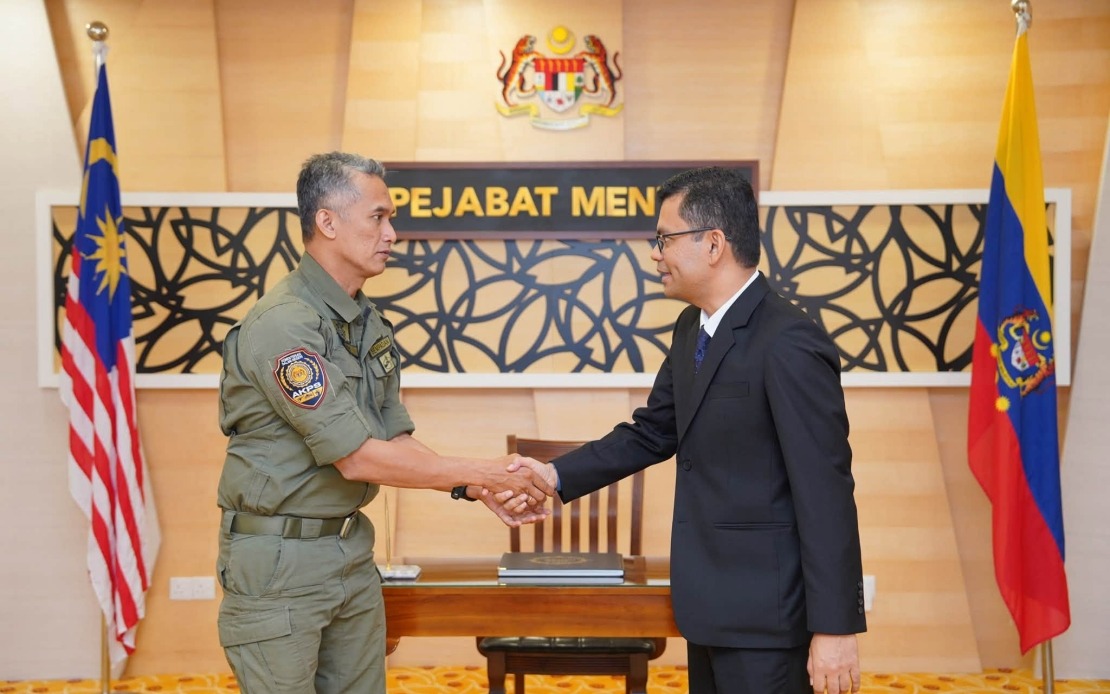
The Malaysian Economy Ministry and the Border Control and Protection Agency (AKPS) have begun strategic discussions on securing adequate development budgets to modernise the country's border infrastructure and enforcement capabilities. The talks, initiated through a courtesy visit by AKPS director-general Datuk Seri Mohd Shuhaily Mohd Zain to Economy Minister Akmal Nasrullah Mohd Nasir in Putrajaya, signal the government's commitment to transforming Malaysia's entry point operations through comprehensive structural and technological investment.
The discussions centred on four interconnected pillars essential to border fortification. Physical infrastructure upgrades form the foundation, alongside targeted technology adoption designed to streamline operations and enhance real-time intelligence gathering. Strategic asset development and operational capacity building round out the framework, reflecting recognition that modern border control demands more than equipment—it requires institutional capability and human expertise working in concert.
The Economy Ministry framed these investments as economically strategic rather than merely administrative. By strengthening AKPS capabilities through deliberate, phased development planning, ministry officials argue that Malaysia can facilitate smoother cross-border trade while simultaneously tightening security protocols. This dual objective matters significantly for a nation that serves as a crucial regional hub for commerce and logistics. Enhanced efficiency at entry points reduces bottlenecks that slow legitimate goods and passengers, while better security screening protects against illicit trafficking and security threats.
AKPS itself represents institutional restructuring on a substantial scale. The agency commenced full operations on January 1, 2025, consolidating border enforcement functions that previously fragmented across six separate government bodies. The Immigration Department, Royal Malaysian Customs Department, Malaysian Quarantine and Inspection Services Department, Health Ministry, Department of Wildlife and National Parks, and Road Transport Department all transferred core border-related functions and personnel to AKPS. This integration aimed to eliminate coordination gaps that historically plagued Malaysia's border administration and created vulnerabilities.
The consolidation framework reflects lessons learned from other regional and international border authorities that discovered efficiency gains and security improvements through unified command structures. However, such integration requires substantial investment to succeed. Merging disparate agency cultures, aligning divergent standard operating procedures, and equipping merged teams with compatible systems demands both capital and sustained attention. The discussions between the Economy Ministry and AKPS leadership suggest this integration phase is now transitioning toward systematic modernisation.
Mohd Shuhaily outlined AKPS's immediate strategic priorities during earlier remarks to the media. The agency is concentrating simultaneously on integrity strengthening and operational efficiency while simultaneously formulating its long-term development blueprint. Human resource capacity enhancement features prominently, acknowledging that technology cannot substitute for trained, trustworthy personnel at border checkpoints. Corruption and inconsistent enforcement undermine border security and commerce efficiency alike, making institutional integrity foundational to any modernisation programme.
Smart border technology dominates AKPS's technological ambitions. The agency plans deploying integrated biometric systems that can cross-reference travellers and cargo manifests against security databases in real time. Automated cargo scanning equipment would accelerate customs clearance while improving detection accuracy. These systems would operate within an artificial intelligence-powered data integration framework where information flows seamlessly between stations and analysed for suspicious patterns. Such interconnectedness represents a dramatic departure from Malaysia's historical approach, where border posts often operated with limited information-sharing.
For Malaysian traders and logistics operators, these modernisation efforts carry substantial implications. Border congestion directly affects supply chain costs and competitiveness. Malaysian manufacturers relying on just-in-time supply chains and regional trade platforms benefit materially when customs clearance accelerates. Similarly, the agricultural and food processing sectors depend on swift quarantine processing. Enhanced technology should theoretically deliver faster processing without compromising thorough inspections.
The regional context amplifies the significance of Malaysia's border modernisation. Southeast Asia remains vulnerable to transnational organised crime, including drug trafficking, wildlife trafficking, and arms smuggling. Malaysia's position astride major maritime and land routes makes it a natural transit point for illicit goods. Neighbouring countries including Thailand, Indonesia, and Singapore have invested heavily in border modernisation, creating pressure for Malaysia to maintain competitive capability. Falling behind technologically could allow organised networks to exploit Malaysian entry points as preferred smuggling corridors.
The budgetary requirements under discussion will likely prove substantial. Integrated biometric systems, automated scanning equipment, and supporting IT infrastructure represent major capital expenditures. Training personnel to operate sophisticated equipment and interpret data intelligence adds further costs. However, government officials frame these as investments rather than expenses, arguing that improved border efficiency generates economic returns through increased trade facilitation and reduced security-related losses.
The Economy Ministry's public statement emphasising connections between border capability and sustainable economic growth reflects broader government thinking about border management. Modern economies depend on secure, efficient trade flows. Sophisticated border control paradoxically enables commerce by assuring trading partners that goods moving through Malaysian ports meet stringent standards and originate from legitimate sources. This quality-control function supports Malaysia's integration into regional and global supply chains.
Moving forward, the outcome of these initial discussions will likely shape Malaysia's border infrastructure and technology roadmap for the coming years. The successful integration of AKPS depends on translating strategic vision into funded reality. Budget allocation decisions made in the coming months will determine whether AKPS's ambitious technological agenda becomes reality or remains aspirational. Malaysian trade-dependent sectors and security-conscious policymakers alike have substantial interest in ensuring adequate development funding reaches this newly unified agency.

