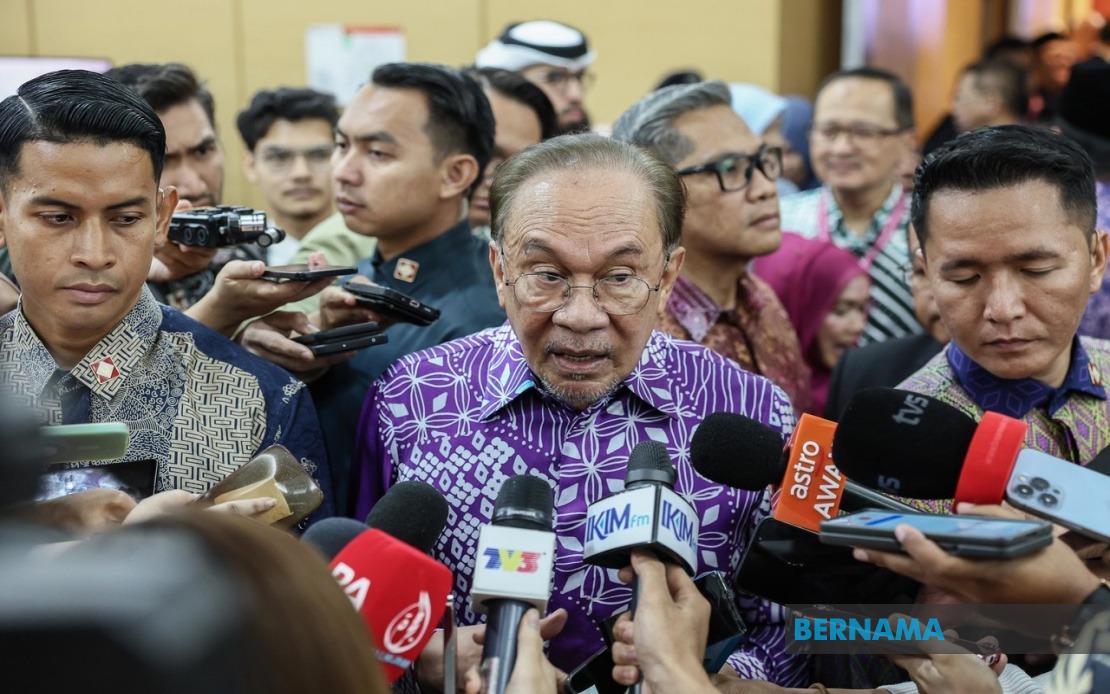
Prime Minister Datuk Seri Anwar Ibrahim has delivered a pointed message to policymakers and business leaders: Malaysia's economic blueprint cannot be divorced from fundamental questions of human dignity and moral purpose. Speaking at the Humane Economy Global Discourse (HEGD) 2026 in Kuala Lumpur, Anwar stressed that as the nation navigates rapid technological transformation and pursues competitive advantage in the global economy, it must remain tethered to a philosophy that places people at the centre of development rather than treating them as secondary beneficiaries of growth metrics.
The timing of Anwar's remarks reflects a broader recalibration of Malaysia's developmental priorities. As artificial intelligence, renewable energy systems, advanced manufacturing capabilities, and biotechnology reshape economic landscapes across Asia and beyond, nations face a critical choice about how to integrate these forces. Anwar's framing suggests Malaysia should resist the temptation to chase growth for its own sake, a tension that plays out acutely in developing economies eager to prove their competitiveness on the world stage yet mindful of social cohesion and quality of life concerns at home.
In his keynote address, Anwar articulated a distinction often blurred in contemporary policy discourse: the economy as a tool versus the economy as a destination. By insisting that "economic life must once again be connected to moral purpose," he implicitly acknowledged that market forces have, in many instances, become untethered from ethical frameworks. This resonates particularly in Southeast Asia, where rapid industrialisation and urbanisation have created winners and losers, often along predictable lines of geography and class. The phrasing "once again" suggests a recovery of older principles rather than an entirely novel invention, appealing to cultural and historical memory while avoiding the charge of utopian thinking.
The emphasis on maintaining Malaysia's competitive standing and openness to investment signals that Anwar is not advocating for isolationism or a rejection of capitalism. Instead, he appears to be arguing for a capitalism with guardrails—one where technological adoption, foreign direct investment, and productivity gains are calibrated against their impact on human flourishing. For regional observers, this represents a middle path between the laissez-faire model that has dominated much of the post-Cold War era and more statist alternatives. Malaysia's position as a middle-income nation with aspirations to high-income status gives such rhetoric particular weight; it speaks to the anxieties of a country trying to industrialise further without replicating the social dislocations witnessed elsewhere.
The event itself underscores institutional recognition of these concerns. The presence of Minister in the Prime Minister's Department (Religious Affairs) Dr Zulkifli Hasan and the Forum Ekonomi Manusiawi (FEM), whose very name translates to "Humane Economy Forum," indicates that these ideas have gained traction within Malaysia's governance structures. The creation of a dedicated global discourse platform around humane economics suggests that Malaysian policymakers see alignment between Islamic principles, secular humanist values, and practical economic management. This coalition-building is significant; it avoids framing the humane economy as a left-wing or ideologically specific project.
For Malaysia specifically, the implications are multifaceted. The nation's tech sector, financial services industry, and manufacturing base all stand to be shaped by how these principles translate into policy. If humane economy principles influence decisions around automation, wage-setting, skills development, and social safety nets, they could determine whether technological disruption benefits broad segments of the population or concentrates wealth further. Similarly, the renewable energy transition—central to Anwar's mention of technological transformation—requires decisions about land use, employment in fossil fuel sectors, and community benefits that cannot be resolved by market mechanisms alone.
The statement also addresses an audience beyond Malaysia. As a major Southeast Asian economy and a nation with significant soft power, Malaysia's articulation of development philosophy influences regional discourse. Neighbouring countries grappling with similar tensions between growth and equity, modernisation and cultural preservation, will observe how seriously Malaysia implements these principles. The contrast between rhetoric and implementation often determines credibility; sustained attention to this agenda will matter more than the keynote address itself.
Critiques of the humane economy framework argue it risks being deployed as cover for policies that ultimately favour established interests. Without concrete mechanisms for accountability, measurement, and course correction, the language of humanity can become a veneer over business-as-usual decision-making. The challenge for Malaysia will be translating Anwar's philosophical position into institutional practices, regulatory frameworks, and budget allocations that demonstrably shift outcomes. This requires moving beyond speeches to mechanisms that constrain powerful actors—corporations, foreign investors, domestic oligopolies—in ways that prioritise human welfare.
The reference to "recovering" humanity and truth suggests Anwar views the current moment as one of reclamation rather than revolution. This conservative framing may appeal to business audiences and cautious policymakers but also raises questions about whether incremental adjustments to existing systems can adequately address structural inequalities. For Malaysia's civil society, workers' organisations, and marginalised communities, the measure of success will not be rhetorical flourishes but tangible improvements in working conditions, access to opportunities, and protection from the downside risks of technological change.
Looking ahead, the sustainability of this agenda depends on whether it becomes embedded in Malaysia's institutional DNA or remains a periodic theme in high-profile addresses. The establishment of forums and discourse platforms suggests genuine commitment to mainstreaming these ideas, but bureaucratic inertia and competing pressures from global capital markets will test that commitment. Anwar's willingness to champion humane economy principles publicly positions Malaysia as potentially offering a distinctive model—neither rejecting development nor accepting its human costs as inevitable. Whether that potential translates into reality will shape not just Malaysia's trajectory but also regional conversations about what development in the 21st century should ultimately serve.

