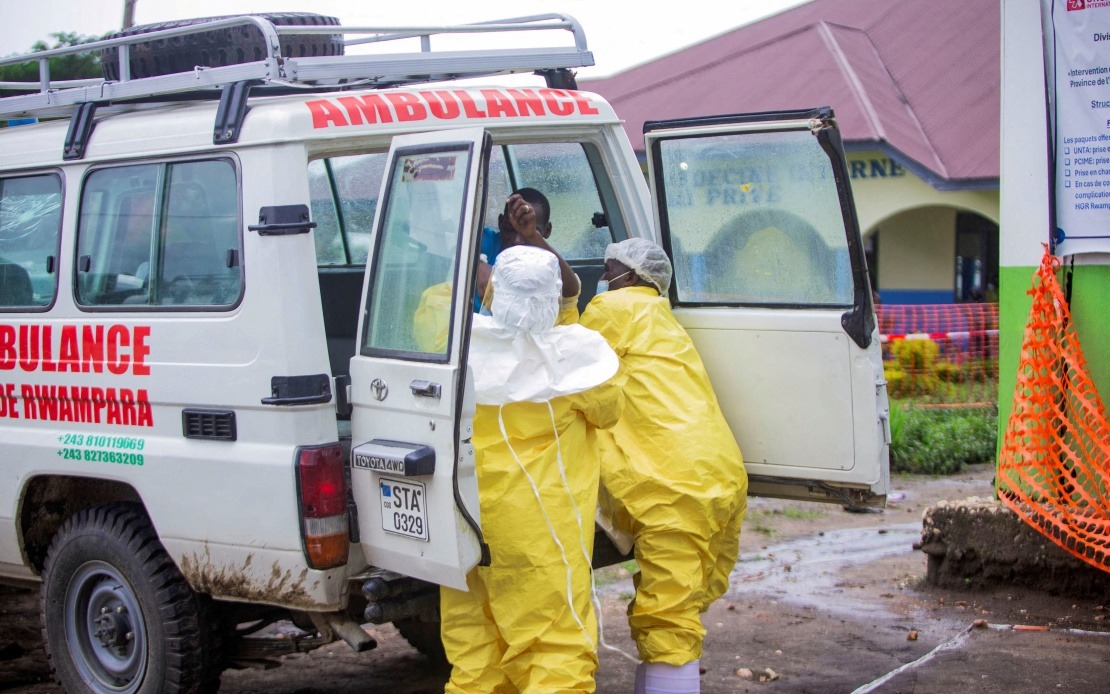
The Ebola epidemic ravaging the Democratic Republic of the Congo has intensified in scope, spreading across five provinces with confirmed infections now reaching 1,873 cases and claiming 672 lives. According to health ministry data released on Sunday and covering information through Friday, the viral outbreak—caused by the Bundibugyo ebolavirus strain—has established itself as a serious public health emergency affecting vast swathes of the country's eastern and northeastern territories. The expansion marks a concerning phase in the crisis since its declaration on May 15, with investigators now documenting sustained transmission chains connecting previously isolated population centers.
The five affected provinces form a geographic footprint spanning Ituri, North Kivu, South Kivu, Haut-Uele, and Tshopo. Two of these jurisdictions, Haut-Uele and Tshopo, appear in the national disease surveillance report for the first time, signalling that the virus has broken through containment barriers and established new transmission zones. This expansion suggests epidemiological linkages between the initial outbreak epicentre and distant communities, driven largely by human movement patterns and contact networks that health authorities struggle to monitor comprehensively across the DRC's vast, difficult terrain.
Epidemiological investigations have traced the newly detected cases in Haut-Uele and Tshopo directly to contacts and population movements originating from Ituri province, where the outbreak began. This finding underscores how cross-provincial mobility—whether through trade routes, family networks, or migration—has facilitated viral dissemination across a widening geographic perimeter. The pattern mirrors previous Ebola crises in Central Africa, where initial containment efforts in designated zones can become undermined by human connectivity that respects no administrative boundaries. For regional observers, the DRC's experience demonstrates how infectious disease dynamics in low-resource settings depend heavily on understanding social networks and mobility patterns alongside traditional epidemiological surveillance.
Healthcare infrastructure is buckling under the mounting caseload. The DRC's treatment facilities are operating at 95.1 percent bed occupancy, a figure revealing the severe strain on medical systems already weakened by decades of underinvestment and fragmented governance. At any given moment, 763 patients are either isolated or receiving active hospital treatment, consuming beds and staff resources at a pace that leaves minimal surge capacity for further case escalations. This utilization rate carries grim implications: should case numbers accelerate, the healthcare system risks becoming overwhelmed entirely, forcing triage decisions and potentially driving patients toward community care settings where transmission risks multiply exponentially.
The case fatality profile remains deeply concerning. Beyond the confirmed 672 deaths, health authorities have logged 299 suspected cases accompanied by 91 additional deaths awaiting laboratory confirmation. These figures suggest that the true mortality burden may exceed official counts by significant margins, reflecting both diagnostic delays and deaths occurring outside formal health facility settings. The accumulation of suspected deaths pending verification indicates that community transmission is active and widespread, with many infections circulating undetected in household and informal care networks where vulnerable populations lack access to diagnostic testing or clinical monitoring.
Recoveries, while providing some cause for cautious optimism, remain relatively modest. Only 306 patients have recovered and exited treatment protocols, representing roughly 16 percent of confirmed cases. This low recovery proportion reflects both the severity of Bundibugyo ebolavirus infections and potential limitations in supportive care quality across the treatment system. In comparison, recovery rates in resource-rich settings typically exceed 50 percent, highlighting how the DRC's constrained medical capacity directly translates into worse clinical outcomes regardless of individual patient factors.
The epidemiological picture carries implications extending beyond the DRC's borders. Southeast Asian nations monitoring global disease threats should note how Ebola outbreaks in Central Africa demonstrate the inherent risks of rapid international connectivity. Although the risk of importation to the region remains low given air travel patterns and entry screening protocols, the DRC crisis illustrates how remote outbreaks can achieve unexpected geographic expansion through networks of human movement. Regional health authorities benefit from tracking such crises closely to refine their own readiness protocols and laboratory capacity for hemorrhagic fever detection.
The identification of Bundibugyo ebolavirus as the causative agent carries technical significance for treatment and epidemiological response strategies. This species differs from Zaire ebolavirus, which has driven the deadliest recorded outbreaks, particularly in West Africa between 2014 and 2016. Understanding which viral species is circulating informs vaccine development priorities and diagnostic algorithm design. However, Bundibugyo has triggered mortality rates exceeding 50 percent in previous documented cases, meaning the DRC's current fatality proportion, while tragic, may reflect partial success in identifying and treating some infections before they reach terminal stages.
The spatial clustering of cases across five provinces suggests that transmission networks remain partially contained within recognizable geographic zones rather than achieving truly national distribution. Nevertheless, the discovery of cases in Haut-Uele and Tshopo demonstrates that serial infection chains have successfully traversed provincial borders, a development that complicates response efforts by expanding the geographic area requiring sustained surveillance and outbreak control measures. Each new province brings fresh challenges in contact tracing, health worker training, and community engagement—tasks that demand extensive resources and sustained political commitment.
Looking forward, the DRC health response faces mounting pressures from both the expanding case geography and the deteriorating hospital surge capacity. International support through mechanisms like the World Health Organization remains crucial, yet ultimately depends on the DRC government's capacity to implement control measures including safe burial practices, infection prevention at treatment centers, and sustained community health education. The outbreak's persistence through mid-July, two months after declaration, signals that initial containment strategies may require substantial refinement or intensification to reverse current epidemiological trends and arrest further geographic spread.

