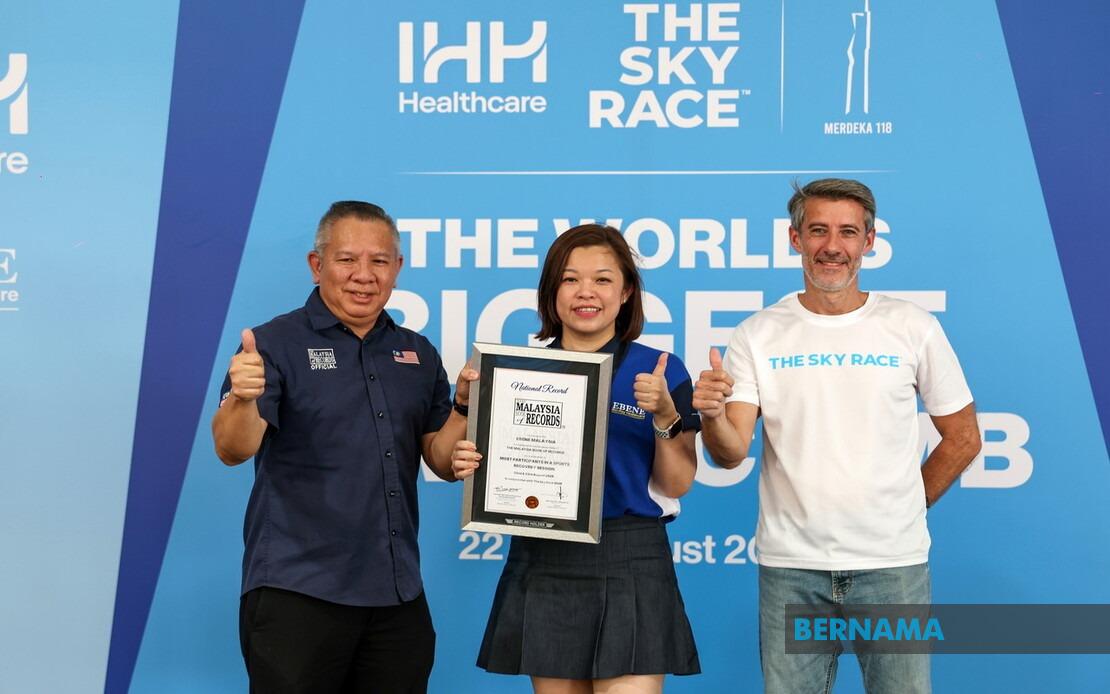
Healthcare support company EBENE Bio-Ray has turned a major tower-running event into a platform for promoting sports recovery and preventative care, attempting to set a Malaysia Book of Records for participation in coordinated recovery activities. The record attempt at Sky Race 2026, held at Stadium Merdeka on August 22 and 23, draws attention to a frequently overlooked aspect of fitness culture in Malaysia—the importance of proper recuperation and joint care in sustaining long-term athletic engagement.
The initiative has already exceeded EBENE's initial target of recruiting 1,000 participants for the recovery session record, according to marketing and e-commerce director Goh Sa Ki. By anchoring the record attempt to a major running event that attracted approximately 8,000 participants, EBENE has created a visible, measurable way to shift public perception of recovery from an optional luxury to an essential component of athletic practice. This approach reflects a broader shift in global fitness culture toward preventative health rather than reactive treatment, a distinction that carries particular relevance for Malaysia's growing running community and office-based workforce dealing with sedentary-related joint issues.
The partnership positioning Sky Race 2026 as a venue for demonstrating recovery practices reflects EBENE's broader brand philosophy. Rather than simply selling knee supports and compression products, the company is using the event to demonstrate how proper care enables people to pursue their sporting passions sustainably. Goh framed the collaboration as extending Sky Race's narrative of courage and determination beyond the finish line—acknowledging that completing a tower-running challenge represents only one phase of an athlete's journey. The real test lies in maintaining the capacity to train, compete, and remain active long-term without injury forcing withdrawal from sport.
Tower running represents a particularly punishing discipline for joints and connective tissues. The repetitive vertical climbing demands intense effort from the knees, lower back, and leg muscles, creating cumulative stress that can lead to inflammation, pain, and eventual dysfunction if not properly managed. By positioning recovery solutions alongside the event itself, EBENE addresses the reality that many Malaysian runners and fitness enthusiasts lack access to professional physiotherapy or structured recovery protocols. The company established a dedicated Sports Recovery Zone featuring sports massage and guided stretching, effectively delivering practical education to thousands of athletes simultaneously.
The record attempt carries strategic marketing value while simultaneously serving genuine public health goals. Tower running has grown in popularity across Malaysia and Southeast Asia, yet information about injury prevention and recovery remains fragmented. Most runners learn through trial and error or personal injury experience, rather than through evidence-based guidance. EBENE's visibility at Sky Race 2026 elevated recovery to the same prominence as performance, challenging the still-prevalent attitude that toughing through pain represents dedication rather than poor strategy.
Goh's comments regarding knee support products reveal the practical mechanics underlying EBENE's initiative. Compression socks and knee guards function across the complete athletic cycle—preparing joints and muscles before running, providing support during the effort, and facilitating recovery afterward. Rather than viewing these as remedial devices for injured athletes, EBENE frames them as confidence-enabling tools for active people. This reframing matters significantly in Malaysian fitness culture, where many individuals associate joint support with age or disability rather than with performance optimization.
The emphasis on proactive rather than reactive care represents the analytical angle embedded in EBENE's messaging. The company explicitly highlighted the importance of caring for knees before discomfort disrupts an active lifestyle, rather than addressing issues only after pain or dysfunction has already established itself. This preventative philosophy aligns with modern sports medicine understanding but contradicts the traditional Malaysian approach, which tends toward fatalistic acceptance of athletic injuries as inevitable costs of competition. By anchoring this philosophy to a major public event and a tangible record attempt, EBENE leverages the visibility to potentially shift broader attitudes toward joint care among runners and fitness enthusiasts.
Sky Race 2026 provided an ideal venue for this initiative, as tower running attracts a demographically diverse group of participants ranging from casual fitness enthusiasts to competitive athletes. The approximately 8,000 runners represented a cross-section of Malaysian society united by commitment to active lifestyle pursuits. Many would have experienced or feared joint pain, making them receptive to hearing about evidence-based recovery and support strategies. The scale of participation enabled EBENE to gather meaningful data while simultaneously conducting what amounts to a large-scale awareness campaign.
EBENE's three decades of experience in the healthcare support category have positioned the company to speak with credibility on joint care and mobility. The accumulated experience informed the development of their product range, which explicitly targets different mobility levels and activity types. Rather than marketing a one-size-fits-all solution, EBENE acknowledges that recovery needs vary based on individual circumstances, activity intensity, and personal risk factors. This nuance reflects maturity in understanding athletic and recreational populations.
The Malaysia Book of Records component adds legitimacy and creates lasting documentation of the initiative. Record-setting attempts generate media attention and social sharing, extending reach beyond those physically present at Stadium Merdeka. The record itself becomes a reference point—proof that thousands of ordinary Malaysians recognized the importance of structured recovery and participated collectively in demonstrating that commitment. This mechanism transforms individual consumer choices into visible collective action, potentially influencing others who might otherwise dismiss recovery as unnecessary.
For Malaysian fitness enthusiasts and the broader active lifestyle community, initiatives like EBENE's carry implications extending beyond the immediate product marketing. They signal that local companies recognize the health challenges facing active populations and are investing in solutions. They also normalize conversations about injury prevention and joint care that many athletes still regard as admissions of weakness. As Malaysia's running and tower-running communities continue expanding, establishing cultural norms around proactive recovery and support will become increasingly important for sustaining participation and preventing unnecessary injuries that force people to abandon sport entirely.
The Sports Recovery Zone at Sky Race 2026 served as a practical demonstration that recovery need not be time-consuming or inaccessible. Guided stretching and professional massage, delivered in a public event setting, proved that quality recovery practices could be standardized, scaled, and delivered to large populations efficiently. This model suggests potential for future expansion—recovery zones at other major sporting events, workplace wellness programs emphasizing joint care, or community-based stretching and mobility initiatives. EBENE's visibility at Sky Race 2026 positioned the company as a leader in this space while contributing genuinely to public health awareness.

