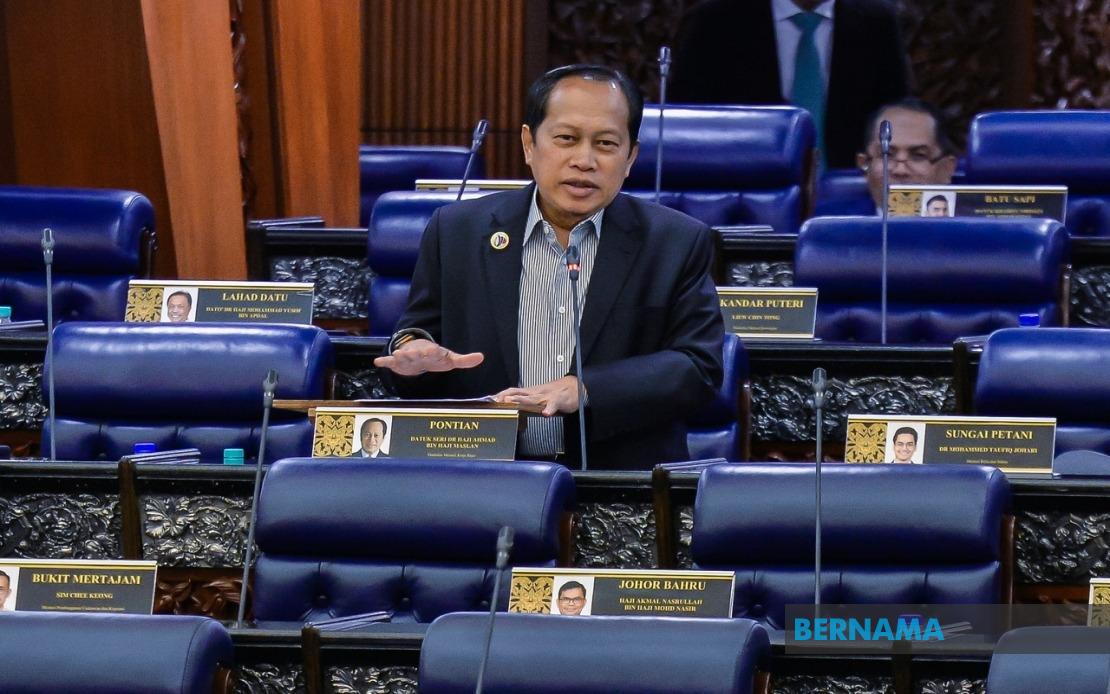
The Federal Government has opted to develop the East Coast Expressway Phase 3 (LPT3) through a public-private partnership model rather than direct state funding, reflecting broader pressures on Malaysia's public finances. Deputy Works Minister Datuk Seri Dr Ahmad Maslan made the announcement during parliamentary proceedings, explaining that financial limitations on the government's budget necessitated this approach for the major infrastructure initiative.
Under the proposed structure, the project will be tendered through a Request for Proposal process, with successful private sector bidders assuming complete responsibility for construction, financing, and delivery. This arrangement shifts the financial burden away from the government's balance sheet, allowing the Ministry of Works to pursue the expressway without competing with other budgetary demands in healthcare, education, and public services. The PPP model has become increasingly common in Malaysia's infrastructure strategy as the government seeks to leverage private capital and expertise whilst maintaining strategic oversight.
The LPT3 project itself represents a substantial undertaking, spanning 122 kilometres from Kampung Gemuruh in Kuala Terengganu to Tunjung in Kota Bharu with a dual two-lane carriageway configuration. The route would incorporate five interchanges to facilitate traffic flow and access, with an estimated development cost of RM9.8 billion calculated according to a 2022 feasibility study. This impressive scope underscores why private sector participation became attractive—the scale of investment would have strained government resources at a time when other critical infrastructure remains underfunded.
Ahmad Maslan contextualised the expressway's role within a broader East Coast transportation ecosystem. He noted that current congestion on the existing route primarily manifests during peak travel periods such as school holidays and the Hari Raya festival season. However, the arrival of the East Coast Rail Link, once completed, will provide an alternative passenger transport corridor. Additionally, the forthcoming Kota Bharu-Kuala Krai Expressway and Lingkaran Tengah Utama Expressway will supply further options for regional connectivity. Within this framework, LPT3 would function as a tertiary alternative, distributing traffic among complementary transport modes and reducing dependency on any single corridor.
The complementary nature of these infrastructure projects reflects strategic transport planning for the East Coast region, which historically experienced connectivity gaps relative to the country's western seaboard. By staggering the completion and deployment of multiple transport links—rail, highway, and expressway—planners aim to create a multimodal network that serves diverse user preferences and journey types. Freight operators, tourism businesses, and commuters will each benefit from having viable alternatives based on their specific requirements and time sensitivities.
Critically, the toll pricing structure for LPT3 remains undetermined, a factor that will significantly influence the project's commercial viability and its appeal to bidders. Ahmad Maslan indicated that final toll rates would reflect a confluence of variables including anticipated construction expenses, financing arrangements, operational and maintenance costs, predicted traffic volume, and the duration of the concession agreement granted to the winning bidder. These interrelated factors create complex mathematical relationships—higher toll rates may deter traffic and reduce revenues, whilst lower rates may make the concession financially unviable for private investors.
The concession period itself represents another undefined parameter with substantial implications. A longer concession—potentially 30 years or more—allows operators to amortise their investment across a extended revenue collection window, potentially justifying lower tolls and more attractive terms for users. Conversely, a shorter concession compressed into 15 or 20 years requires steeper toll charges to achieve acceptable returns, pricing some users away from the expressway and toward competing routes. The eventual calibration of these terms will significantly shape the expressway's attractiveness to both private bidders and the travelling public.
For Malaysian consumers and businesses, the PPP approach carries both advantages and considerations. Private operators typically bring efficiency-driven management, reducing operational slack that sometimes characterises government-run infrastructure. Maintenance standards and customer service may improve under commercial pressure. However, toll-funded roads transfer costs directly to users rather than supporting them through general taxation, potentially disadvantaging lower-income travellers. The success of the LPT3 venture will partly depend on whether toll charges remain affordable for East Coast residents and whether traffic volumes justify the investment.
The RFP process for LPT3 represents an important mechanism for ensuring competitive bidding and value-for-money outcomes. International and domestic construction firms, toll operators, and infrastructure funds will evaluate the project's financial parameters and commercial potential. The transparency and rigour of this process will influence both the quality of proposals received and public confidence in procurement integrity. Given the substantial public interest in East Coast connectivity and the scale of investment involved, the RFP methodology offers accountability through market discipline and open competition.
Regionally, the LPT3 initiative reflects Malaysia's broader infrastructure ambitions and the challenges of funding development amid fiscal consolidation. The recourse to PPP arrangements mirrors approaches adopted across Southeast Asia, where governments face competing demands and constrained budgets. Successful implementation of LPT3 could establish a template for future infrastructure projects, demonstrating feasibility of public-private collaboration. Conversely, challenges in structuring viable commercial terms or in meeting construction timelines could complicate future partnership frameworks.
The timeline for LPT3 remains subject to the RFP process and subsequent negotiations with successful bidders. Ahmad Maslan did not specify a target completion date, suggesting the project remains in preliminary stages despite years of planning discussion. The eventual progression from tender to contract signature to financial close to construction commencement will likely consume several additional years. East Coast residents and businesses anticipating improved connectivity should prepare for a patient timeline before traffic begins flowing on the new expressway.

