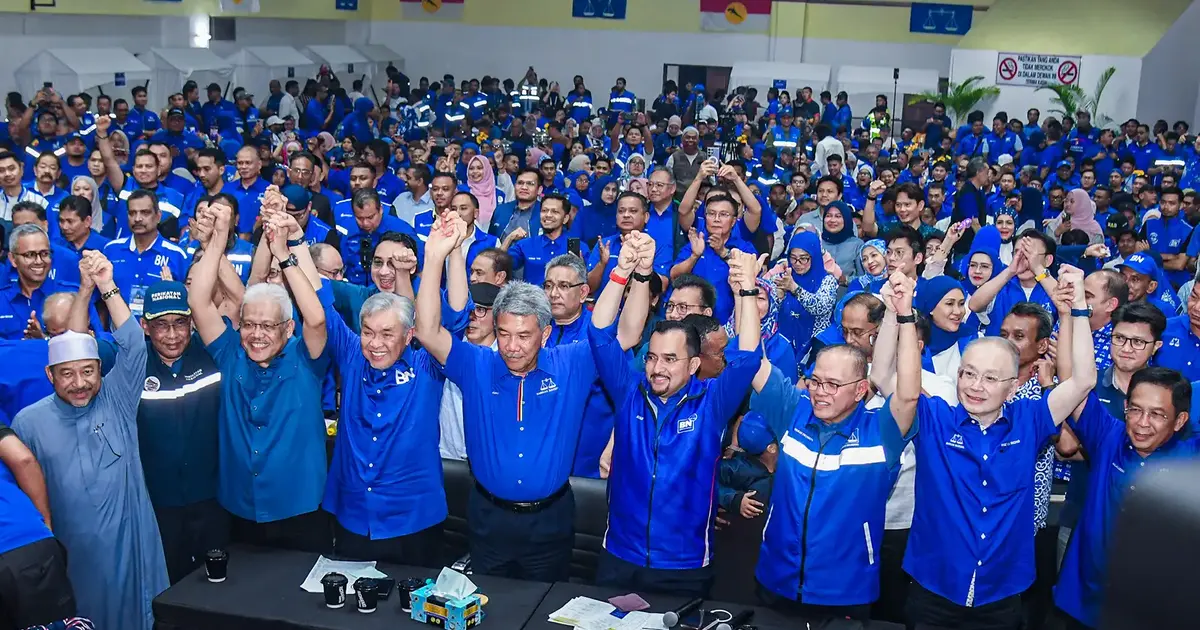
The proposed alliance between Barisan Nasional and Perikatan Nasional faces a critical window for resolving foundational disagreements that could determine the coalition's electoral viability, according to veteran political analyst Tawfik Yaakub. With the complexity of orchestrating a general election involving multiple state-level contests and federal races simultaneously, leaving contentious issues unresolved risks the pact deteriorating under pressure closer to polling day. The analyst's assessment underscores how sensitive the timeline has become for Malaysia's two major conservative blocs to translate their ostensible political compatibility into actionable cooperation.
The thorniest issues facing the would-be coalition partners centre on the distribution of parliamentary constituencies and state seats—the currency of electoral politics in Malaysia. Historically, such arrangements have proven difficult to negotiate even between parties with deeper institutional ties than those currently binding Barisan Nasional and Perikatan Nasional. The two blocs come from different political genealogies: Barisan Nasional dominated Malaysian politics for decades following independence, whilst Perikatan Nasional emerged more recently as an alternative conservative grouping. That structural difference means neither coalition has unambiguous seniority claims over the other, complicating the seat-sharing mathematics that any merged electoral strategy would require.
Equally contentious, if not more so, remains the question of who should serve as prime ministerial candidate under a joint ticket. This is not merely a symbolic matter. The PM candidate selection communicates to party members and voters which coalition partner holds genuine leverage and vision within the alliance, potentially affecting internal party morale and recruitment efforts. Without clarity on this point months before an election, individual parties within each bloc may pursue hedging strategies, including back-channel negotiations with other coalitions or preparations for contesting seats independently. Such fragmentation would substantially weaken whichever united front ultimately emerges.
Tawfik Yaakub's emphasis on early resolution reflects a broader political reality: general elections in Malaysia involve extraordinarily complex logistical orchestration across federal, state, and local contests. Unlike systems with purely national elections, Malaysian candidates and parties must coordinate messaging and resources across thirteen state governments and federal territories simultaneously, each with unique political dynamics and voter preferences. A coalition attempting to manage this complexity whilst simultaneously negotiating core internal terms would face compounded strain. Leadership bandwidth diverts from campaign preparation and messaging to endless coalition maintenance conversations, exactly the scenario the Barisan-Perikatan partnership would wish to avoid.
The urgency Yaakub identifies also reflects electoral momentum considerations. Political momentum is a real force in Malaysian campaigns: coalitions perceived as unified and confident attract volunteers, donors, and undecided voters, whilst those appearing fractious or internally contested generate defections and apathy. The longer the Barisan-Perikatan pact remains undefined on its core mechanics, the greater the risk that supporters and fence-sitters interpret the delay as evidence of fundamental incompatibility. Conversely, announcing concrete seat-sharing arrangements and a unified PM candidate early grants the coalition several campaign cycles to integrate these terms into party culture and voter consciousness, normalising the partnership before voters cast ballots.
From a strategic perspective, early resolution also permits both Barisan Nasional and Perikatan Nasional to present a forward-looking agenda rather than spending campaign energy explaining internal negotiations. Malaysian voters—particularly younger voters less tied to historical party loyalties—increasingly respond to coalitions offering coherent policy platforms rather than merely rejecting their opponents. A Barisan-Perikatan union that has publicly resolved its internal architecture can pivot focus to prospective governance, economic proposals, and administrative vision, contrasting itself sharply against alternative coalitions centred on older political grievances or ethnic-religious polarisation.
The analyst's warning carries particular relevance given Malaysia's experience with electoral realignment. In 2018, the collapse of Barisan Nasional's governing status fundamentally reshuffled parliamentary mathematics and required multiple coalition recombinations before the Perikatan Nasional government emerged. The 2022 dissolution of parliament brought further recalibration. These successive reorganisations have conditioned Malaysian voters to expect political fluidity, but they have also generated fatigue with endless coalition shuffling and genuine hunger for stability. A Barisan-Perikatan partnership that founders on basic operational questions—who gets which seats, who leads the government—would register not as strategic maneuvering but as competence failure, potentially opening space for opposition coalitions to position themselves as more organised and serious governing alternatives.
Moreover, the state-level dimension compounds these dynamics. Malaysia's thirteen states operate under different political controls, with some governed by Barisan Nasional, others by Perikatan Nasional components, and still others by opposition parties or independents. A federal-level Barisan-Perikatan alliance requires alignment across these state entities without undermining state governments' autonomy or local political calculi. Premature seat-sharing announcements without state-level stakeholder buy-in risk generating resentment among state leadership who feel excluded from national-level decisions affecting their political futures. Conversely, attempting to build consensus across thirteen state venues alongside coalition leadership negotiations simply multiplies the nodes where disagreement can arise and multiply the timeline for resolution.
Tawfik Yaakub's analysis ultimately prescribes an uncomfortable reality for both Barisan Nasional and Perikatan Nasional: the partnership's viability depends on political leaders making difficult, publicly visible concessions now rather than deferring disagreement. Either Barisan Nasional must accept a reduced role relative to its historical precedence, or Perikatan Nasional must accept subordinate positioning despite its recent governance experience. Either arrangement requires senior leadership to sell internally that coalition unity serves long-term interests despite short-term sacrifices. The analyst's call for early negotiation reflects his judgment that delaying these conversations only compounds the difficulty, converting what are presently manageable political compromises into potential breaking points as election day approaches.

