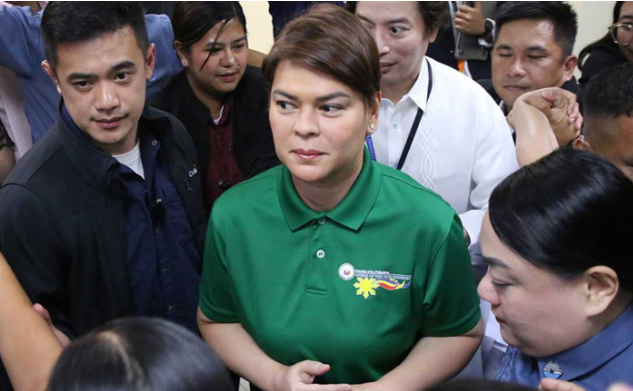
The impeachment trial of Vice President Sara Duterte entered its fourth day on Tuesday with the defendant maintaining her position that the charges against her—centring on an alleged assassination plot against President Ferdinand R. Marcos Jr., First Lady Liza Marcos, and former Speaker Martin Romualdez—rest on a foundation of conjecture rather than substantive proof. Duterte's assertion came ahead of testimony from her chief of staff, Zuleika Lopez, who was expected to be called to the witness stand by the House prosecution panel.
Duterte's defence team has begun exposing apparent vulnerabilities in the prosecution's case through rigorous cross-examination. During questioning of Jeremy Lotoc, the NBI-Bangsamoro Autonomous Region in Muslim Mindanao (BARMM) Regional Director and the prosecution's second witness, defence lawyer Mark Vinluan highlighted inconsistencies in affidavit dates and NBI docket number references. These procedural discrepancies, while seemingly technical, point to potential documentation problems that could undermine the credibility of the investigation underlying the complaint.
In her statement, Duterte characterised the prosecution's approach as fundamentally flawed, arguing that repeatedly asserting threats without foundation, conjuring non-existent assailants, and constructing evidentiary frameworks to support fabricated narratives cannot convert fiction into judicial fact. This critique targets not only the specific allegations but also the methodology by which the case has been constructed and presented before the Senate impeachment court.
The Vice President emphasised that such prosecutorial practices carry broader institutional implications, particularly their corrosive effect on the integrity of public bodies, the erosion of citizen confidence in the justice system, the squandering of state resources, and the fundamental compromising of truth-seeking mechanisms within governance. Her statement suggests a view that what is at stake extends beyond her personal vindication to encompass the credibility and proper functioning of the Philippines' constitutional structures.
Duterte's insistence on the necessity of grounding impeachment proceedings exclusively in verifiable evidence rather than speculation or unsubstantiated allegations reflects a constitutional principle central to democratic governance. The assertion that the rule of law depends fundamentally on facts rather than fiction underscores a legal philosophy that prioritises substantive proof over supposition in matters of such constitutional gravity. For observers of Philippine politics and the broader Southeast Asian context, this debate over evidentiary standards in impeachment trials carries significance beyond the immediate personalities involved.
The Senate impeachment court is currently examining Article IV of the complaints, which specifically addresses the alleged kill plot that Duterte herself had publicly disclosed. This peculiar dimension—where the defendant initially revealed the supposed threat—adds a layer of complexity to the proceedings. The prosecution has thus far presented only two witnesses and has barely progressed beyond the midpoint of the 11 days allocated for their presentation of evidence on Article IV alone.
The anticipated timeline of the complete trial extends to approximately 92 days, suggesting that proceedings may not conclude until early 2027. This extended duration reflects the comprehensiveness demanded by multiple articles within the complaint and the procedural requirements of Senate impeachment trials in the Philippine system. The protracted nature of these proceedings raises questions about governance continuity and the proper allocation of legislative time and resources during a period of significant domestic challenges and international engagement obligations.
Notably, Duterte has not personally appeared at the trial proceedings, instead relying on written statements and her legal team to contest the charges. This approach, while permissible within Philippine impeachment law, contrasts with the more direct participation typical of some high-profile constitutional trials. Her absence from the courtroom may reflect strategic considerations regarding public messaging and the presentation of her defence.
The defence strategy evident thus far emphasises documentary and procedural inconsistencies rather than substantive rebuttal of the underlying narrative. By focusing on methodological flaws in the prosecution's investigation and presentation, the defence appears to be constructing a case that the entire edifice of charges rests on unsound foundations. This approach could prove effective if the Senate impeachment court becomes persuaded that investigative protocols were compromised or that evidentiary standards fell short of constitutional requirements.
For Malaysian observers and regional analysts, this trial encapsulates broader questions about the effective functioning of constitutional checks within presidential systems operating in the Southeast Asian context. The Philippines' impeachment mechanism, like constitutional provisions elsewhere in the region, reflects tensions between accountability mechanisms and the stability required for effective governance. How Philippine institutions navigate this particular trial may offer insights into the robustness of such constitutional safeguards when applied to high-ranking executive officials.
The coming weeks of testimony and cross-examination will determine whether the prosecution can substantiate its allegations or whether Duterte's assertions regarding evidentiary gaps prove persuasive to senators sitting as jurors in this constitutional matter. The stakes extend beyond individual political fortunes to encompass public confidence in Philippine institutions and the demonstrable application of constitutional standards regardless of the standing or popularity of those under scrutiny.

