Dutch Prime Minister Rob Jetten delivered a formal state apology on Sunday to the Moluccan community resident in the Netherlands, acknowledging the systematic mistreatment and broken promises that have defined their seven-decade experience in Europe. The apology, delivered at a commemorative ceremony in Rotterdam, represents a significant moment in the reckoning with one of the Netherlands' most complicated post-colonial legacies—one that has particular resonance for Southeast Asian readers given the region's own colonial history and ongoing discussions about historical accountability.
The Moluccans, originating from the spice islands of eastern Indonesia, occupied a unique position during the independence struggle that followed World War II. Serving in the Dutch colonial military forces during the armed conflict that accompanied Indonesia's push for freedom, these soldiers and their families found themselves caught between two nations after the Dutch formally recognised Indonesian sovereignty in 1949. Approximately 12,500 Moluccans were transported to the Netherlands through an official government programme intended as a temporary arrangement, with the understanding that they would return home once conditions stabilised and negotiations between Amsterdam and Jakarta concluded.
The temporary transfer that was supposed to last months stretched indefinitely into decades. The Dutch government, contrary to its original commitments, never followed through on repatriation plans, leaving the Moluccan community stranded in a foreign land with minimal resources or support. Those who had served in the Dutch military were discharged immediately upon arrival, and the government's approach to their settlement was characterised by profound indifference. Housing conditions were notoriously poor, with many Moluccans initially placed in repurposed facilities that had served as Nazi concentration camps during the Holocaust—a layering of historical trauma that underscores the exceptional nature of their plight.
The integration efforts, or rather the conspicuous lack thereof, left the Moluccan community structurally isolated from Dutch society. Employment opportunities remained severely limited, and there was little governmental initiative to facilitate language training, skills development, or genuine social inclusion. Separated from their homeland, prevented from returning by political circumstance, and rejected by their adopted country, the Moluccans developed a parallel community existence characterised by a profound sense of displacement and loss. Families were separated, cultural connections to Indonesia were severed, and the psychological toll of displacement accumulated across generations.
The consequences of this abandonment became violent in the 1970s when young, second-generation Moluccans, frustrated by their parents' passive acceptance and their own lack of viable futures, engaged in a series of armed actions intended to draw attention to their grievances. These incidents, including train hijackings and hostage-takings, shocked the Dutch public and forced the issue of Moluccan rights into mainstream discourse. Yet even these dramatic gestures failed to produce meaningful policy changes or genuine reconciliation efforts from the Dutch government, leaving scars that persisted well into subsequent decades.
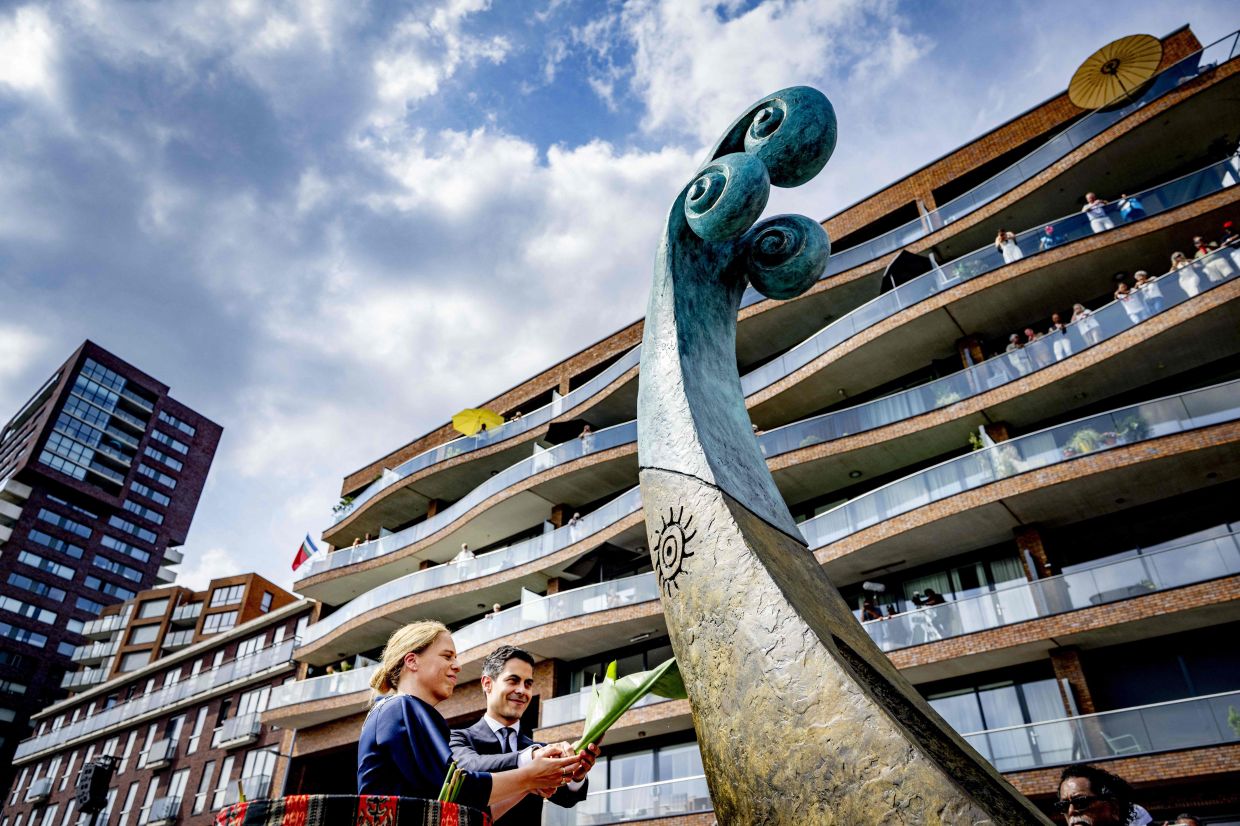
Rob Jetten's apology, delivered at the unveiling of the Ulu Kora monument on Lloydkade in Rotterdam—the very location where the first ships carrying Moluccans arrived in 1949—carries symbolic weight precisely because it arrives so late. The prime minister acknowledged the inadequacy of housing, the social abandonment, the broken promise of return, and the cumulative grief inflicted on families spanning generations. His words, delivered to hundreds of community members many carrying photographs of deceased first-generation Moluccans, represented an official recognition that the Netherlands had violated a fundamental commitment to a vulnerable population.
Crucially, Jetten articulated a recognition that words alone cannot repair decades of institutional betrayal. He explicitly stated that the apology does not erase the injustice, cannot reverse historical decisions, and cannot restore lost time or opportunities. This measured acknowledgment of apology's limitations reflects a mature understanding that historical justice is not a single ceremonial moment but a complex process requiring sustained attention to how past wrongs continue to shape present realities. The statement suggests that the Dutch government is beginning to grapple with the permanent consequences of its choices.
For Malaysian and Southeast Asian readers, this episode offers important lessons about the long shadow of colonialism and the responsibilities of nations toward displaced populations resulting from independence struggles. The Netherlands' initial failure to honour its commitment to repatriate the Moluccans mirrors various failures across Asia and Africa where colonial powers abandoned vulnerable populations after granting independence. The question of how nations account for such historical wrongs—through apologies, reparations, or policy reforms—remains urgent across the region, particularly as younger generations demand acknowledgment of colonial and post-colonial injustices.
The Moluccan case also illustrates how displacement operates at multiple registers simultaneously: as political failure, as personal tragedy, and as a challenge to national identity. The Moluccans were neither fully Indonesian nor fully Dutch, stranded in a bureaucratic limbo created by geopolitical circumstances beyond their control. This condition of permanent liminality, of belonging nowhere fully, represents one of colonialism's most insidious legacies. Decades later, even as some Moluccans have integrated into Dutch society and achieved professional success, others remain psychologically anchored to an Indonesia they were never permitted to return to, their loss incomplete and unrequited.
The monument unveiled in Rotterdam functions not merely as commemoration but as a spatial marker of historical truth. By placing acknowledgment of Moluccan suffering at the literal port of arrival, the Dutch government creates a permanent fixture in public space that prevents forgetting. For communities worldwide seeking recognition of historical wrongs, the visibility of such monuments matters enormously, transforming private grief into public acknowledgment and ensuring that future generations understand what occurred.
The apology also raises questions about whether official recognition, however sincere, adequately addresses the material and psychological consequences of institutional failure. Many Moluccans and their descendants continue to face economic disadvantages, higher rates of mental health challenges, and complicated relationships with their fractured identities. A formal apology may represent necessary justice symbolically, yet whether it translates into concrete policy changes—enhanced pension provisions, explicit pathways to dual citizenship, expanded cultural support programmes—remains to be seen. The real measure of Dutch commitment to historical justice will emerge through sustained action beyond the ceremonial moment.
As Indonesia and the Netherlands continue developing their modern relationship as equal nations, moments like this apology serve to honestly address the complicated inheritance of their shared history. The Moluccan experience, painful as it is, offers an opportunity for both nations to model how former coloniser and formerly colonised country can engage in authentic dialogue about historical wrongs. For the broader Southeast Asian region, watching whether such acknowledgment produces meaningful systemic change will inform how other nations might approach similar reckoning with their own historical injustices and displaced populations.