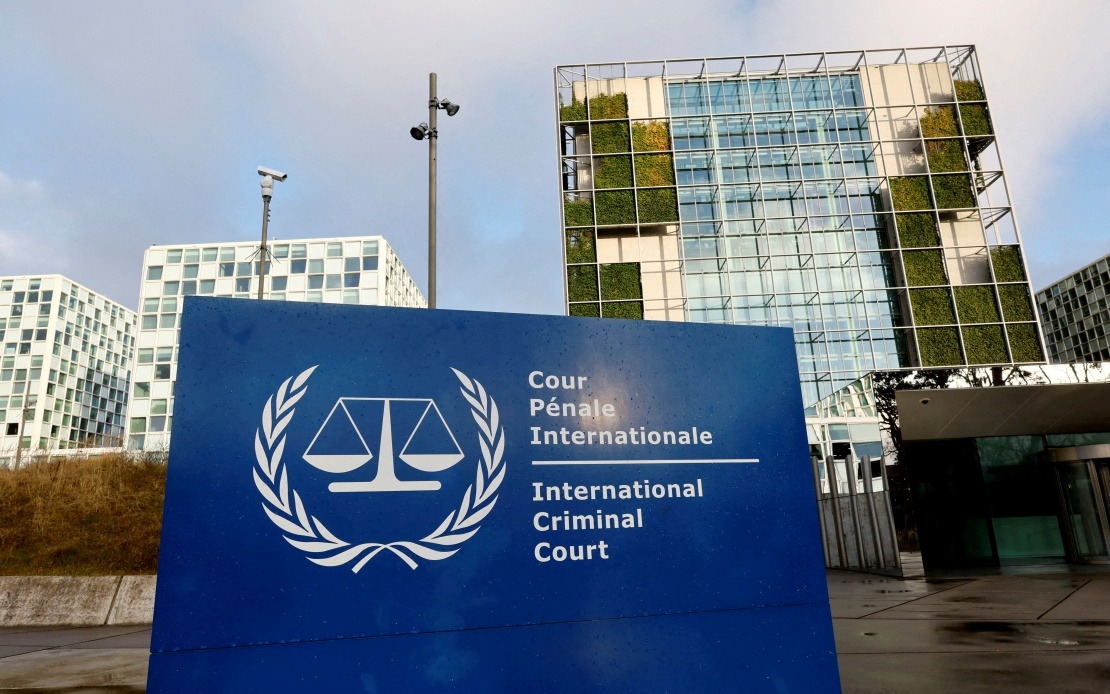
The Netherlands' leading international law academics have mounted a forceful critique of Washington's effort to undermine the International Criminal Court, warning that the strategy represents a fundamental threat to the architecture of international justice and the principle that all nations should be bound by law rather than force. The Dutch experts argue the American campaign, launched formally by the State Department in mid-July, reflects a troubling rejection of multilateral institutions at a moment when global cooperation has never been more essential.
On July 13, the US Department of State unveiled a comprehensive campaign aimed at countering what officials characterised as the ICC's threat to American sovereignty. The State Department contended that the Hague-based tribunal constitutes an intolerable danger because it asserts the authority to investigate, prosecute and potentially imprison American military personnel and government officials undertaking actions deemed to serve US national interests. This framing reflects a long-standing American position that the court operates beyond its legitimate mandate when it considers matters involving US citizens.
Alette Smeulers, professor of international crimes at the University of Groningen, articulated the concern shared by many Dutch legal scholars in conversations with international media. She emphasised that if the United States succeeds in dismantling such institutions, the consequence would be a dramatic shift away from a world governed by established legal frameworks toward one dominated by raw power dynamics. Such a transformation, she argued, would represent a backward step for global civilisation and human rights protections that have been painstakingly constructed since the post-World War II period.
The tension between Washington and the ICC has been building for years, though the July campaign represents a marked intensification. The previous December, the United States had already signalled its willingness to use economic leverage by imposing sanctions against two ICC judges, claiming they had engaged in what American officials termed politicised actions concerning investigations related to Israel. This measure demonstrated that Washington was prepared to deploy punitive measures against court officials deemed to be acting contrary to American interests.
Kyra Wigard, an assistant professor of law at Utrecht University, characterised the sanctions approach as fundamentally absurd when applied to judicial officers. She noted that sanctions are traditionally reserved for alleged terrorists or nations engaged in armed conflict, drawing attention to the unprecedented nature of applying such coercive measures to members of an international court. This perspective underscores how the American strategy breaks with conventional diplomatic practice and international norms regarding the treatment of judicial institutions.
Smeulers stressed that critics of the ICC often misrepresent the scope of its jurisdiction. The court, she explained, can prosecute only the gravest crimes against humanity, and only when such offences occur either within the territory of states that are signatories to the Rome Statute or when perpetrators are nationals of states party to the treaty. This legal framework already provides substantial protections for non-member states and their citizens. The ICC lacks the independent enforcement mechanisms that the United States describes; it must rely on member states to arrest and surrender suspects for trial.
The implications of the American campaign extend far beyond bilateral tension with the ICC. According to Smeulers' assessment, the US effort could have cascading effects on the court's operational capacity and, more broadly, on the entire system of international law that underpins cross-border cooperation on serious crimes. The United States has indicated its intention to pressure other nations to withdraw from the Rome Statute, which would fracture the international consensus around the ICC and weaken the institution's legitimacy and reach.
For Southeast Asian nations, the American strategy carries particular significance. Several countries in the region have either joined the ICC or are signatories to the Rome Statute, making them potential targets for American pressure. Malaysia itself has not joined the court, but the broader question of whether international institutions can function independently of great power interference affects all nations, particularly smaller ones that depend on international law to protect their interests against larger adversaries. The principle that courts should operate free from political interference and coercion is foundational to the rule of law globally.
The Dutch critique also reflects a broader European perspective on the value of multilateral institutions. The European Union and its member states have generally supported the ICC as an expression of shared commitment to accountability for the most serious crimes. The American campaign thus represents not merely a dispute over a single institution but a fundamental disagreement about the future structure of international relations and whether global governance will be built on law or on the exercise of power by the strongest nations.
Smeulers emphasised that the current moment requires strengthening rather than weakening international legal institutions. She argued that the world faces interconnected crises—from mass displacement due to conflict to environmental degradation—that can only be addressed through robust multinational cooperation grounded in mutual respect for law. The American campaign, by contrast, signals a preference for unilateral action unconstrained by international oversight, a posture that undermines the shared frameworks necessary for addressing transnational challenges.
The debate over the ICC ultimately reflects competing visions of global order in the twenty-first century. Washington's position assumes that American interests are best served through freedom from international constraint and the ability to act unilaterally. The Dutch scholars and their allies argue instead that universal adherence to law creates a more stable and just international system that ultimately benefits all nations, including the United States. How this tension resolves will shape whether international law continues to develop as a genuine constraint on state behaviour or becomes merely a tool deployed selectively by powerful nations.

