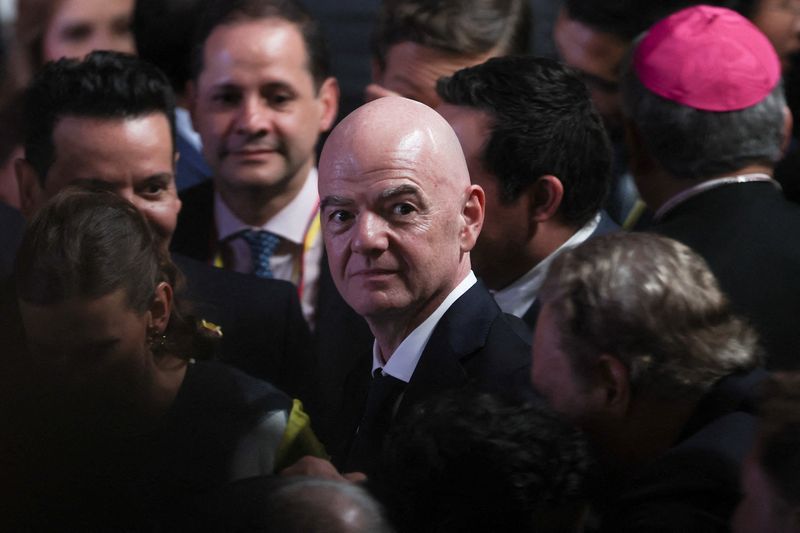
The Royal Dutch Football Association (KNVB), one of FIFA's founding members dating back to 1904, has launched a significant challenge to the world soccer body's current leadership structure. In a statement released on Sunday, the organisation declared it has lost confidence in FIFA President Gianni Infantino and is pushing for a comprehensive overhaul that extends far beyond simply changing the person at the helm. The Dutch federation's intervention represents a notable fracture within FIFA's membership, particularly from a historically influential European confederation that has long shaped international football governance.
The KNVB's loss of confidence arrives at a precarious moment for Infantino, whose term leads toward a scheduled re-election in March next year. The timing is significant because regional football powerhouses have been quietly assessing whether to trigger a formal vote of no confidence following Infantino's controversial and ultimately abandoned proposal to monetise FIFA World Cup events and other major tournaments through private equity partnerships. That failed initiative exposed deep divisions within FIFA's decision-making apparatus and highlighted the concentration of power within the presidency itself.
What distinguishes the Dutch position from typical leadership disputes is its scope and ambition. Rather than simply advocating for a new president to replace Infantino, the KNVB is advancing a systematic reimagining of how FIFA operates as an institution. The federation explicitly stated that governance transformation must precede any leadership transition, arguing that electing a new president without addressing structural deficiencies would merely shuffle the deck without addressing systemic problems. This philosophical stance reflects a belief that FIFA's challenges stem from institutional design rather than individual failings alone.
The KNVB has proposed hosting an "International Summit on the Future of FIFA" in Amsterdam, envisioning this gathering as a forum for determining what FIFA should become before the membership settles on who should lead it. This sequencing reverses conventional political wisdom, which typically assumes that selecting strong leadership enables organisational change. The Dutch approach suggests that without first agreeing on organisational principles and structures, any new leader would inherit the same dysfunctional apparatus that currently constrains effective governance. This represents a sophisticated critique of FIFA's institutional weaknesses rather than a simple personality-driven challenge.
Central to the KNVB's grievances is the concentration of executive power around the FIFA presidency itself. The Dutch association highlighted insufficient separation between the president's office and FIFA's administrative machinery, pointing to an imbalance between presidential authority and institutional checks and balances. This concern resonates across football confederations grappling with governance transparency and accountability, issues that have plagued FIFA's reputation throughout successive leadership crises and corruption scandals. For Southeast Asian readers, this mirrors governance debates within regional sports bodies and national federations struggling to balance centralised authority with democratic oversight.
The KNVB outlined three concrete reform priorities intended to reshape FIFA's institutional character. First, the federation demands stronger internal governance with meaningful checks on presidential power. Second, it insists that human rights protection and environmental sustainability must become embedded in FIFA's decision-making processes rather than treated as afterthoughts or public relations exercises. Third, it calls for enhanced international cooperation, suggesting that FIFA should operate through more genuinely collaborative structures involving its 211 member associations and six continental confederations rather than through top-down directives from the presidency.
Financial redistribution represents another crucial dimension of the Dutch reform agenda. The KNVB advocates for FIFA to reinvest up to ninety percent of its distributable revenue into grassroots soccer development, reflecting a view that FIFA's accumulated wealth should benefit football globally rather than concentrate within the organisation's administrative structure. This aligns with longstanding criticism that FIFA's commercial success has not proportionately enhanced opportunities for developing football nations, particularly those in Africa and Asia where infrastructure investment remains critical for growing the sport.
The KNVB's framing deliberately positions these reforms as a collaborative endeavour rather than a European imposition on world football. Dutch officials emphasised that this new direction should develop through genuine consultation with all member associations and confederations from every continental region. This careful language responds to legitimate historical concerns that European confederations have historically dominated FIFA decision-making, sometimes at the expense of developing football nations. By explicitly inviting non-European participation, the KNVB attempts to build a broader coalition transcending geographical divisions that have traditionally fragmented FIFA membership.
Significantly, the Dutch federation previously supported Infantino's initial presidential campaign, highlighting how backing from founding members was never unconditional. This shift represents a withdrawal of crucial support from someone who presented himself as a reformer when first elected. The KNVB's reversal underscores that even sympathetic observers within FIFA's membership have concluded that Infantino's tenure has failed to deliver meaningful institutional transformation despite his reform rhetoric. This creates space for alternative leadership candidates to present themselves as delivering the structural change that Infantino promised but did not pursue.
The Dutch initiative gains additional weight given UEFA's parallel legal action, with the European confederation seeking court permission in Florida to obtain testimony and documents from FIFA entities for use in a planned criminal complaint against Infantino in Switzerland. While the KNVB's proposal focuses on governance restructuring, this legal pressure from UEFA underscores that FIFA leadership faces challenges operating simultaneously on institutional, political, and criminal investigation fronts. For Malaysian observers, these dynamics illustrate how international sports governance increasingly intersects with legal accountability mechanisms and political coalition-building.
The proposed Amsterdam summit represents a potential inflection point for FIFA's future trajectory. Whether such a gathering materialises and whether it can genuinely reshape FIFA's institutional foundations remains uncertain. However, the KNVB's intervention signals that significant constituencies within world football believe the current governance model has become unsustainable. This pressure may force Infantino to accelerate genuine reforms, encourage other confederations to articulate their own institutional visions, or catalyse a genuine leadership transition before the scheduled March election. The coming months will demonstrate whether FIFA can undertake meaningful self-examination or whether its governance crises will continue festering beneath surface institutional stability.

