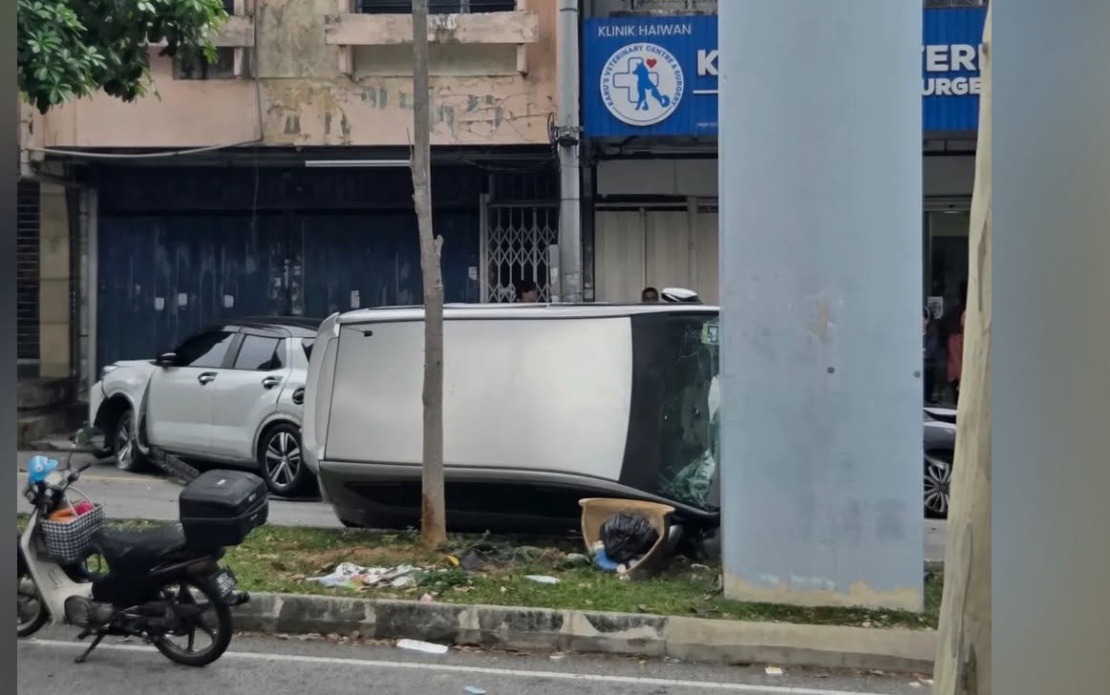
A motorist's sudden medical emergency transformed an ordinary morning commute into a multi-vehicle collision in the Cheras area of Kuala Lumpur on Tuesday. The 28-year-old driver of a BMW 320i lost control of his vehicle after suffering a seizure around 8.30 am while travelling along Jalan Midah 1 towards Taman Midah 1, where he worked. The car veered off the road and struck six vehicles parked along the left shoulder, according to statements from the Kuala Lumpur Traffic Investigation and Enforcement Department (JSPT).
According to ACP Mohd Zamzuri Mohd Isa, the JSPT chief, the driver's sudden loss of consciousness caused him to lose command of the vehicle, resulting in the collision with the parked cars. The incident occurred without warning during what appeared to be a routine journey to the workplace. The sequence of events unfolded rapidly, with the driver unable to prevent the vehicle from crossing the roadway and striking the stationary automobiles positioned along the shoulder.
Fortunately, the parked vehicles were completely unoccupied at the time of the collision, preventing any injuries among bystanders or vehicle owners. The six vehicles involved in the crash belonged to four women aged between 29 and 43, one man aged 39, and one company-owned vehicle. While the property damage was significant, no individuals required medical attention as a direct result of the impact, though emergency services assessed the situation thoroughly.
Investigators discovered that the BMW driver carried a ten-year medical history of seizure episodes, a critical detail that informs the understanding of how this incident occurred. The driver's existing medical condition appears to have manifested without warning during his morning drive, underscoring the unpredictable nature of certain neurological disorders and the challenges individuals managing such conditions face while operating vehicles. This revelation raises broader questions about medical fitness to drive and the protocols governing individuals with chronic seizure disorders in Malaysia.
Roadside breath analysis conducted immediately after the incident produced a zero reading, definitively ruling out alcohol as a contributing factor to the collision. The test recorded 0 milligrammes per 100 millilitres, eliminating impaired driving from consideration. This finding reinforces that the collision stemmed entirely from the driver's medical episode rather than any voluntary or negligent behaviour such as intoxication or reckless driving.
The JSPT has classified the case under Rule 10 of LN 166/59, a standard classification for traffic incidents involving medical emergencies or involuntary loss of vehicle control. Officers from the department continue their investigation, examining the circumstances leading up to the seizure and documenting damage to all vehicles involved. The classification reflects the acknowledgment that this incident differs fundamentally from cases involving driver culpability or negligence, focusing instead on establishing a complete factual record of the medical emergency.
Authorities have appealed to any witnesses or members of the public with information about the incident to contact the Tun H.S. Lee traffic police station at 03-2071 9999 or visit their nearest police station. The appeal seeks to ensure a comprehensive investigation that captures all available evidence and perspectives on the collision. Even minor observations from witnesses may prove valuable in reconstructing the precise sequence of events and understanding the exact moment the driver's medical condition manifested.
This incident highlights the intersection of public health and road safety in urban Malaysia, where thousands of individuals with chronic medical conditions navigate the demands of daily commuting. The case underscores the importance of regular medical reviews for drivers with seizure disorders and the need for comprehensive support systems that protect both affected individuals and the broader motoring public. Seizure management requires careful medication adherence, lifestyle adjustments, and medical supervision, yet episodes can still occur unexpectedly despite optimal management.
The situation also raises practical considerations for insurers and vehicle owners in Malaysia, as determining liability in medically-induced accidents presents unique challenges distinct from conventional traffic collisions. The presence of a documented medical condition may affect insurance claims processing, requiring detailed medical documentation and police reports that clearly establish the medical nature of the incident rather than any component of driver error or negligence.
Further investigations continue to unfold, with the JSPT methodically examining all aspects of the collision. The investigation process will likely include reviewing the driver's medical records, consulting with his healthcare providers, and documenting statements from vehicle owners affected by the incident. These comprehensive investigations serve not only the immediate case but contribute to broader understanding of how medical emergencies impact road safety outcomes in Malaysia's urban traffic environment.

