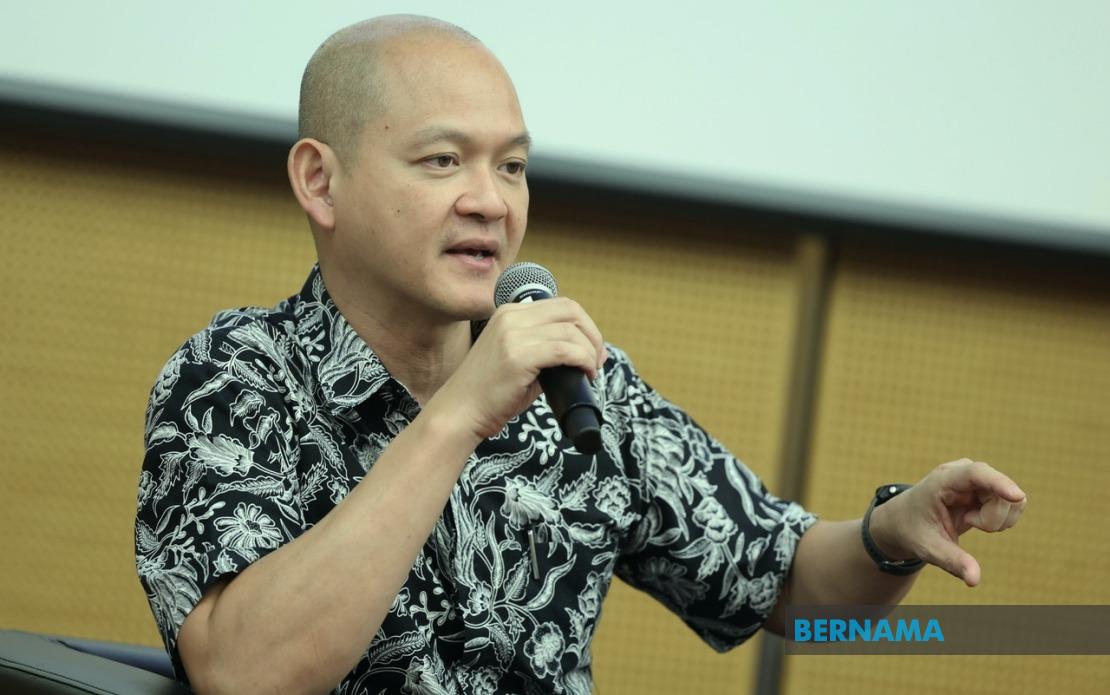
Dr Ong Kian Ming, the former Member of Parliament for Bangi, has formally terminated his membership with the Democratic Action Party after more than a decade with the coalition, bringing to a close a political career that spanned two parliamentary terms and several high-profile government appointments. The announcement was made public on August 31 through a Facebook post in which Ong confirmed that he had already notified DAP Secretary-General Anthony Loke Siew Fook and DAP National Organising Secretary Khoo Poay Tiong of his departure.
Ong's exit marks the end of a 12-year association with DAP that began in 2012, during which he established himself as one of the party's more academically-oriented figures and served in multiple capacities within both legislative and executive structures. His parliamentary representation covered two distinct constituencies: he held the Serdang seat from 2013 to 2018, before transitioning to represent Bangi from 2018 until 2022, giving him a combined tenure of nine years in the Dewan Rakyat.
Beyond his work as an elected representative, Ong occupied a ministerial role during the Pakatan Harapan government, serving as Deputy Minister of International Trade and Industry from 2018 to 2020. This position placed him at the centre of Malaysia's trade and industrial policy discussions during a critical period for the nation's economic direction. His appointment to such a portfolio reflected the confidence placed in him by the administration at that time.
Within DAP's organisational structure, Ong contributed through both appointed and elected channels. He was appointed to the party's Central Executive Committee from 2019 to 2022, before earning election to the DAP Selangor state committee, a position he held from 2018 until 2024. This dual involvement demonstrated his commitment to party machinery at both national and state levels, though his resignation now concludes that engagement entirely.
In his resignation statement, Ong expressed gratitude for the opportunities he had received within the party framework, acknowledging the various roles that had allowed him to participate in both political governance and party administration. He framed his contributions as having occurred across multiple dimensions, suggesting that his departure reflects a deliberate choice rather than any forced circumstance or internal dispute.
Crucially, Ong has made explicit declarations regarding his future political intentions. He has categorically stated that he does not plan to join another political party in the foreseeable future, effectively removing himself from the competitive landscape of Malaysian electoral politics. Additionally, he has announced that he will not be seeking nomination as a candidate in the sixteenth general election, formally known as GE16, thereby stepping away from contesting directly for parliamentary office.
This dual declaration carries significant weight in Malaysian politics, where defections between parties are not uncommon and where former representatives frequently attempt political comebacks. By ruling out both party membership and candidacy, Ong has signalled a comprehensive withdrawal from partisan political competition, though he has indicated his intention to remain engaged with national interests through alternative channels.
The former Bangi MP has indicated that despite his departure from partisan politics, he intends to continue serving Malaysia's broader interests through means outside the traditional party-political apparatus. This suggests possible involvement in civil society, academia, or policy advocacy, areas where his background and experience could continue to generate value for public discourse.
Ong's resignation comes at a time when DAP, as the largest component party within Pakatan Harapan, continues to navigate Malaysia's complex multi-party political environment. His departure removes from the party's roster an intellectually-engaged figure who had represented the more technocratic and policy-focused wing of the organisation. The loss of such personalities can affect a party's capacity to engage in detailed policy debate and economic discussion.
For observers of Malaysian politics, Ong's exit raises questions about the long-term sustainability of careers within coalition politics, particularly for those who achieved prominence during the Pakatan Harapan government's tenure from 2018 to 2020. Many figures from that administration have found themselves navigating uncertain political futures following the coalition's loss of federal government.
The timing of his announcement, in late August, comes ahead of the typical period when political parties consolidate their candidate lists and prepare for electoral campaigns. His explicit statement that he will not contest in GE16 therefore represents a clear signal that he has concluded his electoral chapter, distinguishing his departure from those of other former parliamentarians who maintain ambitions for political return.
Ong's statement indicates a philosophical shift towards post-parliamentary engagement with Malaysian public affairs, potentially reflecting broader trends among some political figures who seek to apply their expertise and experience beyond the constraints and demands of partisan electoral politics. His decision to publicly rule out future party membership simultaneously suggests that his departure from DAP does not presage involvement with competing political organisations, but rather a genuine stepping back from the party political arena entirely.

