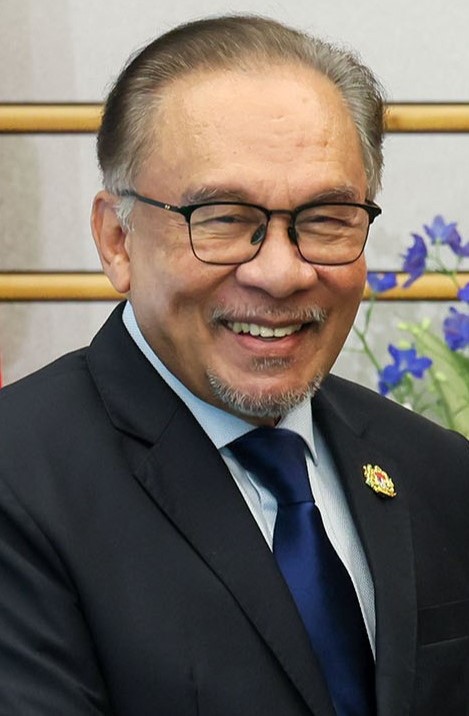
Datuk Seri Dr Adham Baba is banking on more than a decade of service as an elected representative to secure voter support in Pasir Raja, as the Barisan Nasional unveiled its candidate slate for the 16th Johor State Election. The former Health Minister, who held the seat from 2008 to 2018, expressed confidence that his proven track record and enduring ties within the constituency will resonate with residents seeking a capable, familiar advocate at the state assembly level.
Announced formally at the BN candidate declaration ceremony in Johor Bahru, Dr Adham outlined his principal asset as a political contender: continuity grounded in institutional knowledge. During his two-term tenure as Pasir Raja assemblyman, he developed what he characterises as strong, maintained relationships with constituents—a network that he believes remains intact despite his ten-year absence from the state assembly following his transition to federal politics. Such personal connections, he argues, constitute a competitive edge that rivals may struggle to replicate in the compressed timeframe of a state election campaign.
Beyond his assembly years, Dr Adham's political curriculum vitae extends to successive parliamentary victories. He captured the Tenggara federal seat in both the 14th and 15th General Elections, positioning him as a figure of some regional prominence within UMNO's Johor machinery. His prior ministerial appointments—first to the Health portfolio and subsequently to the Science, Technology and Innovation ministry—signal a figure with executive experience and access to federal networks, resources that state candidates can occasionally leverage to benefit their constituencies through funding allocations or policy implementation priorities.
When pressed on the competitive dynamics of the impending campaign, Dr Adham articulated a philosophy centred on grassroots mobilisation intensity. Success in state elections, he believes, accrues disproportionately to parties and candidates capable of executing comprehensive voter outreach operations. The machinery that executes the largest number of face-to-face encounters with voters, he suggested, constructs the most durable electoral advantage. This assessment reflects a traditional campaigning ethos in which organised ground presence and personal interaction remain foundational, even as digital and broadcast media expand their electoral reach.
His policy agenda, should voters grant him the mandate, signals a focus on human capital development. Dr Adham identifies higher education and skills training as primary priorities for the Pasir Raja constituency. This emphasis aligns with broader national conversation around workforce readiness and youth employability—concerns particularly acute in peripheral constituencies where migration to urban centres for tertiary education and professional opportunity remains commonplace. By positioning himself as an advocate for education infrastructure and vocational pathways, Dr Adham attempts to address an anxiety that touches nearly every household with school-age children or young adults navigating the labour market.
The Pasir Raja state seat represents a specific type of electoral challenge within Johor's political terrain. As a seat previously held and now reclaimed by BN, it carries implicit expectations of constituency service continuity. Voters accustomed to a particular representative's accessibility and responsiveness may view a different candidate as representing discontinuity or erosion of established advocacy channels. Dr Adham's pitch, therefore, functions as partial restoration: not a new beginning, but a resumption of interrupted service.
His emphasis on relationship maintenance proves particularly noteworthy given the interval since his assembly tenure concluded. In Malaysian politics, two years represents a substantial period for voter memory to fade and factional dynamics within communities to shift. A decade-long absence, even for a prominent federal role, risks rendering a former local representative somewhat abstracted from contemporary neighbourhood concerns. Dr Adham's confidence that established relationships endure suggests either particularly deep historical roots or potentially optimistic assessment of how effectively bonds survive a protracted absence from daily constituency presence.
The Tenggara UMNO division, of which Dr Adham serves as chief, occupies a hierarchical position within the party apparatus that translates into organizational resources and messaging discipline during campaign periods. Division-level leadership carries authority to coordinate subconstituency mobilization efforts and serves as an intermediary between federal party direction and grassroots implementation. This structural position arguably advantages him relative to lesser-ranked party figures, though it simultaneously ties him more visibly to broader UMNO and BN electoral performance across the state and nation.
For voters in Pasir Raja assessing their choice, Dr Adham embodies a particular category of candidate: the established politician returning to reclaim previous territory. Such figures typically emphasize stability, proven administrative competence, and demonstrated commitment to place—qualities that appeal to voters prioritizing predictability. Conversely, such candidacies invite questions about whether a decade-old achievement constitutes a sufficient platform for renewed public trust, or whether the interval has rendered a former representative insufficiently current in understanding evolving community priorities.
The forthcoming Johor state election will ultimately test whether Dr Adham's analysis of campaign mechanics—that organisational intensity and voter contact frequency determine electoral outcomes—reflects political reality in Pasir Raja specifically. His confidence rests partly on empirical factors: previous electoral success, institutional position, and stated policy commitments. It rests partly also on an assumption that former constituents view returning representatives more favourably than entirely new candidates, and that a division chief's resources genuinely translate into grassroots persuasion at sufficient scale to overcome opposition challengers and any voter impulse toward fresh alternatives after extended absence from the assembly.