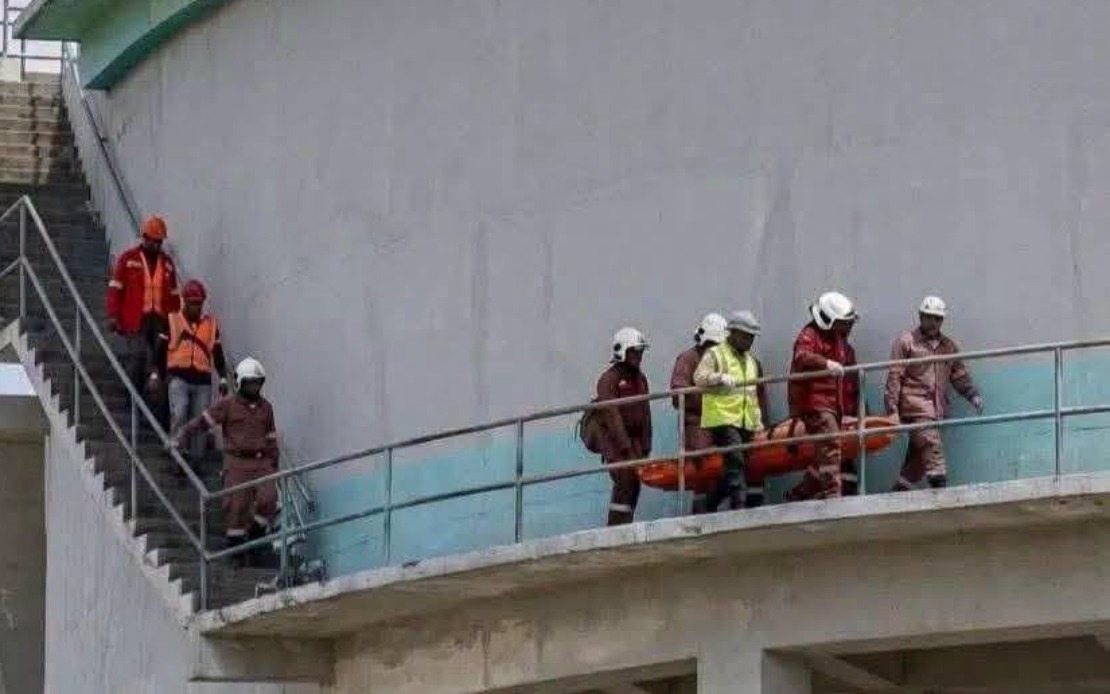
The Department of Occupational Safety and Health (DOSH) has launched a formal investigation into the death of an industrial trainee during water tank cleaning operations at Menara Saujana Perdana 1 in Sungai Buloh, Selangor. The incident occurred on June 16, marking another serious workplace fatality that has drawn the attention of Malaysia's primary occupational safety authority. DOSH director-general Hazlina Yon confirmed that the department's Selangor office has already conducted site inspections and implemented measures to preserve evidence, including issuing formal notices prohibiting any disturbance to the accident location.
The investigation is proceeding under Sections 15, 17 and 18 of the Occupational Safety and Health Act 1994, legal provisions that establish the fundamental obligations of employers, self-employed individuals and other relevant parties to maintain safe working conditions. These sections represent the legislative backbone of workplace safety accountability in Malaysia, making clear that responsibility for worker welfare extends beyond immediate supervisors to encompass all entities involved in orchestrating work activities. The regulatory framework specifically requires that organisations identify hazards, assess associated risks and implement control measures before workers commence labour, particularly in high-risk environments such as confined spaces.
Hazlina emphasised that investigators are currently collecting statements from witnesses to establish a comprehensive account of how the fatal accident unfolded. Should the inquiry uncover breaches of occupational safety legislation, DOSH is prepared to pursue enforcement action commensurate with the severity of violations discovered. This signals the department's commitment to holding responsible parties accountable, a necessary deterrent against preventable workplace deaths that continue to plague Malaysia's industrial sector despite decades of safety regulation.
Confined space work represents one of the most hazardous categories of workplace activity, yet remains inadequately understood and managed across many Malaysian industries. Water tank cleaning exemplifies this danger: such environments often contain residual hazardous substances, limited oxygen, extreme temperatures and restricted means of entry and exit, creating multiple simultaneous hazard exposures. The incident at Menara Saujana Perdana 1 underscores how easily fatal accidents occur when proper protocols are bypassed or inadequately implemented. Hazlina took the opportunity to remind all employers that confined space operations require meticulous preparation, including obtaining appropriate work permits and establishing comprehensive control measures before any worker enters such spaces.
The role of adequate training and competent supervision emerged as a critical theme in DOSH's statement. Industrial trainees and newly hired workers, by definition, possess limited workplace experience and heightened vulnerability to accidents. The regulatory expectation is that employers must provide these individuals with thorough occupational safety and health instruction, comprehensive briefings on specific job hazards and continuous oversight by supervisors possessing genuine competence in confined space operations. This requirement reflects a recognition that vulnerable worker populations require enhanced protection systems, yet many Malaysian employers continue to assign trainees to high-risk activities with minimal preparation or supervision.
Hazlina stressed that employers bear direct responsibility for identifying and rigorously assessing every occupational hazard associated with planned work activities before commencement. This risk assessment process is not bureaucratic formality but rather a fundamental safeguard requiring genuine evaluation of potential harm and implementation of proportionate preventive measures. High-risk activities demand heightened scrutiny and more stringent control measures than routine tasks. Many Malaysian workplace fatalities stem from inadequate or absent risk assessments, suggesting widespread non-compliance with this basic legal requirement across the manufacturing, construction and industrial services sectors.
A particularly significant dimension of DOSH's message concerns the responsibility of employers to ensure that all individuals involved in work activities—whether direct employees, vendors or contractors—receive equivalent safety protection. This principle recognises that outsourced workers, temporary staff and contracted specialists often face heightened risks due to communication gaps, unclear accountability and reduced organisational oversight. In the context of the Sungai Buloh incident, the victim was identified as an industrial trainee, a category of worker whose status may have contributed to insufficient safety provisions. DOSH's emphasis on employer accountability for all worker categories reflects international best practice and legislative intent to eliminate the dangerous practice of treating peripheral workers as less deserving of protection.
The incident highlights broader systemic challenges within Malaysia's occupational safety landscape. Despite existing legislation and regulatory mechanisms, workplace fatalities continue at rates that suggest many employers view safety compliance as a cost burden rather than operational necessity. The prevalence of confined space accidents particularly reflects a gap between regulatory requirements and practical workplace implementation. Many employers lack access to proper confined space rescue equipment, trained rescue personnel or documented safe work procedures. Some simply lack awareness of the specific hazards confined spaces present, particularly the invisible dangers of oxygen deficiency and toxic gas accumulation.
For Malaysian industrial businesses, the DOSH investigation carries important implications. Regulatory enforcement appears to be intensifying, with investigations into fatal accidents now explicitly documenting employer responsibilities and oversight mechanisms. Companies operating in water treatment, tank cleaning, construction and related industrial sectors should immediately audit their confined space work practices against DOSH requirements. This includes reviewing work permits, assessing whether supervisors possess genuine competence, evaluating whether trainees receive adequate preparation and ensuring rescue capabilities are available before work commences. The cost of implementing comprehensive confined space safety systems is invariably less than the human devastation and potential legal consequences following preventable fatalities.
The Southeast Asian regional context adds weight to Malaysia's occupational safety messaging. Neighbouring countries including Indonesia, Thailand and Vietnam face similar challenges managing workplace safety across expanding industrial sectors, where rapid economic development sometimes outpaces regulatory maturity. Malaysia's DOSH investigations and enforcement actions serve as reference points for regional occupational safety practice, demonstrating commitment to preventing repeat incidents through systematic accountability. International labour standards and conventions increasingly establish expectations that developing economies implement rigorous workplace safety systems equivalent to advanced industrialised nations, placing Malaysia under scrutiny regarding whether its regulatory response matches the severity of ongoing workplace fatalities.