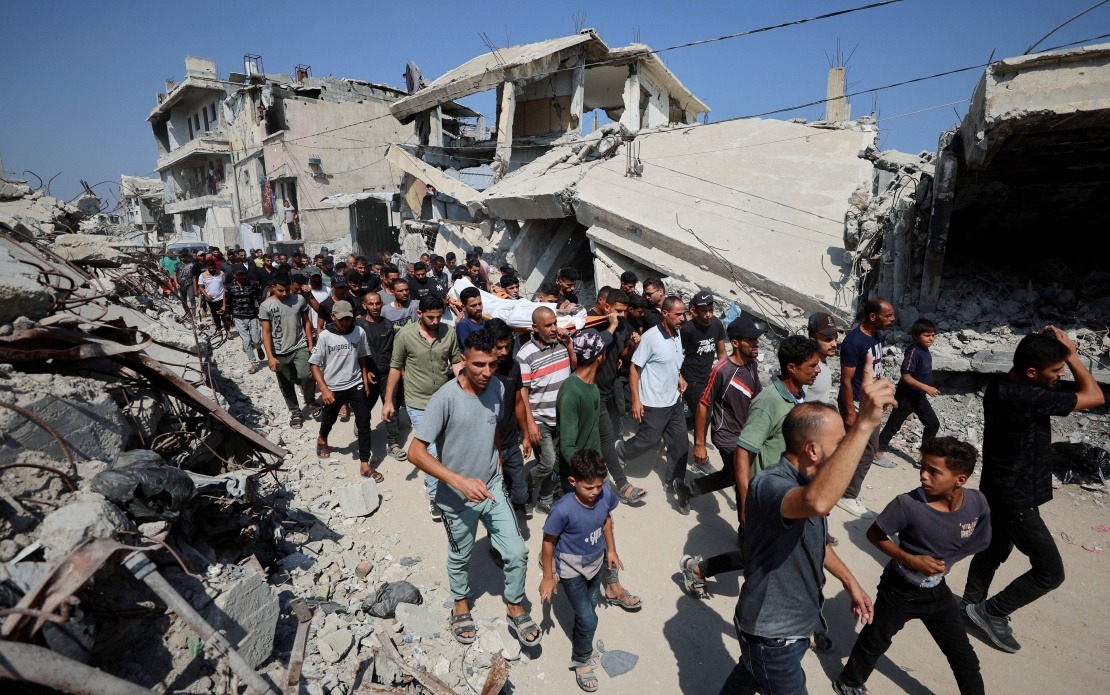
Doctors Without Borders (MSF) has launched a sharp rebuke of the Israeli military's decision to terminate investigations into the deaths of its personnel and their family members in Gaza without initiating formal criminal proceedings. The condemnation, delivered on Thursday, underscores deepening frustration within the international humanitarian community over what MSF characterises as a systematic failure of Israeli accountability mechanisms, particularly in cases involving civilian casualties during the ongoing conflict in the enclave.
The organisation's latest statement arrives nearly two years after it first submitted formal requests for investigations into specific incidents and months after exhausting diplomatic channels by petitioning Israel's High Court of Justice to compel action from the Military Advocate General. MSF's decision to escalate its criticism publicly reflects the exhaustion of quieter diplomatic avenues and signals a significant deterioration in confidence that Israel's internal military justice system can or will address allegations of unlawful conduct in Gaza.
The cases at the centre of MSF's complaints involve multiple incidents across the past year. In November 2023, an attack on an MSF convoy resulted in the deaths of two individuals connected to the organisation, including Alaa Al Shawa, a volunteer actively supporting medical operations at Al-Shifa Hospital. More recently, in February 2024, an assault on an MSF shelter located in Khan Younis claimed the lives of the wife and daughter-in-law of an MSF staff member while leaving six others injured, among them five women and children. These incidents, MSF contends, were not random tragedies but predictable consequences of inadequate protective measures for clearly identified humanitarian personnel and assets.
Central to MSF's accusation is the argument that Israeli forces possessed comprehensive information about the whereabouts and identities of its staff members throughout Gaza. The organisation emphasises that it had shared personnel rosters and locations with Israeli military command and that all MSF vehicles bore distinctive markings designed to prevent precisely such tragic encounters. By presenting this evidence, MSF constructs a narrative suggesting deliberate or reckless disregard rather than genuine error, thereby elevating the legal and moral weight of the allegations from operational accident to potential violation of international humanitarian law.
The human toll extends beyond the specific incidents MSF highlights. Fifteen MSF staff members have lost their lives at the hands of Israeli forces since the conflict's escalation in October 2023, representing a fraction of the estimated 1,700 health care workers killed during the same timeframe across Gaza. This broader context positions MSF's grievance within the larger humanitarian catastrophe unfolding in the territory and suggests systemic rather than isolated problems affecting the medical sector.
For Malaysian and Southeast Asian observers, MSF's position carries particular resonance given the region's emphasis on multilateralism, respect for international law, and humanitarian principles. The organisation's assertion that internal military investigations cannot substitute for independent, impartial accountability reflects universal principles of justice that transcend borders and resonate with Malaysia's historical commitment to supporting international humanitarian frameworks.
MSF's invocation of potential war crimes represents the most serious allegation contained in its statement. By characterising the closure of cases as evidence that "no prospect of accountability within the Israeli legal system" exists, the organisation effectively suggests that pursuing justice through Israeli courts and military tribunals is futile. This conclusion implicitly endorses the need for third-party, potentially international investigative mechanisms or judicial processes removed from direct Israeli control.
The organisation explicitly rejects the notion that military necessity can justify civilian casualties on the scale occurring in Gaza. Its statement that "there is no military objective that justifies the wholesale sacrifice of civilians" articulates a fundamental principle of international humanitarian law while simultaneously challenging Israel's operational and strategic decisions in the enclave. This framing shifts the discussion from isolated incidents to encompassing patterns of conduct.
According to Gaza's Health Ministry, the death toll from the conflict since October 2023 has reached 73,417, with an additional 174,360 individuals wounded. The ministry attributes 1,283 deaths and 4,248 injuries to Israeli violations of truces, suggesting ongoing hostilities even during supposed ceasefire periods. These figures provide the macroscopic context within which MSF's specific grievances exist, illustrating the broader environment of violence and civilian harm permeating the territory.
The implications of MSF's stance extend beyond immediate humanitarian concerns. The organisation's assertion of case closure without criminal investigation raises fundamental questions about the adequacy and impartiality of Israeli military justice mechanisms. International legal scholars and human rights advocates have long debated whether military courts can genuinely police military conduct, particularly in asymmetric conflicts where civilian casualties become routine rather than exceptional.
For the international humanitarian system, MSF's condemnation signals potential erosion of confidence in self-policing mechanisms by any military force. If one of the world's most respected humanitarian organisations concludes that Israeli internal processes cannot deliver justice, this conclusion may influence how other governments and institutions approach accountability for their own military conduct, potentially establishing precedents that weaken overall compliance with international humanitarian standards.
MSF's call for impartial external investigation reflects growing momentum within certain sections of the international community toward mechanisms that operate independent of any single nation's control. Whether through United Nations fact-finding missions, international criminal court investigations, or other multilateral structures, the organisation's stance aligns with broader advocacy for accountability mechanisms that transcend national sovereignty in cases involving alleged systematic civilian harm.
The closure of cases without investigation also raises strategic questions about deterrence and future compliance with international humanitarian law. If military personnel believe their actions will be examined only by colleagues within their own chain of command, with ultimate closure possible without criminal proceedings, the incentive structure for restraint and adherence to civilian protection protocols may weaken substantially.

