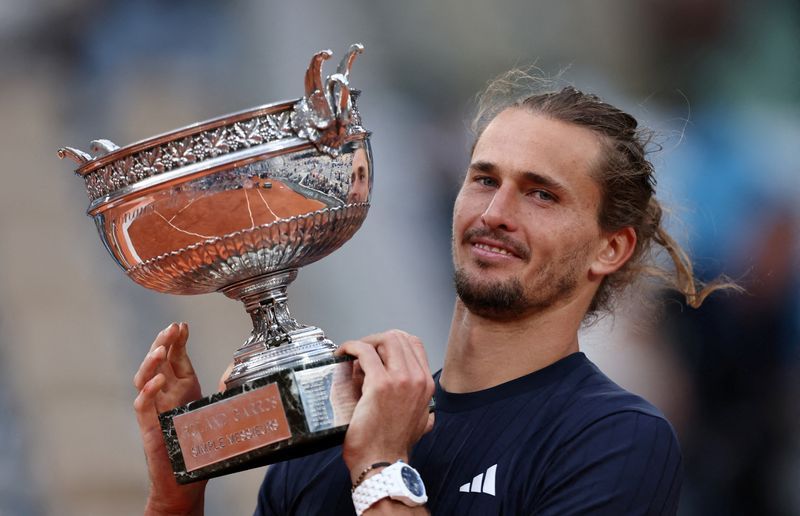
Novak Djokovic's pursuit of an unprecedented 25th Grand Slam title has rarely looked more attainable than at the forthcoming U.S. Open, where his two fiercest rivals have been conspicuously weakened by injury and long absences. The Serbian champion faces a dramatically altered competitive landscape at Flushing Meadows, with Jannik Sinner sidelined by a knee complaint and Carlos Alcaraz still working his way back to form after more than four months away from competition due to a wrist injury that casts uncertainty over his readiness. Yet despite these favourable circumstances, Alexander Zverev has emerged as a formidable obstacle to Djokovic's quest to break clear of Margaret Court's all-time record, having finally captured his maiden Grand Slam at the French Open before reaching the Wimbledon final to cement his credentials as a serious contender in New York.
For the first time since his 2023 triumph at the same venue, Djokovic finds himself with a genuine pathway through the draw. The 39-year-old has spent much of the intervening period watching Alcaraz and Sinner dominate men's tennis, combining to claim 10 of the last 11 major titles and repeatedly frustrating the Serb's attempts to match Court's record. Across the most recent six Grand Slams, this formidable pair have defeated Djokovic five times, leaving his challenge to break through increasingly desperate. His latest defeat came at the Australian Open this year when Alcaraz prevailed in the final, a particularly bitter loss given that it represented arguably his most realistic opportunity to advance the record in recent times.
Yet despite the apparent odds stacked against him and the advancing years, Djokovic carries an unwavering conviction into New York. In a documentary released ahead of the year's final major, he invoked the Serbian concept of "inat"—a distinctive cultural force rooted in stubborn defiance when facing doubt and adversity. This mentality, he explained, embodies precisely the psychological weapon he employs when the broader world counts him out. For Djokovic, the doubters have become fuel rather than detractors, and this tournament represents another opportunity to channel that inner resolve into tangible results on the court.
Alcaraz's extended absence from competition raises genuine questions about his physical conditioning and competitive sharpness, notwithstanding his enviable record of producing peak performances when tournaments matter most. The defending champion's reputation for rising to the occasion on the sport's grandest stages remains largely intact, yet four months away from match play inevitably creates uncertainty. His return will be scrutinised carefully, particularly given that his wrist injury could resurface under the sustained pressure of a Grand Slam draw. Should Alcaraz fail to find his rhythm early, Djokovic's path becomes significantly clearer.
Roger Federer, the Swiss legend who understands better than most what it takes to sustain excellence across decades, recently offered an assessment that underscores Djokovic's enduring threat. Federer noted that whenever Djokovic enters a major championship, he commands genuine consideration for the title, having demonstrated his capacity to win at the highest levels across every significant venue. As long as Djokovic remains in the draw, Federer reasoned, he cannot be dismissed—a philosophy that seems to fuel Djokovic's continued participation despite the physical rigours of professional tennis at his age.
Zverev's breakthrough carries considerable significance for the tournament's narrative. The German finally shed his unwanted reputation as a Grand Slam underachiever by winning Paris, then reinforced that achievement with his Wimbledon final appearance. His presence in the draw represents a genuine obstacle that Djokovic cannot overlook, particularly given Zverev's recent demonstrated ability to sustain excellence across multiple rounds. The question remains whether Zverev can maintain this upward trajectory at Flushing Meadows, where his record has historically lagged behind other major venues.
The American contingent has strengthened considerably, with Ben Shelton capturing the Canadian Open title just before the Open and establishing himself as a credible homegrown challenger. Shelton's momentum proved decisive in Montreal, where he recovered from a disappointing Wimbledon first-round exit to claim the significant Canadian trophy. Yet questions persist about his capacity to maintain excellence throughout an extended Grand Slam run, a concern that veteran Andy Roddick has publicly highlighted. Roddick, the 2003 U.S. Open champion, emphasises that Shelton must navigate the opening week successfully to genuinely contend in the latter stages, an area where the young American has struggled during major championships this season.
Frances Tiafoe and Taylor Fritz provide additional American hope for ending the 23-year drought without a homegrown men's champion. Tiafoe finished as runner-up at Cincinnati, demonstrating form at crucial moments, while Fritz reached last year's final and will harbour legitimate aspirations of converting that experience into a breakthrough title. Both players carry the weight of national expectation, though Djokovic's presence and the formidable international field suggest their paths to glory will prove severely challenging.
Beyond the established contenders, rising talents such as Arthur Fils and Rafael Jodar will seek to announce themselves on the U.S. Open stage, while Felix Auger-Aliassime attempts to build upon his semifinal appearance from the previous year. The Canadian previously achieved his joint-best major result at Flushing Meadows, and another deep run would represent significant progress in his career trajectory. These secondary storylines add texture to a draw that remains dominated by Djokovic's historic quest.
The convergence of circumstances—Sinner's injury, Alcaraz's rehabilitation period, and Zverev's recent confirmation as a legitimate major threat—creates an unusually unpredictable tournament landscape. Djokovic enters with legitimate claims to the title despite his limited preparation and residual physical concerns. For Malaysian and Southeast Asian followers of professional tennis, this Open chapter potentially represents a defining moment in determining whether the Serbian legend can finally break Court's record, with ripples extending across the sport's generational timeline.

