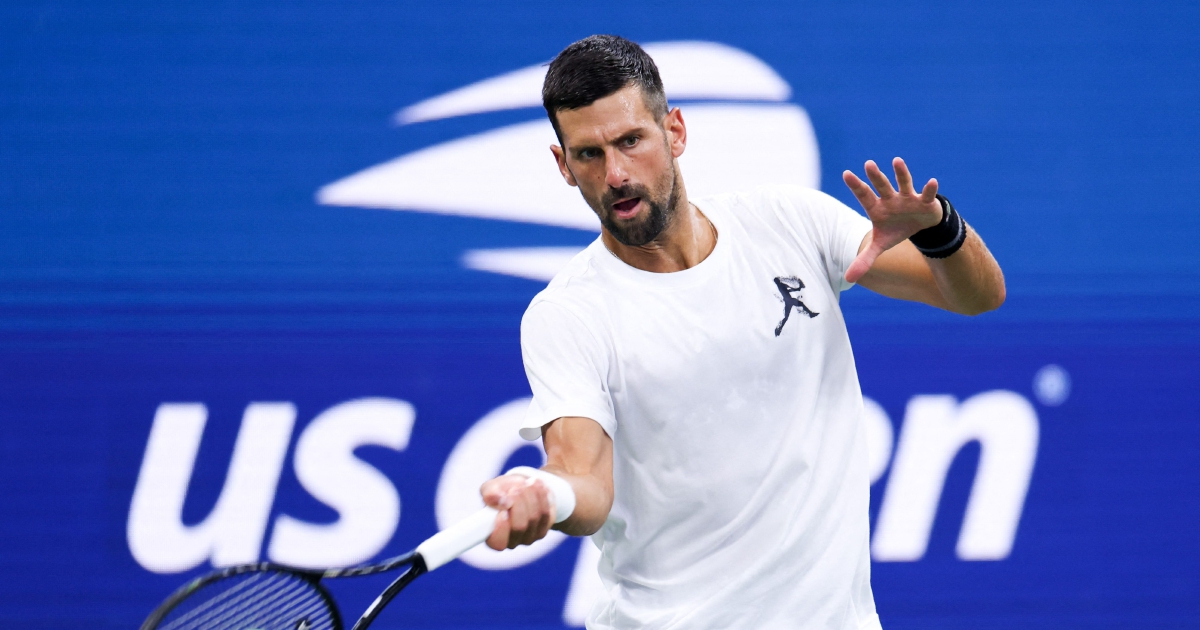
Novak Djokovic enters the upcoming US Open with singular purpose: to become the outright holder of tennis's most prestigious individual achievement by capturing his 25th Grand Slam title. The Serbian champion currently shares the record with Margaret Court at 24 major championships, a distinction he clinched two years ago when he won the 2023 US Open. Since that moment, the pursuit of history has defined his approach to professional tennis, driving his training and tournament selections.
The quest for record-breaking number 25 carries profound symbolic weight in the sport. Court's haul, accumulated between 1960 and 1973, stood unchallenged for decades as the zenith of Grand Slam achievement across all eras of professional and amateur tennis. When Djokovic equalled that figure, he joined an extraordinarily exclusive group—Pete Sampras, Roger Federer, Rafael Nadal, and Court herself—in the pantheon of tennis immortals. Yet equality alone has never satisfied the 37-year-old Serb, whose competitive drive remains as fierce as when he first broke onto the professional circuit two decades ago.
Djokovic's preparation for this year's tournament reflects the meticulous approach that has characterised his career. The world's top-ranked player has structured his schedule to arrive in peak condition, balancing tournament competition with targeted rest periods. His recent performances on the hardcourt circuit, tennis's most demanding surface category, indicate a player laser-focused on the ultimate prize. The US Open's unforgiving conditions at Flushing Meadows—where temperatures soar and rallies extend to brutal lengths—suit Djokovic's relentless baseline game perfectly.
For Malaysian and Southeast Asian tennis enthusiasts, Djokovic's continued dominance represents a fascinating study in athletic longevity. At an age when most elite players have retired, he remains not merely competitive but aspirational in his ambitions. This longevity mirrors the regional appetite for resilience narratives—stories of perseverance that resonate across different sporting cultures. Djokovic's sustained excellence challenges conventional wisdom about athletic decline, suggesting that intelligent training, mental fortitude, and proper recovery protocols can extend peak performance well into the late thirties.
The broader context of Grand Slam records has shifted dramatically in recent years. Rafael Nadal, who himself reached 22 Grand Slam titles, has faced recurrent injury complications that have reduced his tournament participation. Federer, the previous record-holder at 20 majors, retired in 2022. This changing landscape means Djokovic potentially faces fewer formidable challengers than he did even five years ago, though the emergence of younger talents such as Jannik Sinner and Carlos Alcaraz ensures competitive depth remains intact.
For the international tennis calendar, a Djokovic triumph at this year's US Open would represent another remarkable chapter in a career already exceeding what most observers considered probable longevity. The Serbian has won the US Open four times previously—in 2011, 2015, 2018, and 2023—demonstrating particular comfort with the tournament's rhythms and conditions. His familiarity with New York courts provides substantial advantage over opponents encountering the venue's specific characteristics for limited occasions.
The psychological dimension of chasing a singular achievement cannot be understated. Djokovic has spoken openly about his motivation to cement his legacy definitively, to move beyond shared records into unambiguous historical position. This psychological clarity can either fortify a competitor or create dangerous pressure. The player's track record suggests he channels such intensity productively, transforming it into tactical precision and mental resilience during crucial moments.
Regionally, Djokovic's pursuit matters beyond pure tennis statistics. Grand Slam dominance attracts global media attention and sponsorship investment, elevating the sport's commercial profile. For developing tennis nations across Southeast Asia seeking to build competitive infrastructure, the example of sustained excellence at the highest level provides instructional value. Djokovic's combination of technical mastery, physical conditioning, and mental discipline offers a template that young regional players study and attempt to replicate.
The competition at this year's US Open, however, should not be underestimated. Sinner, the Australian Open champion, has demonstrated formidable capability on hardcourts. Alcaraz, despite recent challenges, retains his status as the ATP Tour's most dangerous young prospect. These competitors will push Djokovic to his limits, preventing any assumption of inevitable victory. The Serb's preparation and readiness must be translated into actual tournament performance across multiple rounds against varied opponents.
Should Djokovic succeed in claiming his 25th Grand Slam, the achievement would transcend mere statistics. It would represent the culmination of a two-year focused pursuit, validating his decision to continue competing at the sport's highest level despite approaching 40. The symbolic significance—breaking Court's record and establishing a new benchmark for Grand Slam dominance—would resonate throughout global tennis and beyond into broader sporting culture where longevity and sustained excellence increasingly capture the imagination.

