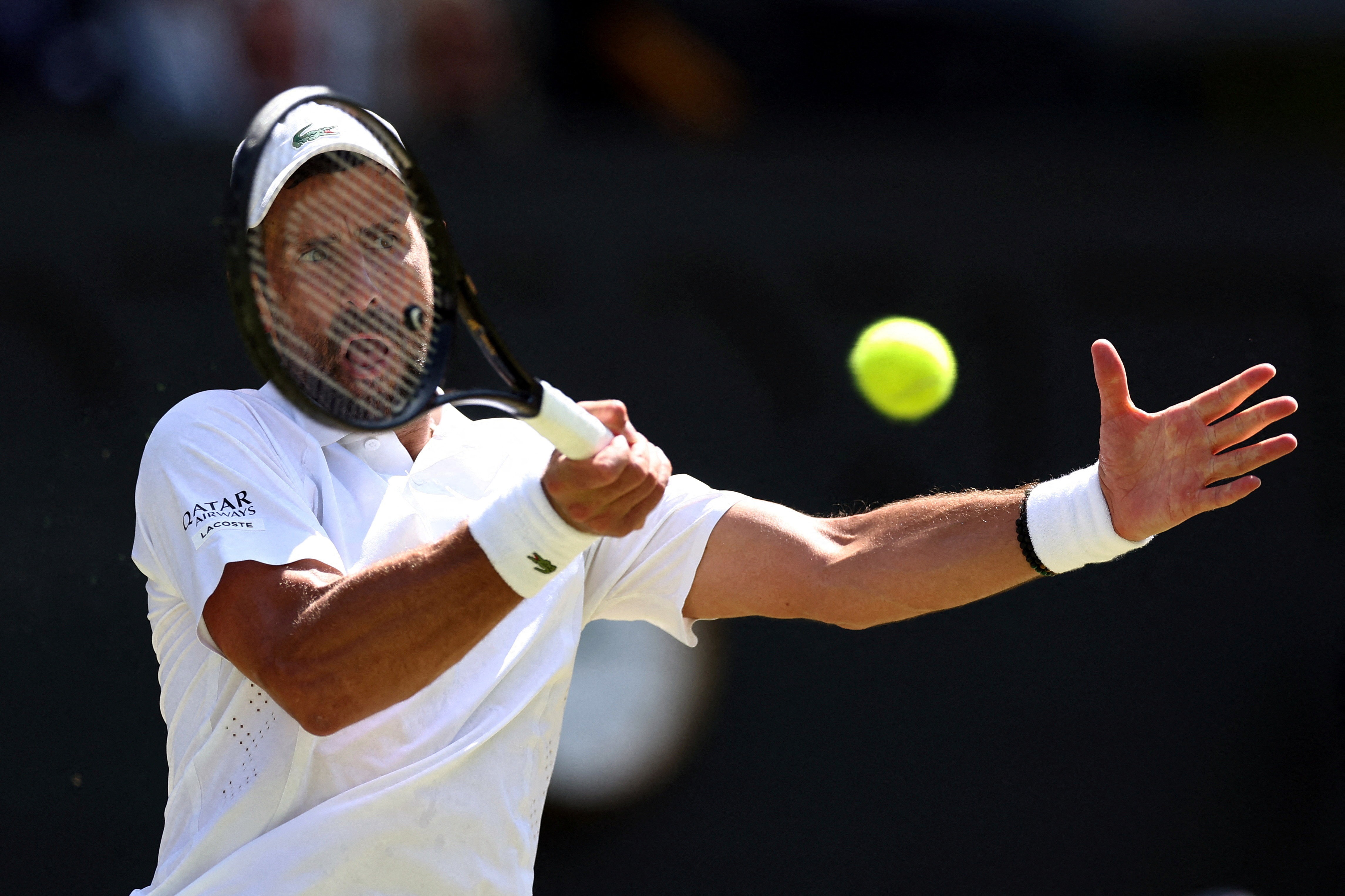
Novak Djokovic has advanced to the Wimbledon semifinals after prevailing in the tournament's longest quarterfinal encounter, defeating Canada's Felix Auger-Aliassime in a five-set epic that tested both players' physical and mental reserves. The 39-year-old Serbian sealed a 7-6 (12-10), 3-6, 6-3, 6-7 (4-7), 7-6 (10-4) triumph in five hours and 15 minutes on Centre Court, crossing the finish line just six minutes before the venue's 11 pm curfew. The victory sets up a highly anticipated semifinal clash with defending champion Jannik Sinner, one of the tournament's most formidable contenders this year.
The match was marked by considerable tension between Djokovic and tournament referee Denise Parnell over court conditions and scheduling protocols. The flashpoint erupted when the players were level at one set apiece around 7.40 pm, and Parnell arrived to inform them that Centre Court's retractable roof would be closed. Djokovic vehemently protested the decision, arguing that sufficient daylight remained to complete another entire set outdoors. The Serbian champion referenced his earlier first-round match against Wu Yibing, where the roof had remained open until approximately 8.30 pm, and questioned the consistency of tournament rulings. His frustration was evident as he challenged Parnell's interpretation of the guidelines, declaring that Wimbledon's fundamental identity as an outdoor tournament was being compromised.
Parnell defended her decision by referencing a cautionary precedent from Sinner's fourth-round encounter with Shintaro Mochizuki, during which the roof had to be deployed mid-set due to deteriorating light conditions. However, Djokovic dismissed this comparison somewhat dismissively, stating his indifference to how Sinner's match had unfolded and emphasizing that only his current contest mattered. His objections proved somewhat prophetic when Auger-Aliassime subsequently held serve for 14 minutes during the second game of the third set, suggesting that artificial lighting conditions might indeed have created tactical disadvantages. The exchange illuminated the ongoing tension between preserving Wimbledon's traditional outdoor character and implementing practical safeguards to maintain match continuity and fairness.
The physical demands of the match were compounded by an injury scare that afflicted Djokovic early in proceedings. The Serbian required medical attention towards the conclusion of the opening set after appearing to suffer a slight left calf strain, yet he persevered to claim the set through a marathon tie-break despite visible discomfort with each serve. This early setback raised questions about his capacity to sustain the gruelling pace across five sets, particularly given his advancing age relative to his opponents. Nevertheless, Djokovic demonstrated remarkable resilience and mobility improvement as the match progressed, systematically adjusting his game to neutralise Auger-Aliassime's considerable strengths.
Auger-Aliassime, seeded third in the tournament, entered the quarterfinal with an impressive defensive record, having surrendered serve only once throughout the fortnight. However, Djokovic's tactical adjustments eventually penetrated this fortress when he broke the Canadian to love during his march toward securing the third set. The momentum swung decisively thereafter, with both players trading breaks in the fourth set before Auger-Aliassime claimed the resulting tie-break with conviction. The pattern established a template for the decisive fifth set, which escalated into a first-to-10 points shootout—a gruelling test of nerve, endurance, and precision that ultimately favoured the more experienced competitor.
Djokovic's victory reflected not merely technical prowess but exceptional psychological fortitude under extreme pressure. Speaking after the match, he attributed his triumph to emotional resilience and exceptional racket control during moments of intense tension. He acknowledged that the encounter represented precisely the calibre of competition that motivates him to continue playing at the highest level. His reflection that he wished the contest had been scheduled as the final underscored the physical toll of the extended match, with legitimate concerns about subsequent recovery and his capacity to perform at peak efficiency in the semifinal against Sinner.
The implications of this quarterfinal extend beyond individual achievement, highlighting the demanding physical requirements of modern professional tennis and the organisational challenges facing major tournaments. Wimbledon's scheduling and curfew protocols must balance fairness, player welfare, spectator experience, and the maintenance of the event's traditional character. The controversy surrounding roof deployment demonstrates that even at sport's highest levels, procedural consistency and transparent decision-making remain contested issues. For Southeast Asian tennis enthusiasts and professionals developing their games at regional academies, Djokovic's performance—particularly his ability to overcome injury concerns and sustain competitive intensity across five hours—offers instructive lessons about resilience and tactical adaptability.
The semifinal against Sinner represents a compelling narrative arc, pitting experience and proven tournament expertise against the rising generation of elite competitors. Sinner, as defending champion, carries both the advantage of recent Wimbledon success and the burden of expectations that accompany defending a major title. Djokovic's capacity to navigate this quarterfinal gauntlet despite physical setbacks and emotional strain suggests he remains formidable opposition, though questions regarding physical recovery and match fatigue may influence the semifinal dynamics. The match also illuminates broader tennis governance issues that resonate throughout the sport's international ecosystem, from Grand Slam administration to regional tournament management in Southeast Asia.
Djokovic's pursuit of an eighth Wimbledon title adds urgency to his campaign, as does the broader context of his career longevity at elite levels. Few players in tennis history have sustained competitive excellence across such extended periods, and Djokovic's advancement through this particularly gruelling encounter demonstrates that his appetite for major tournament success remains undiminished. For Malaysian and regional tennis development programmes, observing how elite athletes navigate injury management, psychological pressure, and fatigue across extended matches provides valuable insights into professional sporting practice. The journey continues toward the final, though both Djokovic and observers of his campaign must contemplate whether the physical exertion required in this quarterfinal will fundamentally affect his semifinal performance against the formidable Sinner.

