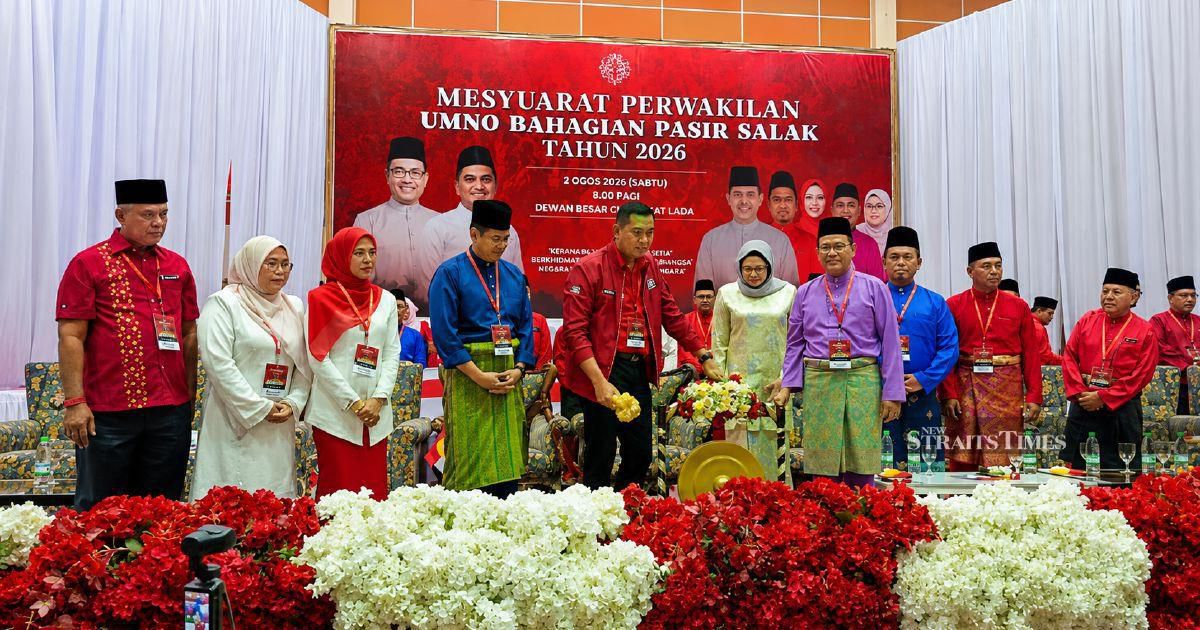
Umno's top youth leader has made a significant intervention into how his party navigates its evolving political partnership with Perikatan Nasional, arguing that grassroots voices must inform decisions about seat allocations ahead of future election cycles. Speaking in Pasir Salak, Datuk Dr Muhamad Akmal Saleh emphasized that the perspectives held by Umno's divisional leadership structures deserve genuine consideration as the party operationalizes its political understanding with PN.
The statement carries weight beyond its immediate context. Malaysia's electoral politics operate on the principle that constituency-level party structures possess crucial knowledge about local political terrain, voter sentiment, and incumbent strength—intelligence that national-level negotiations often overlook. By advocating for grassroots input, Akmal has implicitly acknowledged tensions that frequently emerge when party headquarters and division leaders diverge on strategic priorities, a recurring challenge within both BN and opposition coalitions.
The BN-PN arrangement itself represents a significant realignment in Malaysian politics. After years of intense competition and mutual hostility, particularly following the 2022 elections, these two major blocs have moved toward cooperation. This shift has profound implications for how power is distributed within their respective parties and how they present themselves to voters. The seat-sharing question sits at the heart of this rapprochement—it determines which politicians contest which seats, which affects internal party hierarchies, ambitions, and the coalition's credibility with voters who expect rational governance rather than factional compromise.
Umno's position is particularly sensitive because the party has historically relied on its federal machinery and divisional networks to maintain internal discipline while accommodating multiple competing interests. The party encompasses diverse regional strongholds, generational cohorts with differing ideological orientations, and competing leadership factions. Any seat allocation formula imposed without consulting divisions risks creating grievances that could undermine campaign effectiveness or party cohesion during critical periods.
Division leaders occupy a distinct niche within Umno's organizational hierarchy. They function as intermediaries between national policy frameworks and grassroots party membership, serving as bridges between top leadership and the thousands of ordinary members who volunteer in campaigns. Their perspectives on seat feasibility and local electoral dynamics often prove more accurate than assessments conducted at party headquarters, particularly in constituencies experiencing demographic shifts or where particular candidates face personal popularity challenges or liabilities.
The Pasir Salak setting for this statement also merits attention. As a Perak constituency, it lies within a state where BN and PN have competed intensely for dominance, making it a barometer for how these coalitions manage their partnership. Perak's political volatility—it has experienced multiple state government collapses and shifting alliances—underscores why grassroots input matters. Politicians operating in such fluid environments possess real-time understanding of electoral dynamics that extrapolated national figures cannot capture.
Akmal's intervention also signals internal discussions within Umno about how the party manages its relationship with PN without sacrificing internal equity or member morale. The youth wing, which he chairs, comprises younger party members increasingly concerned with modernizing Umno's image and governance practices. By championing divisional input, he positions the youth wing as advocating for more democratic, bottom-up decision-making rather than top-down imposition—a narrative that resonates with contemporary expectations about organizational legitimacy.
The practical implications of respecting divisional perspectives could reshape seat negotiations significantly. If divisions carry genuine weight, the allocation process becomes more transparent and consultative, potentially building stronger support among local party operatives. Conversely, divisions might amplify particularistic demands that complicate broader coalition mathematics, requiring skilled negotiation between national strategists and grassroots constituencies.
For Malaysian voters, this debate reflects deeper questions about how political coalitions function. Do they represent genuine partnerships among constituent parties, or arrangements imposed by leadership elites who prioritize maintaining power over democratic consultation? Akmal's position suggests a commitment to the former model, though implementation will ultimately determine whether this represents substantive reform or rhetorical positioning.
The BN-PN understanding itself remains a work in progress. Beyond seat allocation, these blocs must clarify how they coordinate on policy matters, support each other's politicians during parliamentary votes, and present themselves as a coherent alternative to opposition blocs. Umno's internal dynamics will significantly influence this process, as the party remains the largest component within BN and plays crucial roles in multiple state governments.
As divisions consider seat allocation proposals, their responses will likely reveal which constituencies face the most competitive environments, which politicians command genuine grassroots support versus those dependent on factional backing, and which areas both coalitions view as winnable versus conceding grounds. This intelligence will ultimately determine whether the BN-PN arrangement translates into electoral advantages or simply reflects existing power distributions masked by new language.
Moving forward, the sustainability of the BN-PN partnership may depend substantially on whether national leadership honors commitments to grassroots consultation or treats such pledges as tactical statements abandoned once negotiations conclude. Akmal's emphasis on respecting divisional stances establishes a benchmark against which Umno's leadership will be measured during the actual implementation phase.

