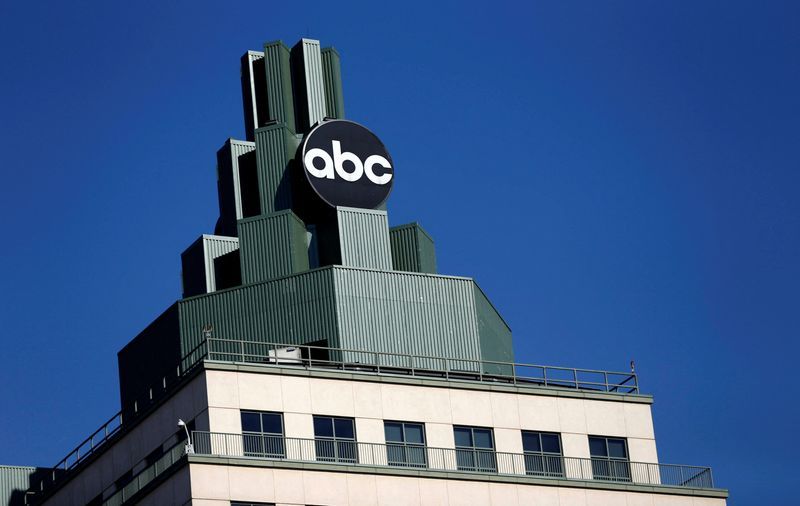
Disney and its ABC division mounted a legal challenge against the Federal Communications Commission on Tuesday, seeking to block an accelerated review of broadcast licenses for eight ABC stations. The lawsuit centres on allegations that the Trump administration is weaponising regulatory authority to punish a media outlet that has resisted political pressure and maintained independent editorial control. This confrontation between a major media conglomerate and federal regulators represents a significant test of free speech protections for broadcasters in the modern political landscape.
The core complaint filed in U.S. District Court in Washington characterises the FCC's actions as retaliatory and unconstitutional. Disney and ABC argue that the agency is violating their First Amendment rights by leveraging its regulatory power against programming and editorial decisions that the administration finds objectionable. The lawsuit specifically contends that the FCC is attempting to coerce the network into abandoning content or making decisions based on political preferences rather than journalistic merit, describing the government's conduct as an "extraordinary assault on free speech."
President Trump has shown a consistent pattern of hostility toward media organisations whose coverage he perceives as unfavourable, repeatedly calling on broadcasters to cancel programmes critical of his administration or featuring hosts and commentators he dislikes. The latest licensing threat follows a two-year arc of escalating tensions between the president and Disney, with Trump's most recent demand for ABC to lose its licenses occurring just last month after the network declined to broadcast a prime-time address on elections. This weaponisation of regulatory oversight to influence editorial decisions raises fundamental questions about the relationship between executive power and press freedom that extend far beyond this single dispute.
FCC Chair Brendan Carr, who ordered the early licence reviews in April, has justified the agency's actions on different grounds. The FCC has stated that its investigation concerns whether Disney's diversity policies constitute unlawful discrimination, a characterisation the company categorically denies. Notably, these licence renewals were not originally scheduled for review until October 2028, making the accelerated timeline extraordinary given that the FCC had not ordered such early reviews in more than fifty years prior to April's decision. Carr has framed the inquiry as part of a broader effort to enforce public interest obligations for broadcasters using publicly owned airwaves, claiming the FCC has inadequately deployed these standards for decades.
In a statement to Reuters, Carr suggested that Disney's legal action indicates anxiety about evidence emerging during the investigation, though he stopped short of confirming whether the FCC would ultimately proceed with licence revocation proceedings. "We haven't made a decision about when we're making a decision," he said, promising that the agency would follow legal and factual standards as it moves forward. This ambiguous posture, combined with the explicit political statements from Trump calling for ABC's licenses to be revoked, creates the appearance that regulatory determinations are being influenced by executive branch demands.
The timing of regulatory actions has compounded concerns about political motivation. The accelerated review was ordered just one day after Trump publicly urged ABC to dismiss late-night host Jimmy Kimmel, a television personality known for satirical commentary on the president. Additionally, the FCC has opened a separate investigation into ABC's daytime programme "The View," which regularly discusses American politics, examining whether the show complies with rules requiring broadcasters to provide equal opportunities to political candidates. Disney has noted that since February, "The View" has not invited any political candidates to appear, citing explicit awareness of the FCC's scrutiny and what the company characterises as a pressure campaign.
Democratic FCC Commissioner Anna Gomez has publicly condemned the agency's actions, describing them as a "campaign of censorship and control" designed to punish speech the administration dislikes. Her statement underscores the partisan dimension of the dispute and suggests that regulatory authority has become entangled with partisan political objectives. The threat of licence revocation, while theoretically rare, functions as a powerful coercive tool because broadcast stations depend entirely on FCC approval to operate. Even the credible threat of losing a licence can influence editorial and programming decisions, effectively giving the government leverage over content choices despite the broad First Amendment protections that networks nominally enjoy.
The legal action Disney and ABC initiated includes a request for U.S. District Judge Loren AliKhan to issue a temporary restraining order halting licence renewal proceedings immediately. The company argues that expedited judicial intervention is necessary because the public comment period has already concluded and the FCC could move forward with further action at any moment. Judge AliKhan has directed both parties to propose a schedule for considering the restraining order request and instructed the FCC to notify her if it advances toward revocation proceedings, signalling judicial awareness of the case's constitutional implications.
This confrontation illustrates a broader tension between regulatory authority and media freedom that holds particular relevance for Southeast Asian democracies. Malaysia and other regional governments have faced criticism for using licensing regimes, spectrum allocation decisions, and regulatory enforcement to influence media coverage. The Disney-FCC dispute demonstrates how even in a mature democracy with strong constitutional protections, the combination of regulatory authority and executive pressure can create a chilling effect on editorial independence. The outcome of this case may establish precedents affecting how broadcasters globally navigate the relationship between government regulators and content decisions.
The White House declined immediate comment on the lawsuit, though Trump's documented public statements provide clear evidence of his administration's objectives regarding ABC's broadcasting license. The case tests fundamental principles about whether government can leverage regulatory power for purposes that would be clearly unconstitutional if pursued directly through legislation or executive order. If courts determine that the FCC's actions were motivated primarily by political retaliation rather than legitimate regulatory concerns, the decision could significantly constrain executive and agency power to weaponise licensing regimes. Conversely, if the FCC successfully maintains that its investigation addresses genuine regulatory issues distinct from political motivations, the decision could validate a broader government role in policing broadcaster conduct beyond traditional public interest standards.

