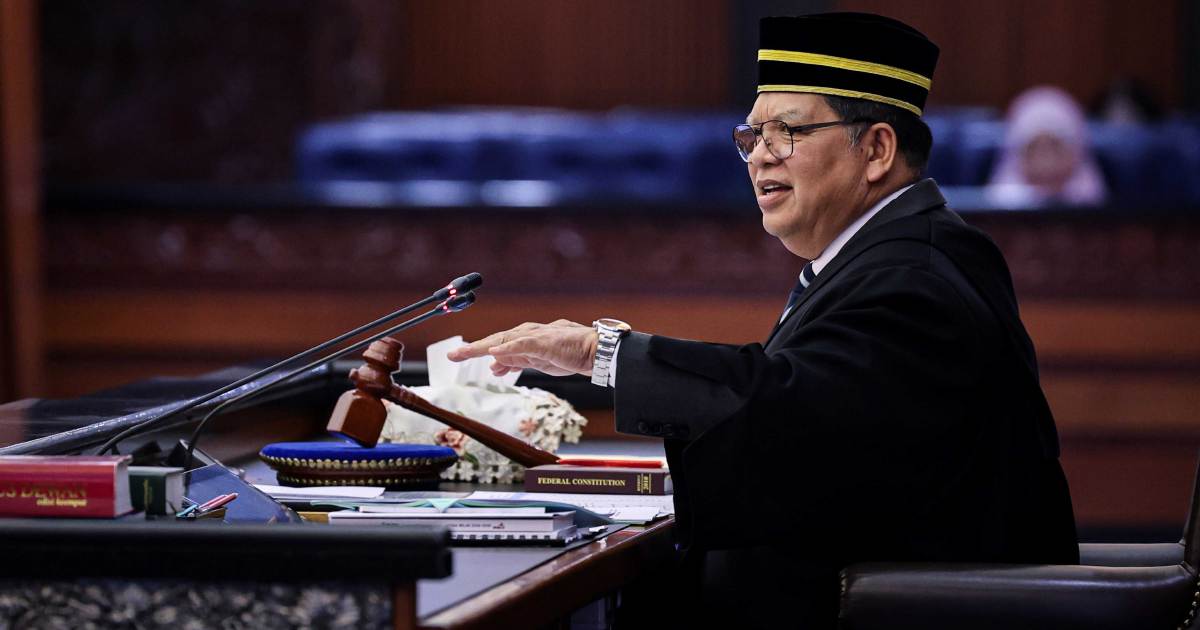
Dewan Rakyat Speaker Tan Sri Johari Abdul has issued a pointed reminder to members of parliament that attendance at legislative sittings is a fundamental responsibility that cannot be casually dismissed, particularly when representatives lack legitimate justification for their absence from the chamber.
The Speaker's intervention underscores a persistent challenge facing Malaysia's legislative body: maintaining quorum and ensuring that elected representatives fulfil their constitutional duties to participate in parliamentary proceedings. This directive carries particular weight given the Speaker's authority to enforce parliamentary conduct and maintain institutional standards within the lower house.
Absent MPs create significant operational and symbolic problems for the institution. When lawmakers fail to show up without valid reasons, it undermines the legislative process, delays important business, and sends an unfavorable message to the public about the commitment of elected officials to their mandates. The issue becomes more acute during critical parliamentary sessions dealing with budget allocations, legislative amendments, or matters of urgent national importance where full participation is essential.
The Speaker's statement reflects growing concern about attendance patterns that have plagued recent parliamentary sittings. Whether driven by competing constituency demands, health considerations, or simple neglect, unexplained absences erode public confidence in parliament and raise questions about the dedication of those elected to serve. Tan Sri Johari's intervention signals that such behaviour will not be tolerated without proper accountability mechanisms in place.
Matters constituting valid reasons for parliamentary absence typically include serious illness, urgent family emergencies, official government duties that cannot be rescheduled, or approved leave by the Dewan Rakyat. These categories provide flexibility for genuine circumstances while preventing abuse of the system. The Speaker's emphasis on the validity requirement suggests that casual excuses or undocumented absences will face closer scrutiny going forward.
For Malaysian readers observing parliamentary proceedings, this reminder highlights an important governance principle: elected representatives are accountable not merely for their votes and statements, but for their presence and engagement with the legislative process itself. Constituents who elected these MPs deserve to see their representatives actively participating in parliament, defending local interests, and holding government to account across the breadth of issues affecting Malaysian society.
The enforcement of attendance standards also reflects broader institutional health within Southeast Asia's legislatures. Many regional parliaments grapple with similar attendance challenges, making this a relevant concern across the region. Countries seeking to strengthen democratic institutions and legislative effectiveness must address fundamental issues of member participation and accountability before tackling more complex policy matters.
Parliamentary discipline extends beyond simple attendance numbers to encompassing broader behavioural standards. When speakers invoke their authority to correct attendance lapses, they establish precedent that parliament operates according to established rules applying equally to all members regardless of party affiliation or seniority. This consistency strengthens institutional legitimacy and reinforces public perception that parliament functions according to principled standards rather than partisan convenience.
The timing of the Speaker's statement suggests it responds to observable patterns during recent sittings rather than representing a theoretical concern. Rising absences during parliamentary sessions would prompt leadership intervention aimed at course-correction before the situation deteriorates further. Such proactive messaging serves as both reminder and warning: MPs should expect increased attention to attendance records and consequences may follow persistent violations.
For opposition and government-aligned MPs alike, the message is identical: parliamentary responsibility is non-negotiable. This universality actually strengthens the Speaker's position, as no group can credibly argue special treatment or selective enforcement. When institutional authorities apply standards uniformly, they enhance their moral authority and reduce opportunities for critics to dismiss corrections as partisan retaliation.
Moving forward, this directive likely means tighter documentation of absences, clearer criteria for what constitutes valid reasons, and potentially increased consequences for repeat offenders. Some parliaments employ mechanisms such as publicising attendance records or linking attendance to committee assignments and resource allocation, creating tangible incentives for regular participation.
Ultimately, the Speaker's reminder reflects the fundamental contract between parliament and the public: elected members accept responsibility for regular participation in the institution that grants them authority and resource. When MPs shirk this basic obligation, they breach public trust and weaken the legitimacy of parliament itself. Tan Sri Johari Abdul's intervention signals that such breaches will meet institutional resistance, reinforcing standards essential for parliament to function effectively and maintain public confidence.