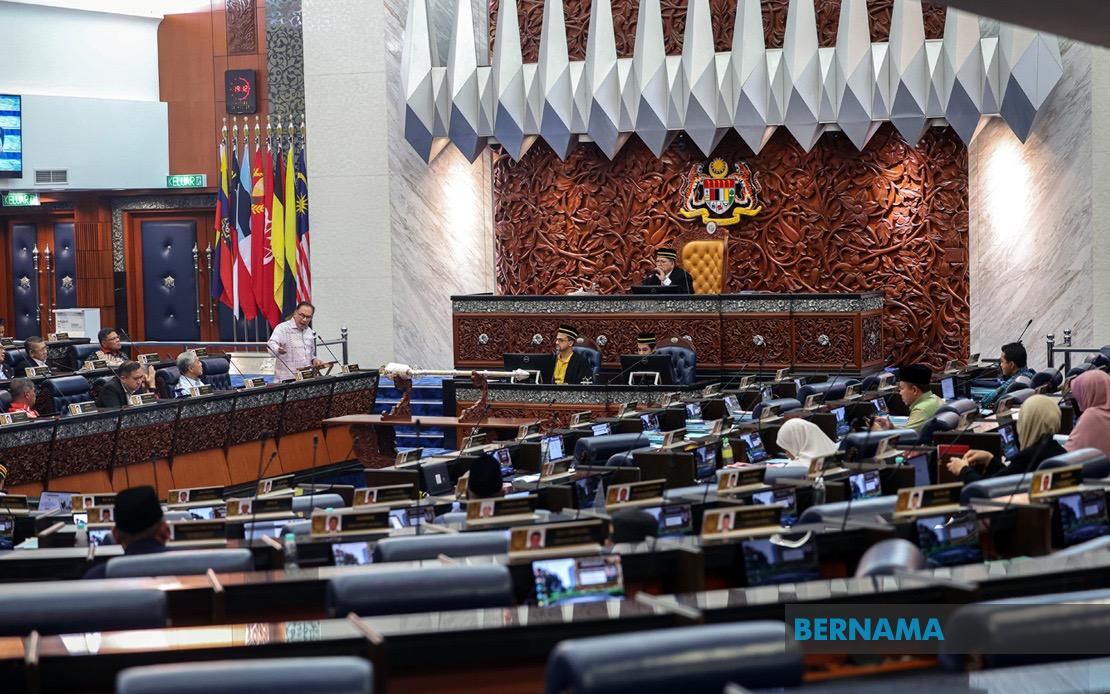
Parliament's lower house has adopted a series of amendments to the Employment Insurance System (Amendment) Bill 2025 that establish a progressive fine regime targeting employers who bypass their obligation to notify the Social Security Organisation (PERKESO) of employment vacancies. The move, approved on June 30 through voice vote following deliberation involving thirteen legislators from government and opposition ranks, represents a compromise between the government's enforcement objectives and business community concerns about regulatory burden.
The revised penalty framework, initially endorsed by the upper house in March, creates three tiers of financial liability. A first violation will attract a fine of RM1,000, with repeat offenders facing RM3,000 for a second breach. Employers committing a third or subsequent transgression face the maximum penalty of RM5,000. This escalation methodology diverges markedly from the government's original proposal, which sought penalties climbing to RM10,000 at the upper limit. The reduction emerged from extensive consultation with business representatives across multiple economic sectors, signalling the administration's responsiveness to industry feedback during the legislative process.
Deputy Human Resources Minister Datuk Khairul Firdaus Akbar Khan framed the amendments as prioritising employer education and voluntary compliance over punitive measures. He emphasised that PERKESO would issue compliance notices affording employers opportunity to rectify deficiencies before enforcement action becomes necessary. This graduated approach reflects recognition that many businesses, particularly smaller enterprises operating outside urban centres, may lack familiarity with the regulatory framework or encounter genuine implementation obstacles. The government's strategy therefore hinges on building awareness and facilitating compliance rather than deploying penalties as the primary enforcement mechanism.
The amendments address a substantive gap in Malaysia's employment ecosystem. The job vacancy reporting requirement serves multiple policy objectives: it equips PERKESO with labour market intelligence essential for effective job-matching services, supplies data informing policymakers' understanding of sectoral employment trends, and supports the development of targeted labour market interventions. Without systematic intelligence on employer hiring intentions, government agencies operate largely blind when designing programmes to reduce unemployment or identify skills mismatches between workforce capabilities and employer demands.
Parliamentary contributors across the political spectrum raised complementary concerns about implementation practicality. Azahari Hasan from Padang Rengas emphasised that the reporting mechanism must remain sufficiently streamlined to avoid creating unnecessary compliance friction for employers while delivering the data quality necessary for effective labour market planning. Nurul Amin Hamid, representing Padang Terap, welcomed the moderated penalty structure but highlighted specific vulnerability among rural businesses, which frequently operate with limited exposure to regulatory changes and may lack dedicated personnel managing statutory obligations. This observation carries particular weight for Malaysian policymakers given the disproportionate concentration of smaller enterprises in less-urbanised regions.
Syerleena Abdul Rashid introduced a complementary dimension to the debate, stressing that alongside employer reporting obligations, government must ensure employment opportunity information reaches job seekers through accessible, transparent channels. Her intervention points toward a broader ecosystem consideration: the reporting requirement generates value only if accumulated vacancy data translates into improved job-matching outcomes and genuine accessibility for workers seeking placement. Without robust government portals and transparent advertisement systems, the vacancy data becomes administratively confined rather than dynamically serving the labour market's efficiency objectives.
The legislative outcome reflects a broader Malaysian policy trend toward calibrating regulatory approaches that acknowledge competing imperatives: the government's legitimate interest in gathering employment data and enforcing compliance, set against business sector preferences for proportionate penalties and workable implementation procedures. The decision to moderate the original fine proposal from RM10,000 to RM5,000, coupled with the first-offence threshold of RM1,000, indicates parliament's judgment that this structure appropriately balances deterrence with fairness across employer scales and sophistication levels.
Khairul Firdaus's commitment to ongoing PERKESO engagement and advocacy sessions suggests the government recognises that legislative passage represents merely the beginning of implementation. The critical phase involves building practical understanding among employers across sectors and company sizes. PERKESO will require adequate resourcing to conduct awareness campaigns, provide technical assistance on reporting mechanisms, and maintain supportive communications before resorting to penalty imposition. This implementation focus distinguishes the legislative approach from purely punitive frameworks and suggests confidence that most employers will comply willingly once educated about requirements and processes.
The amendments hold particular significance for Southeast Asian employment governance more broadly. Malaysia's approach—combining escalating penalties with compliance support and employer feedback integration—offers a model potentially relevant to regional peers addressing similar labour market transparency objectives. Countries across Southeast Asia confront comparable challenges around employment data collection and labour market visibility, yet often lack robust voluntary reporting mechanisms. Malaysia's legislative methodology, emphasising progressivity and prior notification rather than immediate severe penalties, may resonate with administrations seeking to improve employment statistics while maintaining reasonable employer relations.
For Malaysian businesses, particularly small and medium enterprises, the framework presents manageable compliance obligations. The RM1,000 first-offence penalty, preceded by compliance notices allowing corrective action, falls substantially below the original proposal and establishes reasonable financial incentive for adoption without threatening business viability. The progressive structure provides practical acknowledgment that unintentional or inadvertent non-compliance differs categorically from persistent disregard for obligations. However, business groups will need to invest in educating members about reporting procedures, timelines, and PERKESO contact mechanisms to translate legislative intent into effective compliance.
The amendments also underscore PERKESO's expanding role as labour market infrastructure provider. Beyond traditional social security functions, the organisation increasingly functions as repository and analytical centre for employment data supporting broader labour policy development. The reported vacancy information enables PERKESO to identify emerging sectoral demands, geographic employment clusters, and skills trends that should shape vocational training investment and labour force development initiatives. This expanded mandate requires organisational capacity building, data management sophistication, and analytical capability that extend considerably beyond administering insurance contributions and benefit payments.
Government policymakers will face implementation questions in subsequent months: How effectively will PERKESO's reporting system function in practice? Will employers across economic sectors and geographic regions demonstrate comparable compliance rates, or will usage concentration in certain industries create data gaps? Do the compliance notices prove sufficiently motivating, or will PERKESO eventually resort to substantial penalty imposition? Monitoring these implementation dimensions will reveal whether the legislative framework achieves its substantive objective of generating usable employment data while maintaining acceptable employer relations. The graduated penalty approach establishes the institutional framework; effective enforcement and data utilisation depend on subsequent bureaucratic execution and sustained political commitment to labour market transparency.

