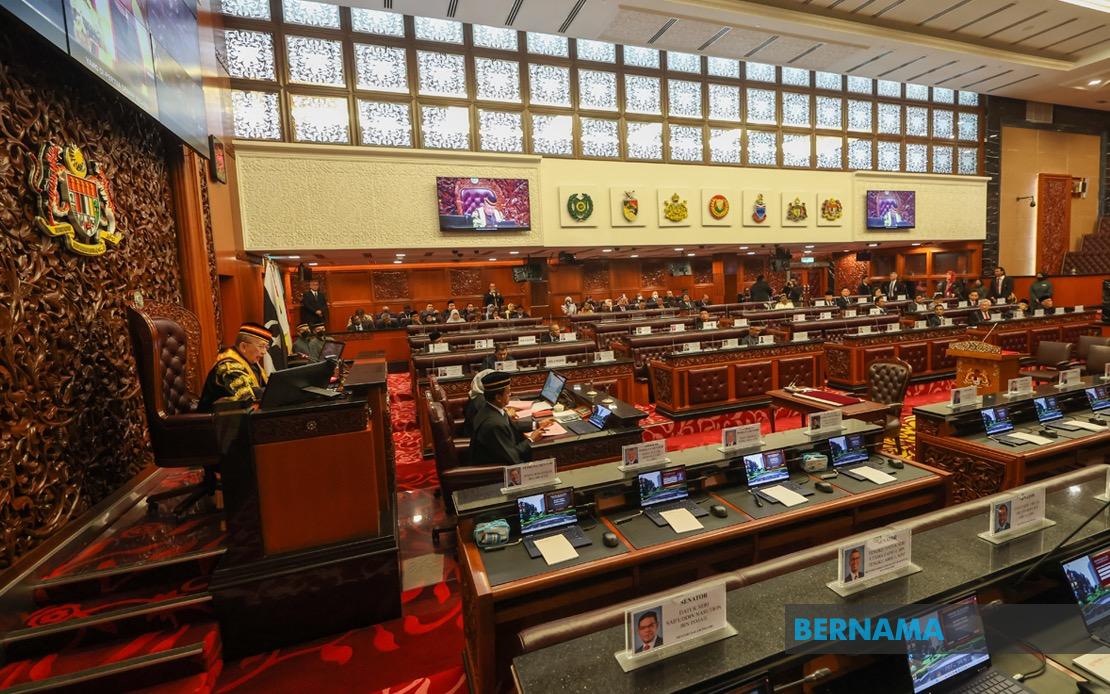
Malaysia's Dewan Negara wrapped up its Second Meeting of the Fifth Session on August 4, approving legislation designed to tighten controls over national financial management and establish modern statistical governance. The chamber's passage of the National Trust Fund (KWAN) Bill 2026 and the Statistics Bill 2026 represents a significant step in government efforts to restructure how Malaysia handles both fund withdrawals and data collection going forward. These twin measures emerged from a 10-day parliamentary sitting that commenced on July 20 and maintained intense focus on the structural challenges facing the nation's economic framework.
Deputy Finance Minister Liew Chin Tong shepherded the KWAN Bill through chamber proceedings, emphasising provisions designed to introduce tighter governance standards and establish clearer mechanisms for monitoring withdrawals from the National Trust Fund. The companion Statistics Bill, introduced by Deputy Economy Minister Datuk Mohd Shahar Abdullah, replaces outdated regulatory architecture with a framework better suited to contemporary data demands. Together, these legislative initiatives reflect the government's broader agenda of strengthening institutional discipline while positioning Malaysia for sustained fiscal and economic management in coming years.
The parliamentary agenda extended considerably beyond these two bills, encompassing weighty discussions on how Malaysia should navigate a complex external environment while maintaining internal economic stability. Government representatives outlined plans to shield Malaysian households and businesses from the spillover effects of geopolitical turbulence affecting West Asia, pledging to take protective action on supply chains, inflation management, sectoral support and overall economic fortitude. These assurances arrived during the sitting's opening phase and underscored the government's recognition that external shocks demand coordinated domestic responses.
Prime Minister Datuk Seri Anwar Ibrahim addressed parliamentary concerns regarding the Retirement Fund (Incorporated) (KWAP), defending its investment track record amid discussion of its RM12.9 billion net profit while acknowledging that certain investments, particularly in eFishery, had yielded important strategic lessons for future decision-making. His remarks illustrated the government's willingness to subject major financial institutions to transparent scrutiny whilst maintaining confidence in their overall performance. The KWAP discussion highlighted recurring tensions within Malaysian governance between the need for institutional accountability and the imperative to allow professionally managed funds adequate operational latitude.
Parliament received detailed briefings on Pos Malaysia's ongoing restructuring strategy, which targets financial sustainability through network optimisation, digital service expansion and operational discipline. The government has commenced studying mechanisms to establish a dedicated Postal Service Fund, recognising that Malaysia's postal infrastructure requires long-term financing architecture beyond conventional budgeting. This signals official acknowledgment that traditional postal services across Southeast Asia face secular headwinds requiring creative institutional responses rather than simple cost-cutting.
Energy security emerged as a central parliamentary preoccupation, particularly following geopolitical anxieties in global energy markets. Government officials briefed the chamber on assessments regarding the feasibility of establishing a strategic petroleum reserve, noting that such an initiative would require careful consideration of fiscal impacts, operational logistics, governance arrangements and international practice benchmarks. Separately, the Economy Ministry announced that Malaysia has finalised a 20-year fuel supply agreement with Russia covering petrol, diesel, crude oil and natural gas, positioning this arrangement as complementary to the National Energy Transition Roadmap objectives. This Russian arrangement represents Malaysia's pragmatic balancing of energy security imperatives against longer-term decarbonisation commitments.
Malaysia's attractiveness to high-value international investors received prominent attention during parliamentary discussions. Representatives disclosed that Japanese companies have committed RM10.5 billion across 46 electrical and electronics projects between 2021 and 2025, with these investments anticipated to generate 9,009 employment opportunities. These figures underscore Malaysia's continued capacity to attract substantial manufacturing investment in technology-intensive sectors despite broader regional competition. The E&E sector remains strategically significant for Malaysia's industrial positioning, particularly as advanced economies pursue supply chain diversification away from concentration in single jurisdictions.
Competitiveness metrics featured substantially in parliamentary deliberations, with Deputy Economy Minister Mohd Shahar noting that Malaysia maintains trajectory toward ranking among the world's 12 most competitive economies by the conclusion of the 13th Malaysia Plan. This aspiration draws support from Malaysia's improved standing in the 2026 World Competitiveness Ranking, suggesting that recent policy initiatives are generating measurable results in objective international assessments. Relatedly, Bank Negara Malaysia will implement a refreshed Performance Measurement Framework for Development Financial Institutions from July 1, 2027, broadening evaluation criteria beyond traditional financial metrics to encompass developmental impact, governance quality and operational performance.
The electric vehicle sector received parliamentary attention as officials outlined Malaysia's strategy to nurture EV ecosystem expansion through private sector initiative rather than government price interventions for public charging infrastructure. As of May 31, Malaysia had installed 6,416 public EV chargers nationwide, representing steady infrastructure accumulation despite the absence of regulatory price controls. This market-driven approach contrasts with more interventionist models adopted elsewhere in Southeast Asia, reflecting Malaysian policymaker confidence that competitive dynamics will drive adequate investment in charging networks without requiring direct government involvement in tariff-setting.
Fiscal consolidation featured prominently throughout parliamentary discussions, with the Finance Ministry reporting that the federal fiscal deficit has contracted for the fifth consecutive year following implementation of comprehensive economic and fiscal reform measures. Federal debt levels remain within statutory boundaries despite pressures from elevated global interest rates and domestic spending demands. Deputy Finance Minister Liew highlighted that expenditure constraints implemented during the first half of 2026 achieved nearly RM5 billion in spending restraint without compromising the delivery of essential public services, suggesting that efficiency improvements in public financial administration are yielding genuine results rather than simply deferring expenditure obligations.
The parliamentary session illuminated the Malaysian government's multidimensional policy agenda spanning financial governance, energy security, economic attractiveness and fiscal sustainability. Passage of the KWAN and Statistics Bills establishes clearer institutional frameworks for managing national assets and collecting economic data, providing legal scaffolding for more sophisticated governance practices. Simultaneously, parliament's detailed discussion of energy agreements, investment flows, competitiveness metrics and fiscal performance indicates that Malaysian policymakers are attempting to balance multiple competing priorities—supporting growth, maintaining stability, attracting investment and ensuring resilience against external shocks. These 10 days of parliamentary activity reflected both the complexity of Malaysia's governance challenges and the government's commitment to addressing them through comprehensive legislative and administrative reform.

