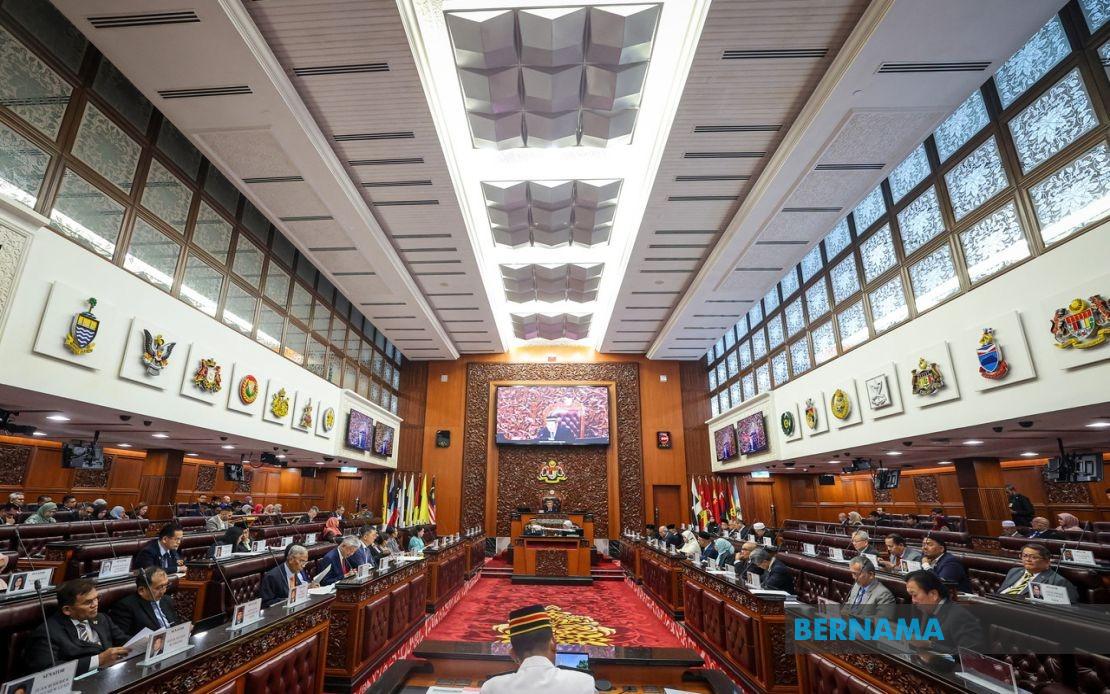
The Dewan Negara has wrapped up a productive legislative session that ran for ten days, with lawmakers successfully advancing twelve bills through Parliament's upper house. The Second Meeting of the Fifth Term concluded on August 4 after commencing on July 20, marking a substantial legislative output that touched on several critical policy domains ranging from digital security to agricultural management.
Among the most significant measures passed was the Cybercrimes Bill 2026, which carries particular relevance for Malaysia as cybersecurity threats continue to evolve in sophistication and scale. This legislation represents the government's response to mounting digital crime challenges, from online fraud targeting businesses and individuals to data breaches affecting sensitive personal information. The bill's passage signals the nation's commitment to updating its legal framework to address twenty-first century criminal threats that traditional statutes struggle to adequately address. For Malaysian businesses and consumers operating in an increasingly connected digital economy, this legislation establishes clearer legal protections and prosecution mechanisms against cyber offenders.
The session also approved multiple amendments to existing legislation that strengthen consumer protections and regulatory oversight. The Road Transport (Amendment) Bill 2026 enhances the nation's vehicle and transport safety standards, while the Sexual Offences against Children (Amendment) Bill 2026 tightens legal safeguards for minors—a critical priority as child protection remains a paramount social concern. These amendments reflect Parliament's recognition that statutes must evolve with societal challenges and emerging threats to vulnerable populations.
Competition law received significant attention through passage of two related bills: the Competition (Amendment) Bill 2026 and the Competition Commission (Amendment) Bill 2026. These measures aim to strengthen Malaysia's competitive marketplace and provide regulators with enhanced tools to prevent unfair trading practices and monopolistic behaviour. The twin legislation demonstrates Parliament's focus on ensuring fair commercial conditions where legitimate local businesses, particularly small and medium enterprises, can compete on equal footing.
The legislative agenda also encompassed important amendments to witness protection laws, reflected in passage of the Witness Protection (Amendment) Bill 2026. This legislation recognises the critical role that protected witnesses play in criminal justice proceedings, particularly in complex cases involving organised crime, corruption, or organised violence. By strengthening protections for those willing to testify against powerful offenders, the amendment supports the rule of law and judicial processes that depend on credible testimony.
Additional bills addressed diverse policy areas essential to national functioning. The National Trust Fund Bill 2026 establishes mechanisms for managing public assets and resources, whilst the Padi and Rice Control (Amendment) Bill 2026 reflects agriculture's continuing importance to Malaysia's food security and rural livelihoods. The Social Work Profession Bill 2026 formalises standards for social welfare practitioners, and communications legislation amended the Communications and Multimedia (Amendment) Bill 2026 alongside amendments to the Malaysian Communications and Multimedia Commission (Amendment) Bill 2026, addressing evolving broadcasting and digital communication standards. The Statistics Bill 2026 improves data collection and management frameworks critical for evidence-based policymaking.
Beyond the formal legislative business, the Dewan Negara utilised an Adjournment Speech session for the first time since 2022 to debate two substantive motions of national consequence. Senators engaged discussion on the escalating threat posed by extreme cross-border e-commerce platforms, specifically naming Pinduoduo and Temu, which operate at ultra-low cost structures potentially destabilising Malaysia's micro, small and medium enterprise sector and traditional retail businesses. This debate reflected growing concern across Southeast Asia about how digital commerce giants from other regions can undercut local merchants and erode domestic commercial ecosystems through aggressive pricing strategies that may prove unsustainable.
The second motion debated during adjournment addressed electoral participation for auxiliary police members, proposing mechanisms for early voting or postal voting to ensure these essential security personnel can exercise franchise rights despite operational demands. This represents a practical recognition that modern governance must accommodate diverse work schedules and circumstances that traditionally excluded certain groups from electoral participation.
Dewan Negara Speaker Datuk Awang Bemee Awang Ali Basah highlighted the constitutional role of Malaysia's upper house in parliamentary democracy, noting how the diverse professional backgrounds and perspectives represented among senators strengthened both legislative scrutiny and constitutional checks. His adjournment remarks emphasised that the composition of the Dewan Negara—drawing from business, academia, civil society, and other sectors—enriches the legislative process beyond the party-political dynamics sometimes dominant in the lower house. This institutional distinction underscores why bicameral parliamentary systems maintain separate chambers with different compositions and appointment procedures.
The Speaker's invocation of national sovereignty and constitutional supremacy, delivered in conjunction with upcoming National Day and Malaysia Day celebrations, connected parliamentary proceedings to broader questions of national identity and governance stability. He called upon all stakeholders to renew commitments to the Federal Constitution's principles and the rule of law—fundamental to Malaysia's multiethnic, multireligious society where constitutional frameworks serve as binding agreements among diverse communities.
For Malaysian observers and the regional business community, this legislative session demonstrates Parliament's capacity to address contemporary challenges through systematic law-making. The bills passed signal government intent to modernise legal frameworks across cybersecurity, commerce, safety, and child protection—domains where statutes from earlier decades prove inadequate. As Malaysia navigates rapid technological change and evolving security threats, the Dewan Negara's output suggests responsive, albeit sometimes incremental, legislative adaptation to emerging national needs.

