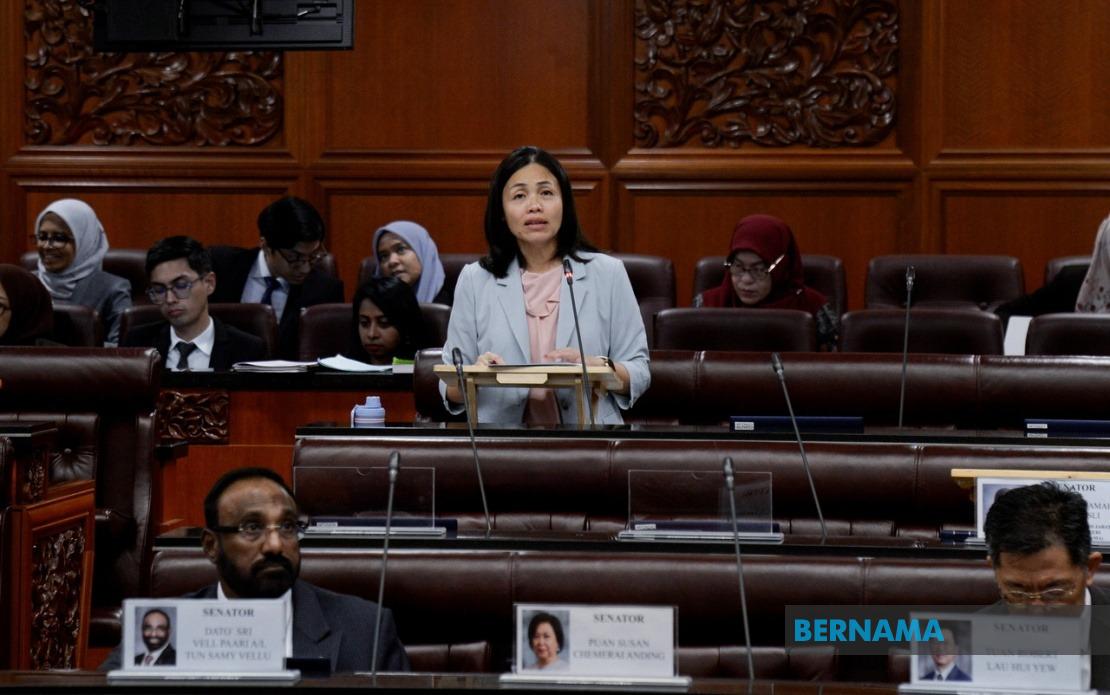
Malaysia's Dewan Negara has given its blessing to significant structural reforms of the country's communications regulator, approving the Communications and Multimedia Commission (Amendment) Bill 2026 on August 3 following deliberations among 11 senators. The legislative development marks a watershed moment for digital governance in Southeast Asia's third-largest economy, as lawmakers seek to insulate the regulator from political influence while equipping it with stronger enforcement capabilities in an increasingly complex online landscape.
The amendments represent a fundamental shift in how Malaysia intends to manage its communications sector, which has evolved far beyond a purely commercial domain into critical national infrastructure. Senators emphasised during debate that the modernisation of regulatory frameworks must keep pace with technological change and the proliferation of digital harms. Deputy Minister of Communications Teo Nie Ching, presenting the government's position, underscored that the reforms strike a careful balance between expanding MCMC's mandate and constraining ministerial discretion, a tension that has long characterised debates over regulator independence across Southeast Asia.
Central to the amendments is a constitutional-style restriction preventing sitting politicians and members of parliament or state assemblies from chairing the commission. This provision addresses longstanding concerns within civil society and international governance circles that regulatory capture—where political interests override consumer protection—poses risks to market competition and public trust. By severing the direct pipeline between executive appointment and parliamentary membership, the legislation attempts to create professional distance between day-to-day politics and technical regulatory decisions. While Malaysian observers note similar reforms have been attempted elsewhere in the region with mixed results, supporters contend that formalising such separation through statute rather than convention provides essential clarity.
Data presented during the parliamentary sitting illustrated MCMC's intensifying campaign against illegal online gambling, a priority that resonates with enforcement agencies and communities concerned about gambling addiction. In the first seven months of 2026 alone, the commission oversaw removal of more than 222,000 gambling-related online content items, representing a dramatic acceleration in digital enforcement. This figure sits atop cumulative action spanning the past four years: merely two gambling content takedowns occurred in 2022, a figure that mushroomed to 18,814 by 2023, jumped to 189,484 in 2024, and reached 289,486 throughout 2025. The exponential growth reflects both the explosion of online gambling supply and MCMC's evolving technical capacity to identify and block such material.
Beyond content removal, the enforcement record includes blocking access to 6,982 gambling websites during the period from 2022 through July 31, 2026. These operations highlight the technical sophistication required of modern regulators, as blocking mechanisms must contend with constantly evolving website architectures, mirror sites, and increasingly sophisticated evasion techniques employed by operators across multiple jurisdictions. Teo clarified that while gambling activities fall primarily under Royal Malaysia Police jurisdiction, MCMC functions in a supportive capacity, providing digital forensic analysis and technical blocking capabilities upon formal enforcement requests. This division of labour, familiar to regulators across ASEAN, acknowledges that regulatory effectiveness depends on inter-agency coordination rather than monopolistic authority.
The legislative amendments also expand MCMC's foundational mandate by clarifying its authority to develop and regulate digital infrastructure standards and platform governance frameworks. With 17 clauses amending the parent legislation, the bill—which had already passed the Dewan Rakyat on July 15—grants the commission explicit statutory grounding for interventions increasingly necessary as internet platforms become essential services. This evolution parallels developments in Singapore, Indonesia, and other regional economies grappling with how traditional telecom regulators must adapt to regulate digital ecosystems that blur traditional boundaries between carriage, content, and commerce.
Senator Datuk Abdul Halim Suleiman provided a crucial framing during debate, asserting that communications infrastructure has transitioned from a sectoral concern to a matter of national strategic importance. His remarks suggest Malaysian policymakers increasingly view digital regulation through a security and resilience lens rather than merely competition or consumer protection. This perspective carries implications for how MCMC may approach future challenges including cybersecurity coordination, critical information infrastructure protection, and managing disinformation—domains where regulatory scope and technical capability remain contested across Southeast Asia.
Equalising emphasis on institutional quality, Senator Muhammad Hasbie Muda cautioned that legislative power without professional competence produces hollow reform. His intervention spotlights a regional challenge: that expanding regulator authority without corresponding investment in expertise, transparency mechanisms, and accountability frameworks risks creating a technically powerful but potentially unaccountable institution. This concern reflects experiences across ASEAN where regulatory agencies sometimes accumulate powers faster than internal capacities, training programmes, and external oversight mechanisms develop to match.
The prohibition against ministerial discretion in appointing commission leadership carries practical consequences for how Malaysia positions itself within international standard-setting bodies and regional regulatory networks. An independently-appointed technical leadership strengthens MCMC's credibility with counterparts in Singapore's Infocomm Media Development Authority, Indonesia's Ministry of Communications and Informatics, and international bodies including the International Telecommunication Union. Such credibility proves essential when negotiating cross-border spectrum allocations, coordinating responses to cyber threats, or harmonising standards with neighbouring economies.
Looking forward, implementation of these amendments will test Malaysia's commitment to regulatory independence in practice. The reforms represent statutory intent, but actual autonomy depends on budgetary allocations, recruitment policies prioritising merit, and political patience when regulator decisions displease particular constituencies. Regional precedents offer cautionary lessons: regulatory independence, once formally established, remains vulnerable to political pressure during periods of crisis or when regulatory actions affect economically powerful interests. Malaysian observers will watch whether MCMC can translate its expanded legal mandate into sustained, professional operations insulated from partisan influence.

