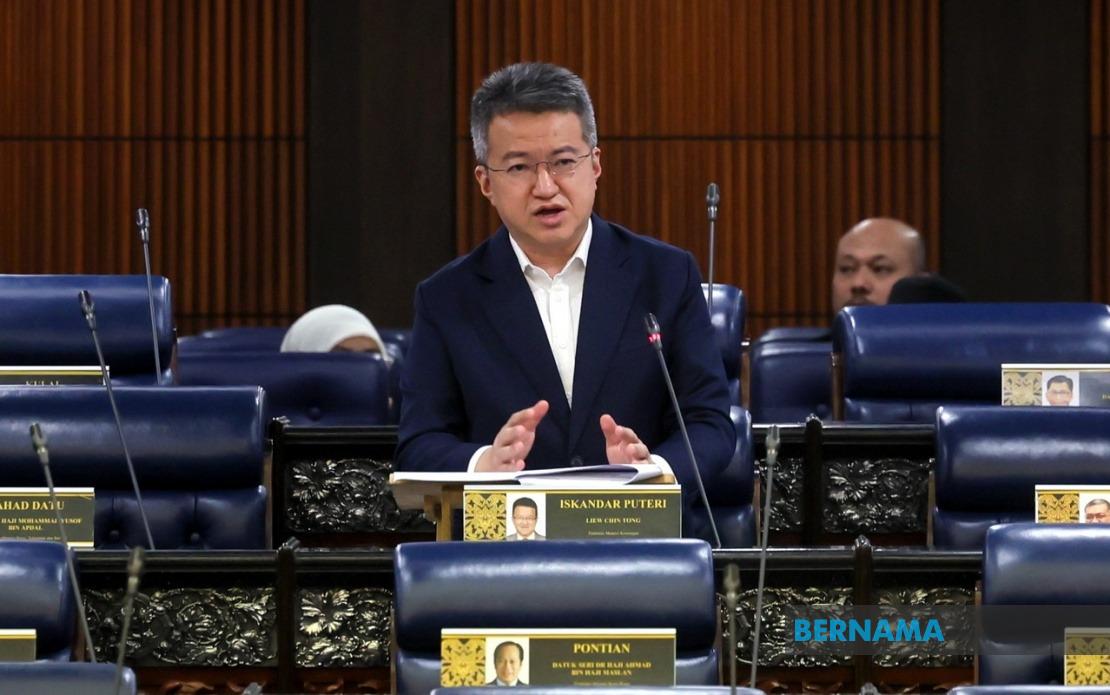
The question of whether controversial businessman Low Taek Jho—better known as Jho Low—has made any clandestine visits to Malaysia has resurfaced in parliament, with the government's Deputy Finance Minister flatly denying recent allegations. Liew Chin Tong responded to parliamentary inquiries on July 9 by stating he categorically rejected claims that the fugitive fugitive had entered the country alongside a Chinese delegation last year to participate in secret negotiations centred on resolving the 1Malaysia Development Berhad (1MDB) crisis. The denial came during Question Time in the Dewan Rakyat when opposition lawmaker Syed Saddiq Syed Abdul Rahman of MUDA-Muar raised the matter as a supplementary question.
The allegations that prompted the parliamentary exchange originated from media reports suggesting Jho Low had attended confidential meetings within Malaysia in the latter part of the previous year. According to the reports cited by Syed Saddiq, the purported gatherings were intended to explore potential arrangements for repaying misappropriated 1MDB funds, ostensibly involving coordination with the Ministry of Finance. The timing and nature of such allegations are particularly sensitive given that Jho Low remains one of the world's most sought fugitives in connection with one of history's largest financial scandals, having evaded capture for years despite international warrants and a dragnet of law enforcement agencies across multiple jurisdictions.
While addressing the parliamentary query, Liew seized the opportunity to outline the government's ongoing strategy for reclaiming assets and pursuing accountability related to 1MDB. He emphasised that Malaysia's authorities continue to escalate their recovery initiatives through multiple legal channels, deploying both criminal prosecutions and civil litigation to recoup funds and identify culprits. The recovery effort has already yielded significant legal victories, most notably the conviction of former Prime Minister Datuk Seri Najib Tun Razak, whose case represents a watershed moment in Malaysia's anti-corruption narrative.
Najib's legal proceedings culminated dramatically on December 26, 2025, when the High Court delivered a landmark sentence: fifteen years' imprisonment coupled with an enormous financial penalty of RM11.38 billion. The court found Najib culpable on twenty-five separate charges encompassing money laundering and the abuse of executive power to secure bribes directly connected to 1MDB's misappropriation. This conviction stands as one of Malaysia's most significant judicial outcomes in recent memory, sending a powerful signal about the accountability mechanisms now functioning within the country's legal system.
Beyond Najib, the government has extended its legal assault to other alleged beneficiaries of the 1MDB scheme. Datin Seri Rosmah Mansor, the former Prime Minister's wife, now faces civil litigation seeking to recover approximately US$380 million—equivalent to roughly RM1.56 billion—in damages. The court action targets funds that authorities contend were illicitly diverted from 1MDB to finance purchases of luxury consumer goods, encompassing designer handbags, jewellery, and other high-end acquisitions. These parallel proceedings demonstrate that the government's recovery strategy extends across the entire ecosystem of alleged wrongdoing rather than focusing solely on the most prominent figures.
Jho Low himself, identified by authorities as the alleged architect and principal orchestrator of the 1MDB fraud, remains subject to substantial legal exposure. The government has mounted both criminal and civil proceedings against the fugitive businessman, with the civil component alone seeking to recover an enormous US$3.78 billion—approximately RM15.4 billion. This civil claim ranks among the largest financial recovery demands ever pursued in Malaysian legal history, reflecting both the scale of his alleged misappropriation and the determination of authorities to pursue maximum recompense. Despite his current whereabouts remaining unknown to Malaysian authorities, the government has maintained active legal pressure through international cooperation mechanisms and Interpol channels.
The 1MDB scandal, which unfolded over more than a decade before gaining widespread public attention around 2015, has inflicted multifaceted damage on Malaysia's economy and international standing. Liew identified four distinct categories of loss flowing from the scheme: direct monetary losses representing funds actually misappropriated; opportunity costs encompassing investment opportunities foregone while funds were diverted; irrecoverable losses that may never be returned regardless of legal outcomes; and substantial damage to Malaysia's international reputation and institutional credibility. These cascading impacts have affected Malaysia's standing among international investors, rating agencies, and development partners who carefully assess governance quality and accountability mechanisms when evaluating risk exposure in emerging economies.
The government's multi-pronged legal offensive against 1MDB beneficiaries must be understood within the broader context of Malaysia's governance trajectory since the scandal's exposure. The conviction of Najib, the ongoing pursuit of Jho Low across borders, and the attempts to recover billions of ringgit all represent attempts by successive administrations to demonstrate that Malaysia possesses functioning accountability systems capable of addressing even the highest-level wrongdoing. These efforts carry particular significance in Southeast Asia, where 1MDB became synonymous with governance failures and corruption at the apex of state power, serving as a cautionary example that rippled across the region's financial markets and geopolitical alignments.
The parliamentary denial regarding Jho Low's alleged secret return to Malaysia also underscores the continued international dimensions of the scandal. Any potential negotiations involving Jho Low would necessarily implicate foreign governments and international financial institutions, making such high-level discussions subject to intense diplomatic scrutiny. The allegation that Jho Low had accompanied a Chinese delegation further complicates the narrative, introducing questions about Malaysia's bilateral relations, financial diplomacy, and the role of international actors in resolving disputes stemming from the 1MDB misappropriation. Such geopolitical considerations may well explain why official denials have been swift and unambiguous, protecting Malaysia's diplomatic relationships while maintaining the legal offensive against the alleged perpetrators of the fraud.

