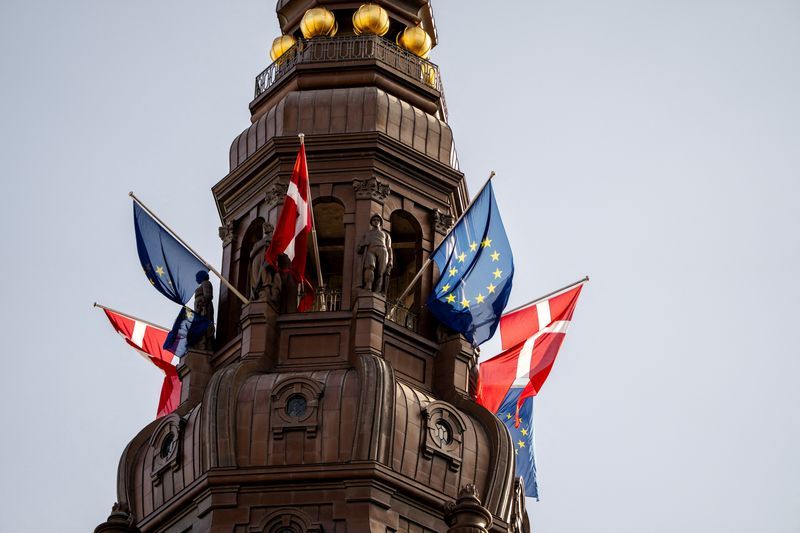
Denmark's government has stepped into a high-stakes legal dispute at the European Court of Justice, filing a written intervention to support Belgium's position in a closely watched case that pits major technology companies against the Belgian state over media publishers' rights. The move, announced by Denmark's Culture Ministry on Monday, underscores growing concern among European nations that without clear legal boundaries, technology giants will continue extracting value from journalistic content without compensating the news organisations that produce it.
The case, known as the Streamz case after one of the defendants, began in 2023 when Google, Meta, Spotify, Streamz, and Sony launched legal proceedings against Belgium. Their core argument centres on what they contend is an overly broad implementation of Article 15 of the European Union's Digital Single Market Directive, which they believe goes beyond what EU law actually requires or permits. The defendants maintain that Belgium's approach to enforcing publishers' rights infringes on broader EU legal principles and creates an unjustifiable burden on their business operations across the continent.
Denmark's decision to formally participate in the case carries significant strategic weight. Rather than remaining neutral, the Danish government has chosen to stand alongside Belgium and against the technology platforms, signalling that it views the outcome as directly affecting its own media landscape and democratic health. This intervention is not merely symbolic; Denmark will send a formal delegation to participate in oral arguments scheduled for July 6-7 before Europe's highest court, ensuring that Danish perspectives directly influence judicial deliberations.
At the heart of Denmark's position is a straightforward principle: technology companies that profit from displaying publisher content on their platforms must compensate the creators of that content. Denmark's Culture Minister Zenia Stampe articulated this argument bluntly, stating that tech giants should not be permitted to use media content without payment, framing the dispute as fundamentally about protecting the economic viability of news production. This reflects a broader anxiety among policymakers across Northern Europe that without enforceable compensation mechanisms, the traditional media sector will continue to weaken, threatening the production of original journalism that underpins informed democratic participation.
Denmark's intervention strategy focuses on urging the European Court of Justice to provide exceptionally clear legal definition of two interconnected questions: precisely what scope of rights Article 15 grants to press publishers, and what specific responsibilities technology platforms bear when publishers' material appears on their services. By pushing for clarity rather than relying on existing ambiguous language, Denmark seeks to establish precedent that would benefit not just Belgium but potentially all EU member states seeking to enforce similar provisions domestically.
The stakes of this case extend far beyond bilateral relations between tech companies and Belgium. A ruling favouring the technology defendants could substantially weaken the legal position of press publishers across the entire EU, effectively gutting the protections that Article 15 was designed to provide. Conversely, a victory for Belgium would strengthen the hand of national governments seeking to hold platforms accountable and would underscore that the DSM Directive's protections represent binding obligations rather than aspirational guidelines that companies can circumvent through creative legal arguments.
Denmark's participation draws from real experience with digital media disruption. Like other Scandinavian countries, Denmark has grappled with the economic devastation that technology platforms have inflicted on traditional news organisations, even as those platforms accumulate vast advertising revenue by distributing publisher content. The Danish media sector has lost significant advertising income to Google and Meta over the past decade and a half, creating pressure on newsrooms and threatening the sustainability of quality journalism across the country.
The Danish government's framing of this dispute reveals the depth of concern about democracy itself. Culture Minister Stampe's assertion that weakened media economics ultimately damages democracy reflects a conviction that journalism production requires economic stability and that technology platforms' appropriation of content without compensation represents not merely commercial unfairness but a democratic threat. This argument resonates particularly strongly in Scandinavian contexts where strong public discourse and independent media are considered foundational to effective governance.
This case also reflects Denmark's broader engagement with EU copyright and digital rights disputes. The country has previously participated in another landmark European proceeding examining the legality of Google's use of press material to train artificial intelligence systems. These successive interventions indicate that Denmark views digital platform accountability as a sustained policy priority rather than a one-off concern, suggesting it will remain active in shaping how EU law addresses technology sector power.
The timing of Denmark's intervention, coinciding with oral hearings, suggests a carefully calibrated legal strategy designed to influence judicial thinking at a critical moment. By presenting arguments emphasising democratic implications and the sustainability of news production, Denmark positions the dispute as fundamentally about values beyond commercial interests alone. This framing may prove influential with judges considering whether to read Article 15 broadly or narrowly, particularly judges from member states where media sustainability concerns resonate strongly.
Looking ahead, the European Court of Justice's decision will establish crucial precedent for how the EU's copyright framework applies to technology platforms. If the court rules against the technology defendants, it validates the enforcement approach adopted by Belgium and supports similar initiatives in other member states. If the court rules for the defendants, it would signal that technology platforms retain significant leeway in exploiting publisher content without compensation, a development that would reverberate through newsrooms across Europe and Southeast Asia, where many outlets rely on the European legal framework as a reference point for their own digital media policy discussions.

