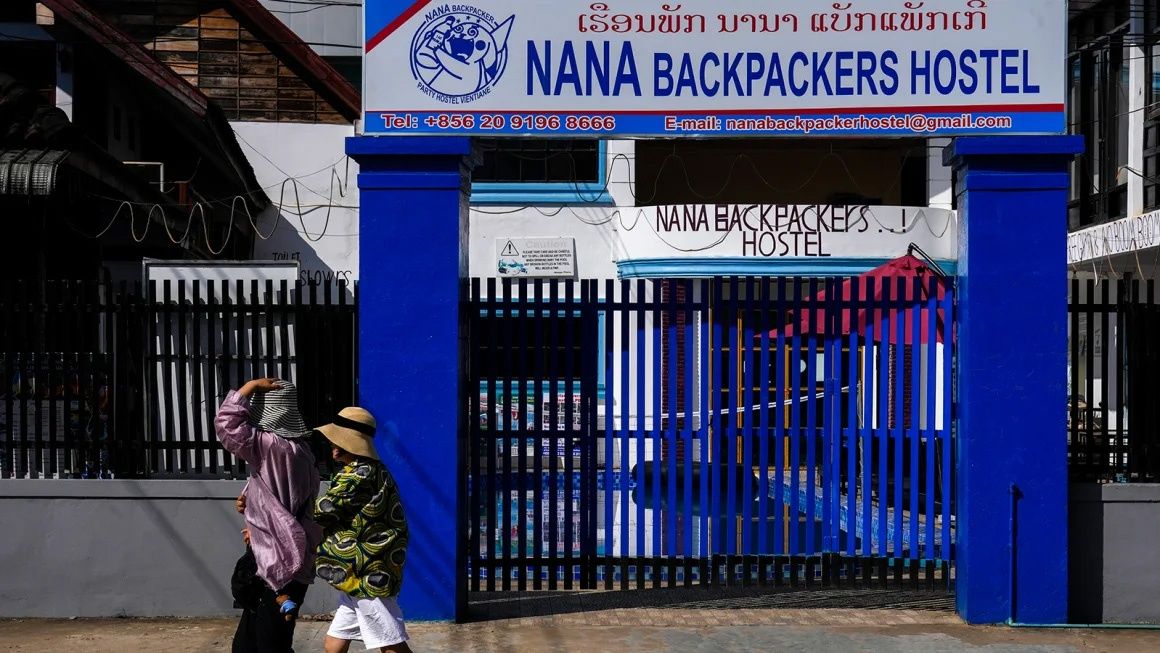
A Laotian court has formally charged a distillery operator in connection with a methanol poisoning tragedy that claimed the lives of six international visitors at a Vang Vieng hostel in late 2024, though the charges brought fall far short of what grieving families and multiple governments had anticipated. The indictment alleges the distillery owner engaged in selling harmful foodstuffs and operating an unlicensed enterprise—offences carrying maximum penalties of four years imprisonment and accompanying fines upon conviction. Denmark's foreign ministry disclosed the development on Friday, signalling deep international dissatisfaction with what it characterised as a disproportionate legal response to a incident that devastated families across multiple nations and raised serious questions about hospitality safety standards in the region.
Among those killed were two young Danish women, Anne-Sofie Orkild Coyman, aged 20, and Freja Vennervald Sorensen, aged 21, alongside Australian teenagers Bianca Jones and Holly Morton-Bowles, both 19 years old. British legal professional Simone White, 28, and United States resident James Louis Hutson, 57, also perished from the contaminated alcohol. The tragedy unfolded after these visitors had consumed complimentary shots of Laotian vodka distributed at the Nana Backpacker Hostel before proceeding to additional venues throughout the town. When the Australian pair failed to vacate their accommodation as scheduled, staff discovered them incapacitated and arranged emergency evacuation across the Thai border, where they subsequently succumbed to the poisoning's effects.
Lars Løkke Rasmussen, Denmark's foreign minister, issued a statement expressing profound disappointment that the formal charges neither reflected the magnitude nor gravity of a catastrophe affecting numerous families. He acknowledged that satisfying the rigorous evidentiary criteria necessary for more severe culpability charges—particularly negligent homicide—presents considerable procedural complications in such circumstances. Nevertheless, Rasmussen emphasised the difficulty of accepting such a relatively modest legal framework given the scale of loss and suffering involved. The Danish administration has signalled its intention to collaborate with affected families and representatives from other impacted nations to determine appropriate subsequent measures and explore whether additional avenues for accountability remain available.
Australia's response proved equally scathing, with Foreign Minister Penny Wong declaring herself deeply frustrated and bitterly disappointed by authorities' apparent unwillingness to pursue the most serious available charges. Prime Minister Anthony Albanese dispatched an official envoy to Laos to communicate the Australian government's formal objections and reaffirm expectations for an investigation producing genuine justice for the deceased victims. Wong further disclosed that Canberra had summoned Laos' ambassador to Australia, underscoring the diplomatic gravity with which the nation viewed the charges decision. This coordinated pressure from major trading partners and tourism source countries reflects widespread international concern that minor charges trivialise the deaths and suggest inadequate deterrence against future safety lapses.
Michelle Jones, mother of deceased Australian teenager Bianca Jones, delivered an emotionally raw statement at a family news conference held ahead of the formal charge announcement. She lamented that the minimal charges conveyed the impression that her daughter's life held little significance in Laotian justice calculus. Jones described the profound devastation of losing a young person engaged in the ordinary rite of passage that defines teenage years—a backpacking journey intended to broaden horizons—only to see authorities respond with what she characterised as woefully inadequate legal accountability. Shaun Bowles, father of fellow victim Holly Morton-Bowles, extended these concerns into broader implications for tourism, suggesting that prospective visitors to Laos would understandably reconsider travelling to a destination where authorities appear to devalue foreign lives and have seemingly attempted to downplay the severity of the incident.
The Danish victims' parents have expressed additional frustration regarding investigative procedures and administrative documentation surrounding their daughters' deaths. According to reports from Danish public broadcaster DR, the family received minimal communication following the tragedy. Critically, no autopsy was conducted on Freja Vennervald Sorensen, whilst her official death certificate attributed her passing to the natural cause of cardiac arrest rather than acknowledging methanol poisoning as the actual medical cause. The parents emphasised that throughout their travels, both daughters maintained careful safety precautions, yet remained entirely unaware that methanol contamination represented a genuine hazard. They have since committed to raising international consciousness about methanol poisoning dangers, transforming their loss into advocacy for greater public awareness.
Methanol contamination in alcoholic beverages constitutes a persistent global public health concern extending far beyond tourist destinations, though backpackers frequently encounter particular vulnerability to adulterated drinks at informal hospitality establishments. Unscrupulous bar operators sometimes introduce methanol—a toxic substance with markedly lower production costs than ethanol—into mixed drinks to maximise profit margins. The chemical also emerges as a byproduct of poorly controlled home-distillation processes, potentially contaminating commercial supplies through inadequate quality oversight or intentional adulteration. Doctors Without Borders data documenting suspected poisoning cases indicates that Indonesia, India, and Russia consistently report the highest incidence frequencies, though the problem afflicts numerous developing economies and informal alcohol sectors.
Vang Vieng, a landlocked Laotian town situated in one of Southeast Asia's economically poorest nations, has cultivated a reputation as a premier backpacker destination attracting young travellers worldwide seeking adventure sports and nightlife. The town's popularity particularly resonates with Australian youth and international budget travellers seeking inexpensive recreation and cultural experiences. This surge in tourism revenue represents an economic lifeline for an impoverished region, creating strong financial incentives for hospitality establishments to attract visitors through permissive policies toward recreational activities. However, the tragic incident illuminates the potential disconnect between profit-maximisation strategies and safety protocols, raising uncomfortable questions about whether commercial interests have adequately prioritised consumer protection or whether regulatory frameworks remain sufficiently robust.
Laos' communist political system, characterised by singular-party authoritarianism and substantial information control, has limited the transparency available to international observers investigating the incident. Official proceedings remained closed to international media representatives, with access restricted to local journalists and embassy delegations from affected countries. The Laotian Foreign Ministry indicated that detailed information would be released exclusively through a restricted news conference addressing local and official international participants, effectively constraining public scrutiny and independent reporting. This opacity, combined with minimal charges that appear disproportionate to the deaths' severity, has reinforced international perceptions that accountability mechanisms in Laos may struggle to deliver meaningful justice in cases involving foreign nationals, potentially affecting the nation's reputation as a travel destination amongst safety-conscious international visitors.
Laotian authorities retain the option to escalate charges within a fifteen-year case window, theoretically permitting pursuit of more serious offences should additional evidence emerge substantiating negligent homicide allegations or establishing deliberate culpability. However, this extended timeline offers minimal comfort to families seeking immediate accountability, and many observers question whether meaningful evidence collection and investigation have been conducted thoroughly. The minimal initial charges suggest either that investigative authorities have determined insufficient evidence supports elevated culpability, or alternatively, that political and economic considerations regarding tourism revenue and international relations have influenced prosecutorial decision-making. For Malaysian and broader Southeast Asian readers, this case underscores the importance of exercising caution when selecting accommodation and venues in developing tourism destinations, verifying establishment credibility through reliable sources, and remaining vigilant regarding beverage safety—particularly complimentary offerings at unfamiliar establishments.

