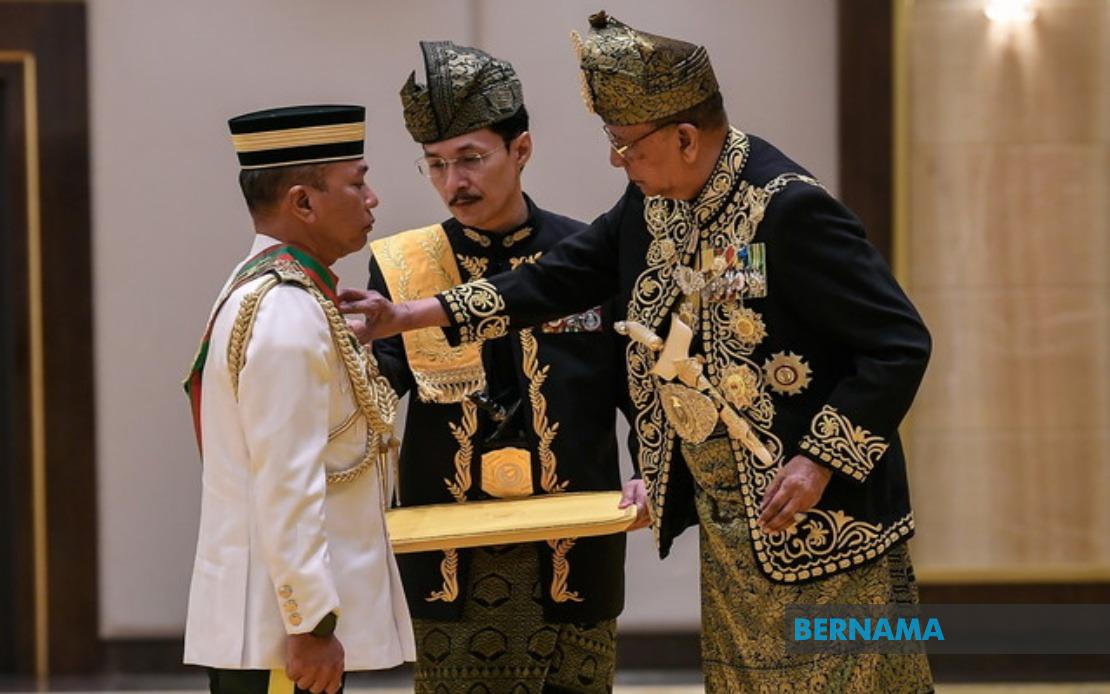
The Sultan of Kedah, Al Aminul Karim Sultan Sallehuddin Sultan Badlishah, conferred honours and medals on more than 200 recipients during celebrations marking his 84th birthday at Istana Anak Bukit in Alor Setar on July 5. The ceremony underscored the traditional role of Malaysian sultans in recognising service to the state and nation, with the highest accolades going to two of the country's most senior security officials.
General Tan Sri Malek Razak Sulaiman, who heads Malaysia's combined military forces as Chief of Defence Forces, received the Darjah Dato' Seri Setia Pahlawan Yang Amat Dihormati, the most prestigious honour conferred during the event. Inspector-General of Police Tan Sri Mohd Khalid Ismail, the nation's top law enforcement officer, was similarly recognised at this highest tier. Both appointments reflect the crown's endorsement of leadership within Malaysia's security establishment and highlight the continued centrality of the state sultans in honouring national and regional figures.
Beyond the military and police leadership, the honours extended across Kedah's civil administration and professional classes. Datuk Syed Khairol Anuar Syed Abidin received the Orang Besar Enam Belas title, while Datuk Mohamad Che Nai was conferred the Orang Besar Tiga Puluh Dua title, both reflecting senior positions within the state's traditional administrative hierarchy. These titles carry historical weight within the Kedah sultanate and signal recognition of contributions to governance and state affairs.
The Darjah Dato' Setia Diraja Kedah was awarded to four individuals, a mid-tier honour recognising sustained service to the state. Kedah's police chief, Datuk Adzli Abu Shah, received the Darjah Dato' Setia Pahlawan, acknowledging his leadership of law enforcement operations in the northern state. These appointments reflect how honours ceremonies function as mechanisms for consolidating institutional loyalty and recognising meritorious service within state structures.
Notably, Major (Rtd) Mansor Zakaria, a state executive council member, and Afnan Hamimi Taib Azamudden, chief of PAS Youth, both received the Darjah Setia Sultan Sallehuddin Kedah. The inclusion of a prominent youth wing leader from Kedah's dominant political party suggests the honours process incorporates recognition across the political spectrum, bridging institutional and partisan actors. This reflects broader Malaysian practice of honouring political figures of different affiliations during state ceremonies.
Nine recipients were awarded the Darjah Setia Diraja Kedah, spanning diverse sectors critical to state development and services. Syeikh Mohamad Subhi Abdullah, director of the Kedah State Islamic Religious Affairs Department, represented the religious bureaucracy; Maznim Ismail of the Langkawi Development Authority and Zulkifli Romli of the Muda Agricultural Development Authority represented development agencies. This cross-sectoral approach demonstrates how honours ceremonies acknowledge contributions across economic, religious, and administrative domains that shape state governance.
Healthcare professionals featured prominently, with Sultanah Bahiyah Hospital staff receiving recognition. Dr Adam Mohd Zakaria, head of the Neurosurgery Department, Dr Jamaliah Omar, deputy director of the Health Ministry's Dental Health Programme, and Dr Manisekar K. Subramaniam, a senior consultant surgeon, were all honoured. This recognition of medical practitioners reflects the public health emphasis within state ceremonies and acknowledges the critical role of healthcare workers in delivering services to Kedah residents.
Infrastructure and development sectors were recognised through appointments including Ir Mohd Fisal Ismail of the Kedah Public Works Department and Yeoh Su Guan, chairman of the Real Estate and Housing Developers Association's Kedah/Perlis chapter. Such honours signal the state's recognition of figures driving physical development and urban planning, sectors crucial for Kedah's economic trajectory and quality of life.
Beyond these senior appointments, the Sultan conferred honours on a broader cohort of recipients across multiple categories. Thirty-one individuals received the Ahli Mahkota Kedah, whilst the Bintang Perkhidmatan Cemerlang Kedah was awarded to another 31 recipients, recognising excellence in service. Forty-three individuals received the Bintang Kebaktian Masyarakat, honouring community dedication. These awards demonstrate how honours ceremonies function as mechanisms for recognising contributions at multiple levels of state and community life.
The distribution of honours across categories reflects a structured approach to recognition. Fifty-five recipients received the Pingat Perkhidmatan Cemerlang Kedah, forty received the Pingat Jasa Kebaktian, and fifteen received the Pingat Perkhidmatan Lama, acknowledging long service. Five individuals were honoured with the Ahli Cemerlang Semangat Jerai Kedah. This tiered system allows the state to recognise contributions ranging from exceptional service to decades-long dedication, creating a comprehensive honours architecture.
For Malaysian and Southeast Asian readers, such ceremonies underscore the persistence of traditional monarchical systems within modern nation-states. While federal honours exist, state-level recognition remains meaningful and politically significant. In Kedah, where Islamist party PAS has substantial political influence, the inclusion of party figures alongside civil servants and security officials in honours ceremonies reflects how sultans navigate contemporary political landscapes whilst maintaining symbolic authority above partisan division.
The breadth of recipients—spanning security, healthcare, agriculture, religious affairs, infrastructure, and business—illustrates how honours systems function as instruments of state legitimacy. By recognising diverse sectors and professions, the sultan positions the institution as transcending narrow interests and honouring service across society. For Kedah's development trajectory, such public recognition of agricultural, development, and infrastructure figures may also signal state priorities moving forward, particularly given MADA's central role in agricultural development across the northern peninsula.

