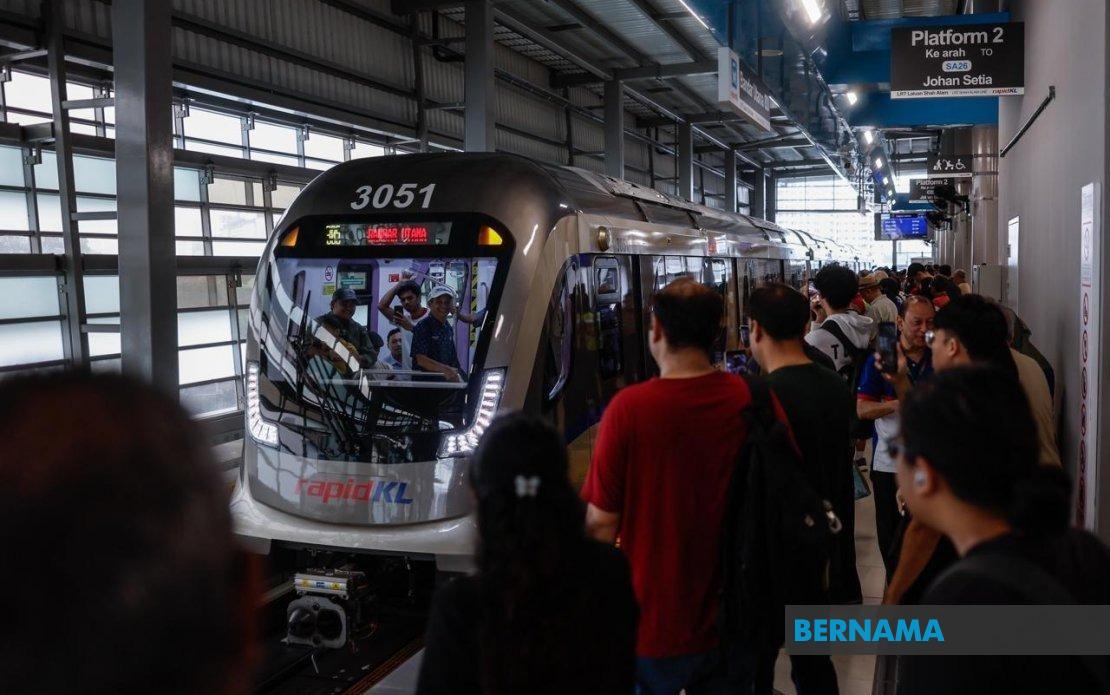
A technical malfunction in one of the train's key components was responsible for an incident that occurred on the Light Rail Transit 3 (LRT3) Shah Alam Line on July 4, according to operator Rapid KL. The faulty element made contact with the power conductor at Shah Alam Stadium Station at 7.05 pm, creating a brief disturbance that caught the attention of passengers and commuters at the station.
The contact between the defective component and the electrical conductor produced a small explosion-like sound accompanied by visible sparks, a phenomenon not uncommon when electrical systems experience sudden faults. Despite the dramatic nature of the incident, Rapid KL confirmed in a statement released on July 14 that no passengers or staff members sustained injuries from the occurrence. The company emphasised that regular train services resumed without significant disruption, maintaining the line's operational integrity throughout the evening.
Rapid KL's response protocol proved effective in managing the situation. Upon detection of the problem, the affected train was immediately withdrawn from active service. Passengers aboard the train were safely disembarked at the subsequent station along the route, allowing them to continue their journeys on an alternate train that was made available. This measured approach minimised inconvenience to commuters while prioritising their safety and preventing further complications.
Following the incident, the compromised train was transferred to Rapid KL's maintenance depot for comprehensive technical examination. Technicians conducted a thorough inspection to identify the specific nature of the fault and assess whether any other systems had been damaged by the electrical contact. The identified faulty component was subsequently replaced with a new, functioning unit to restore the train to full operational capability.
The transit operator did not provide extensive technical details about the nature of the defective component in its public statement, maintaining operational confidentiality whilst assuring the public of corrective measures. After completing all necessary inspections and safety validations, Rapid KL authorised the train's return to regular service once engineers confirmed its fitness for passenger operations. This clearance followed standard safety protocols and indicated confidence in the repair work undertaken.
Beyond addressing the immediate issue, Rapid KL initiated a wider precautionary programme to ensure similar faults did not exist elsewhere within its LRT3 fleet. The company conducted inspections and continuous monitoring of other trains operating on the Shah Alam Line, reflecting an abundance-of-caution approach to fleet management. These preventative measures aimed to identify potential vulnerabilities in other units before they manifested in operational incidents.
The incident highlights the critical importance of regular maintenance and monitoring in rapid transit systems that serve hundreds of thousands of passengers daily. Although the July 4 incident resulted in no injuries and minimal service disruption, it underscores the consequences when mechanical components deteriorate or fail unexpectedly. For Malaysian commuters relying on LRT3 for daily transportation across the Klang Valley, assurance of rigorous safety protocols provides confidence in the system's reliability.
Rapid KL's public prioritisation of passenger safety in its statement reflects industry standards and regulatory expectations for public transport operators in Malaysia. The company's commitment to comprehensive inspections and preventative monitoring across the fleet demonstrates a proactive rather than reactive approach to maintenance. Such practices are essential for maintaining public trust in the rapid transit system, particularly given the modal's growing role in addressing urban congestion and supporting economic activity across the Selangor region.
The LRT3 Shah Alam Line continues to serve as a crucial transport artery connecting residential areas, commercial zones, and the Shah Alam Stadium precinct with other parts of the Klang Valley. Any operational disruption on this line potentially affects thousands of daily commuters, making swift and effective maintenance response essential. The July 4 incident and Rapid KL's subsequent management demonstrate the operational readiness required to minimise passenger impact when technical problems arise within the system.

