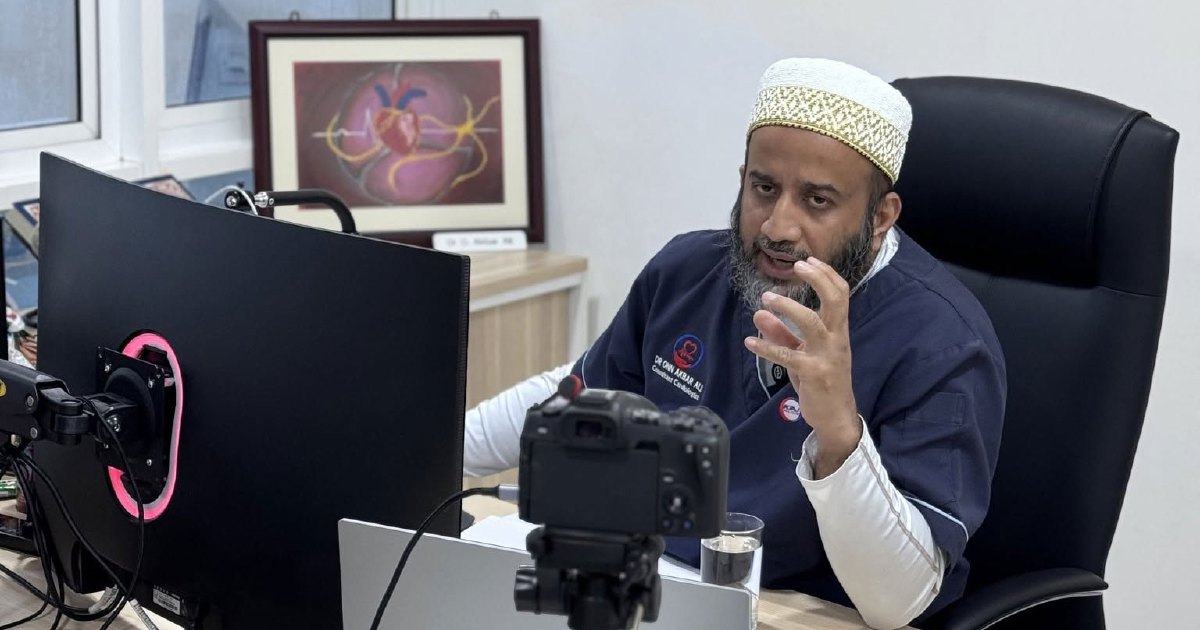
Consultant cardiologist Dr Onn Akbar Ali received a jolt recently when he stumbled upon a synthetic video circulating online that superimposed his facial features and voice onto footage promoting herbal tea as a purported diabetes treatment. The discovery underscores an escalating vulnerability facing medical professionals and consumers alike as artificial intelligence technology becomes increasingly sophisticated and accessible to unscrupulous actors exploiting the healthcare space.
The incident involving Dr Onn Akbar Ali represents merely one visible case within a broader ecosystem of health-related fraud enabled by deepfake technology. Criminals have discovered that medical practitioners carry particular credibility weight with consumers, making their synthetic likenesses potent tools for marketing dubious remedies and unproven supplements. When viewers encounter what appears to be a trusted physician endorsing a product, the psychological persuasion quotient rises substantially, even among individuals with baseline critical thinking skills.
Malaysia's position as a growing hub for both digital innovation and traditional medical product manufacturing creates a particularly fertile landscape for such schemes. The nation's strong herbal medicine industry, while legitimate and culturally rooted, provides convenient cover for fraudulent operators who can flood markets with counterfeit herbal preparations. Deepfake technology adds a dangerous multiplier effect, allowing scammers to operate with minimal overhead while generating manufactured endorsements that circumvent traditional regulatory pathways.
The technical barriers to creating convincing deepfakes have collapsed dramatically in recent years. Generative artificial intelligence models, some freely available online, require only modest computational resources and footage samples to construct fabricated videos that deceive casual viewers. The sophistication required to identify synthetic media has become a specialized skill, placing ordinary consumers at considerable disadvantage. A patient seeking diabetes management solutions through online channels faces exponentially higher risks of encountering falsified medical endorsements.
From a regulatory perspective, Malaysian authorities face mounting challenges in combating health fraud executed through synthetic media channels. Traditional advertising standards and medical claims verification frameworks were designed for a world of static images and recorded statements that could be authenticated through source tracing. Deepfakes fundamentally alter this equation by creating attributable falsehoods that technically never originated from the source individual. The lag between technological capability and regulatory adaptation has grown uncomfortably wide across the region.
Consumers in Malaysia and throughout Southeast Asia should exercise heightened vigilance when encountering online medical endorsements, particularly those promoting unorthodox treatments or dietary supplements. Verification strategies might include directly contacting claimed endorsers through official channels, consulting regulatory databases maintained by bodies like the Malaysian Medical Council, and recognising that synthetic media increasingly mimics authentic presentation standards. The absence of traditional publication markers—professional medical journals, peer review evidence, institutional affiliations—frequently indicates fraudulent origin.
The implications ripple across the healthcare ecosystem beyond individual victim scenarios. Public confidence in legitimate medical advice erodes when false endorsements become indistinguishable from genuine statements. Patients may develop unwarranted scepticism toward actual physician guidance, or conversely, may accept counterfeit medical claims with greater acceptance than warranted. Medical professionals simultaneously lose control over their own professional identity and face reputational damage from association with fraudulent schemes beyond their control or knowledge.
Standards-setting organisations and technology platforms bear responsibility for developing detection and mitigation systems. Some jurisdictions have begun requiring disclosure markers for synthetic media, similar to labelling requirements for other content categories. Malaysia's regulatory bodies, in coordination with platforms hosting such content, should consider implementing deepfake detection mechanisms and rapid takedown procedures specifically for health-related synthetic media. Digital literacy initiatives targeting vulnerable populations—including elderly citizens and those with limited internet experience—represent complementary protective measures.
International cooperation becomes increasingly essential as fraudsters operate across borders with minimal friction. A scam originating from outside Malaysia can target Malaysian consumers through social media platforms headquartered elsewhere, exploiting regulatory gaps and jurisdictional blind spots. Regional health authorities and technology regulators should establish information-sharing protocols and coordinated enforcement mechanisms capable of responding to cross-border synthetic health fraud operations.
Dr Onn Akbar Ali's experience, while individually troubling, carries systemic significance for how Southeast Asian societies approach emerging technology risks in the medical sector. The incident demonstrates that even high-profile professionals with established credibility remain vulnerable to identity appropriation through artificial means. Protecting public health requires moving beyond reactive individual complaint mechanisms toward proactive regulatory frameworks that anticipate and address technological vulnerabilities before fraudsters fully exploit them. The integration of AI literacy into medical education and consumer health awareness represents an overdue investment in regional health security.

