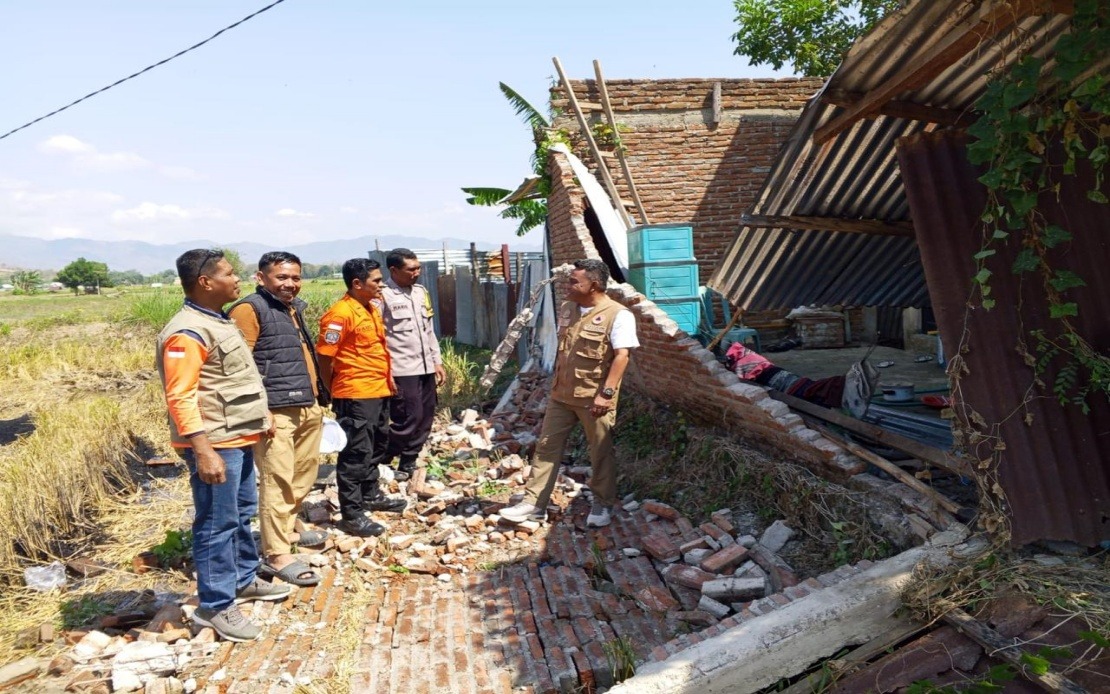
A powerful magnitude 7.7 earthquake has claimed at least 38 lives on Indonesia's Flores Island in East Nusa Tenggara province, triggering a massive rescue operation across the affected region. The devastating tremor struck early Saturday morning, causing widespread structural damage and prompting authorities to mobilise emergency response teams across multiple districts as search-and-rescue operations continue in race against time to locate survivors beneath the rubble.
According to Suharyanto, chief of the National Disaster Management Agency (BNPB), the toll reflects conditions as of mid-afternoon on Saturday. Beyond the fatalities, two individuals were listed in serious condition requiring urgent medical intervention, while another 11 sustained lighter injuries. Notably, approximately 2,000 residents evacuated independently from the most dangerous zones, suggesting rapid public response despite the early morning timing of the disaster. The relatively large number of self-evacuees has likely prevented an even higher casualty count, as residents recognised immediate danger and moved to safer ground.
The earthquake originated beneath the ocean approximately 30 kilometres from Mbay at a depth of 15 kilometres, rupturing shortly after 4:58 am local time. Such underwater epicentres typically generate tsunami risks, and authorities swiftly issued warnings for the surrounding coastline. However, sea-level monitoring stations detected no dangerous wave activity, allowing officials to lift the tsunami alert by 7:31 am. This fortunate development prevented a secondary disaster that could have compounded already severe casualties and damage across coastal settlements.
Rescue efforts mobilised immediately, with personnel from Basarnas, Indonesia's dedicated search-and-rescue agency, working alongside military and police units to penetrate damaged buildings and locate survivors. Suharyanto confirmed that multiple residents remained unaccounted for, believed trapped within collapsed structures across several locations. The agency prioritised search operations above all other considerations, recognising that survival chances for buried individuals diminish rapidly after the initial hours following a major earthquake.
The physical destruction extends across multiple infrastructure categories. Dozens of residential buildings suffered damage ranging from moderate to total collapse, while several community health centres that serve as vital medical facilities experienced structural compromise. Landslides triggered by ground instability cascaded across numerous roads, severing critical transport connections between communities. Even airport terminal facilities sustained damage, though critically, the runways themselves remained operational—an important factor for delivering relief supplies and evacuating the most severely injured to larger medical centres beyond Flores.
Two ports serving the island also experienced damage, potentially disrupting maritime supply routes essential for a region dependent on sea transport for goods and services. The cumulative infrastructure damage paints a picture of a region struggling not only with immediate rescue operations but also facing weeks or months of reconstruction ahead. Authorities acknowledged that comprehensive damage assessment remained incomplete on the first day, with figures expected to rise as teams could access previously unreachable areas and conduct systematic surveys.
Recognising the urgency of restoring connectivity in isolated communities, Indonesia's Public Works Ministry deployed specialized teams and heavy equipment to clear landslide debris from blocked roads. This parallel effort to rescue operations represents an attempt to maintain essential supply lines even as search teams worked through rubble. Without restored road access, delivering food, water, and medical supplies to affected populations would prove impossible, potentially creating secondary humanitarian crises in areas where survivors survived the earthquake but face deprivation in its aftermath.
The BNPB deployed aerial resources including two helicopters and a fixed-wing transport aircraft to supplement ground operations. These aircraft served dual purposes: facilitating evacuations of injured individuals to hospitals with greater capacity than rural health centres, and transporting relief packages to communities cut off by damaged infrastructure. Distribution of critical supplies—food, drinking water, purified water for sanitation, temporary shelter tents, and generators for powering emergency operations—began immediately, though authorities faced the challenge of reaching scattered populations across a mountainous island.
For Malaysia and broader Southeast Asia, the Flores earthquake serves as a sobering reminder of regional seismic vulnerability. Indonesia sits along the Pacific Ring of Fire, making such disasters inevitable rather than exceptional. The efficiency of Indonesia's disaster response—swift deployment of rescue teams, rapid tsunami assessment, concurrent infrastructure restoration—provides lessons applicable throughout the region. Malaysian authorities continue developing similar protocols through collaboration with ASEAN partners, recognising that earthquakes and tsunamis respect no national borders and that coordinated regional response capacity benefits all member states.

