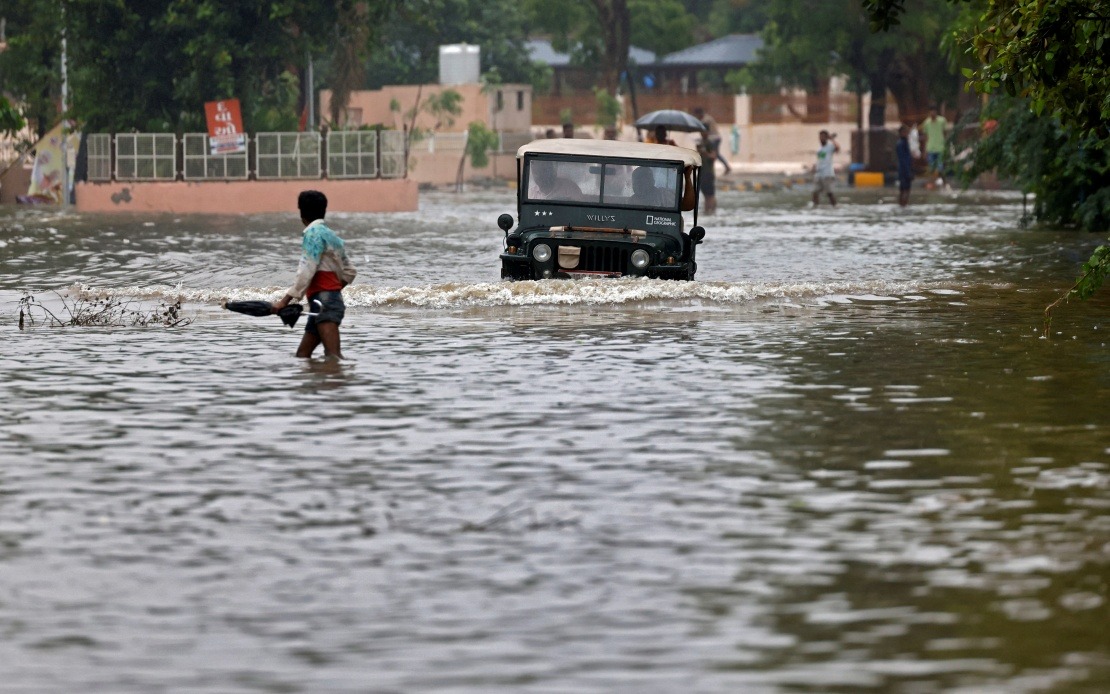
A devastating flood crisis in India's northeastern Assam state has claimed at least 61 lives, with authorities reporting 14 additional deaths within the span of 24 hours as the disaster entered a critical phase on Friday. The deaths underscore the escalating severity of a disaster that began earlier in July, with meteorological and hydrological conditions showing no signs of immediate improvement across the affected region.
According to the State Disaster Management Authority, the catastrophe has extended beyond a localized event into a widespread humanitarian emergency affecting multiple districts simultaneously. Three districts reported new fatalities during the latest reporting period, though the burden fell unevenly across jurisdictions. Charaideo district alone accounted for seven of the 14 newly confirmed deaths, indicating the uneven geographic distribution of the disaster's impact and suggesting that certain areas face particular vulnerabilities to flooding in monsoon season.
The human toll represents only one dimension of the crisis unfolding across the northeastern Indian state. Chief Minister Himanta Biswa Sarma outlined the staggering scale of displacement, noting that close to 1.1 million people have been displaced from their homes and livelihoods. These affected populations are scattered across more than 2,000 villages, creating an enormous logistical challenge for relief and rescue operations. The sheer geographic dispersal of those requiring assistance—spread across thousands of separate settlements rather than concentrated in urban centers—compounds difficulties in delivering food, medical care, and shelter to vulnerable populations.
Environmental factors continue to pose an active threat to further loss of life and property damage. River water levels remain significantly elevated, hovering at or above officially designated danger thresholds across much of the state. Sarma emphasized that current conditions represent an ongoing rather than subsiding crisis, with hydrological measurements suggesting that the immediate threat period has not yet concluded. This persistent elevation of water levels, rather than declining toward normal seasonal patterns, means that populations in low-lying areas face sustained and elevated risk of inundation.
Authorities have implemented vigilance protocols in response to the continued threat posed by swollen waterways. Emergency management teams have been explicitly instructed to maintain heightened awareness and preparedness, recognizing that conditions could deteriorate further or shift geographically as water moves downstream through the complex river system of Assam. The Brahmaputra River and its tributaries, which drain vast areas of the eastern Himalayan region, remain key focus areas for monitoring and response efforts.
The monsoon season that typically brings heavy precipitation to northeastern India from June through September creates recurring vulnerability in this region. Assam, positioned at the confluence of major river systems and characterized by extensive wetland areas and low-lying terrain, faces particular exposure during periods of above-normal rainfall. Infrastructure limitations and constrained resources for disaster management in this less-developed region compared to parts of India further south compound the challenges faced by state authorities.
The cascade of failures that characterize major flooding events extends beyond immediate loss of life. Displacement on this scale creates secondary humanitarian concerns including waterborne disease risk, food security challenges, and psychological trauma among affected populations. Economic disruption affects agricultural livelihoods for peasant farming communities that dominate rural Assam, with crops inundated and farming calendars severely disrupted. Livestock losses accumulate as animals perish or are separated from their owners.
For Malaysia and other Southeast Asian nations, the Assam floods serve as a cautionary reminder of climate-related vulnerabilities that transcend national boundaries. Similar monsoon-driven flooding patterns affect Malaysia's east coast states and parts of Southeast Asia, presenting parallel risks to densely populated low-lying areas. Assam's experience demonstrates the compounding challenges that emerge when large-scale natural disasters strike regions with limited economic resources and stretched administrative capacity.
The Indian central government's response mechanisms are now engaged alongside state-level authorities, though the geographic scale and the complex hydrology of the affected region present enduring operational constraints. As water continues to move through the river system, downstream areas remain at risk, potentially extending the crisis timeline beyond current projections. The situation underscores fundamental tensions between sustainable development and climate resilience in South Asia's vulnerable northeastern frontier.

