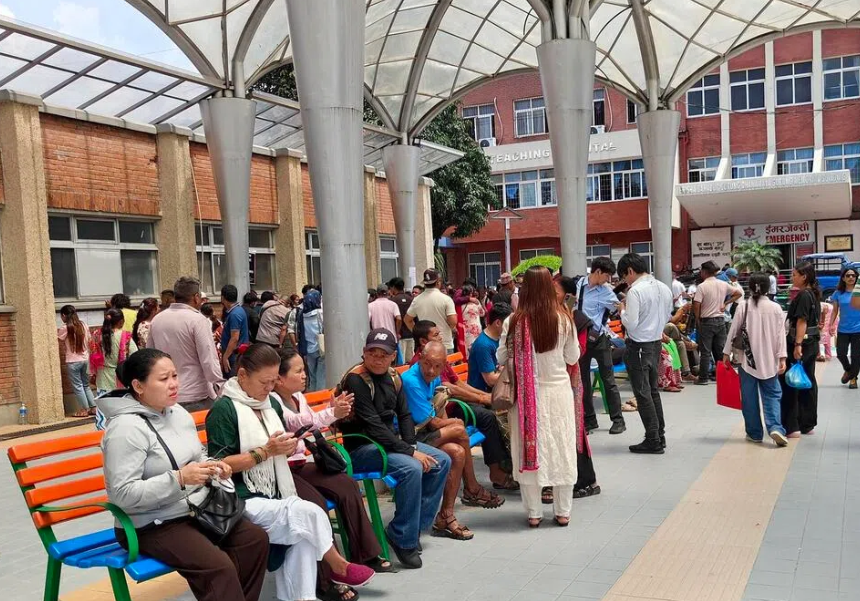
The streets surrounding Tribhuvan University Teaching Hospital in Kathmandu have become an unexpected hub of heartbreak in recent days, as authorities have taken the grim step of displaying photographs of unidentified bodies on the hospital gates. Since the devastating flash flood that tore through Nepal's northern border region on 26 August, this macabre display has become the last hope for thousands of families searching for missing loved ones. The disaster has proven one of the most severe in recent memory for the Himalayan nation, with the confirmed death toll now exceeding 500 people, while search and rescue operations continue to recover bodies from the Bhotekoshi river system and affected downstream areas.
The human dimension of this tragedy is evident in the countless narratives playing out across Kathmandu's medical facilities. Dolma Tamang, a 36-year-old woman, stands among the crowds of desperate relatives examining photographs, searching for any sign of her sister and brother-in-law. The couple were traveling through Rasuwa district on 26 August, transporting goods from the Chinese border, when their mobile phones went silent and they vanished without trace. Over three days, Tamang has made the exhausting rounds of Kathmandu's hospitals, moving from ward to ward and studying face after face, her emotional reserves depleted by the relentless search for answers. Her struggle represents the anguish felt by hundreds of families who find themselves in similar circumstances, clinging to fragile hopes that their relatives might still be alive somewhere in the vast landscape of destruction.
The scale of the missing remains staggering. By the afternoon of 28 August, the official list of unidentified or missing individuals had reached more than 1,500, with new names being added as coordination centres receive fresh information. Hospitals across Kathmandu have become makeshift identification stations, their walls papered with printed photographs and handwritten notices as relatives attempt to cross-reference missing persons with identified bodies. The situation has been further complicated by the sheer volume of casualties, which has overwhelmed the capacity of morgues across affected districts. In Chitwan, a district downstream from the epicenter that borders India and is renowned for its national park, authorities had recovered 186 bodies by the afternoon of 28 August, yet the district's hospitals could collectively store only between 30 and 50 bodies in their existing morgue facilities—a stark illustration of the humanitarian crisis unfolding.
Search and rescue operations have mobilized unprecedented resources, with over 4,400 police personnel deployed across affected areas, supported by the Nepali Army and Armed Police Force. On 28 August, rescue efforts faced a temporary setback when fears of a barrier lake breach prompted authorities to pause operations out of concern that another catastrophic flash flood could be unleashed. However, by evening, rescue teams resumed their work, though the situation surrounding the barrier lake remained uncertain and continued to pose potential risks to search personnel. The coordination of these vast rescue operations, combined with the recovery of bodies in inaccessible terrain, has created extraordinary logistical challenges for Nepali authorities attempting to manage a disaster that extends across multiple districts and borders.
The international dimensions of this tragedy have added further layers of complexity to the response. At least nine Singaporeans remain missing, while the fate of approximately 288 Indian nationals caught in the disaster has generated intense concern across the border. The Kathmandu Post reported that 121 foreign tourists had been rescued as of 28 August, including 85 Indians and 16 Chinese nationals, yet many more remain unaccounted for. Significantly, many of the missing Indian nationals were part of pilgrimage groups heading to or returning from Mount Kailash and Lake Manasarovar in Tibet via the Rusawa district. This popular spiritual route passes through Rasuwa district, which bore the full force of the flash flood and suffered catastrophic damage at the Gyirong border crossing between Nepal and Tibet, where viral images of mudslides and torrential floodwaters have captured the horrifying scale of the disaster.
The arrival of family members and friends of missing persons from abroad has become another poignant feature of the unfolding crisis. A group of men from Tamil Nadu in South India flew into Kathmandu on an early morning flight on 28 August to search for members of their travel group who were returning from pilgrimage and have since disappeared. Among them was a man from Coimbatore who traveled to support his friend already in Kathmandu as they jointly search for the friend's wife and son. At the airport, as the group confronted the overwhelming uncertainty, one visitor offered his struggling friend a measured message: whatever the outcome, they would face it together and must remain strong. These personal journeys underscore how the disaster's impact radiates far beyond Nepal's borders, affecting communities across South Asia and Southeast Asia.
Individual stories of loss echo through Kathmandu's hospitals with particular intensity. Inside the TUTH facility, Sushila Shrestha, a 23-year-old, searches desperately for her younger brother, 21-year-old Bir Bahadur Shrestha, who was a truck driver traveling toward the Chinese border to transport goods when the flood struck Rasuwa district. Despite the terror of having received no news about his whereabouts, Sushila clings to the possibility that no information might indicate he remains alive somewhere. Her determination to maintain hope even in the face of overwhelming odds reflects a common psychological response among those confronting the uncertainty of mass disasters. Meanwhile, 35-year-old Bikesh Shrestha stood outside the hospital gate searching for his cousin Rakesh Shrestha, yet found himself unable to examine the photographs of unidentified corpses. His emotional distress—expressed through the simple but devastating statement "I had to turn my eyes away"—captures the profound psychological toll of participating in such grim identification processes.
The Nepali government has taken a strategic approach to international assistance that reflects lessons learned from the 2015 earthquake. Prime Minister Balen Shah has declined offers from multiple countries, including China and India, to deploy foreign search and rescue teams, citing coordination difficulties that arose when numerous international rescue units descended on Nepal following the previous disaster. Instead, the government has requested financial assistance channeled through a single coordinated mechanism that will be announced shortly. This approach represents a deliberate prioritization of streamlined domestic management over the potential logistical complications of multiple foreign rescue operations. India has nonetheless provided substantial humanitarian support, initially sending 47 tonnes of assistance including temporary shelters, blankets, hygiene kits, solar lamps, medicines, and food packets via military transport aircraft. Additionally, New Delhi has offered prefabricated truss bridges to help restore connectivity in regions where dozens of small and large bridges were destroyed by the floodwaters.
The disaster has revealed critical infrastructure vulnerabilities across northern Nepal's border regions. The Gyirong border crossing, a crucial point of entry between Nepal and Tibet, sustained severe damage from mudslides and floodwaters, effectively severing a key pilgrimage and trade route. The destruction of bridges and transportation networks has isolated communities and complicated rescue operations, as teams must navigate treacherous terrain to reach affected areas. The downstream spread of devastation extended into Chitwan district, where debris and silt now block roads and have accumulated across the landscape, creating additional hazards for relief workers and rescue teams. These infrastructure failures underscore how natural disasters in the Himalayas can have cascading effects across international borders and affect travel and commerce patterns for entire regions.
The psychological and social dimensions of this disaster continue to unfold as Kathmandu grapples with unprecedented loss. The temporary morgue displays at hospital gates, while necessary for identification purposes, represent a profound departure from normal social conventions and reflect the scale of death that has exceeded the capacity of established systems to manage. Families have been forced to conduct their searches in public spaces, grieving alongside strangers while examining images of the deceased in hopes of locating their own relatives. The hospital walls, now covered with missing persons posters, have become informal memorials where hope and desperation intersect. As days pass without resolution for many cases, the psychological burden on families intensifies, and the provisional nature of each day—wondering whether news might arrive—creates an exhausting limbo of uncertainty that extends the trauma far beyond the immediate moment of disaster.

