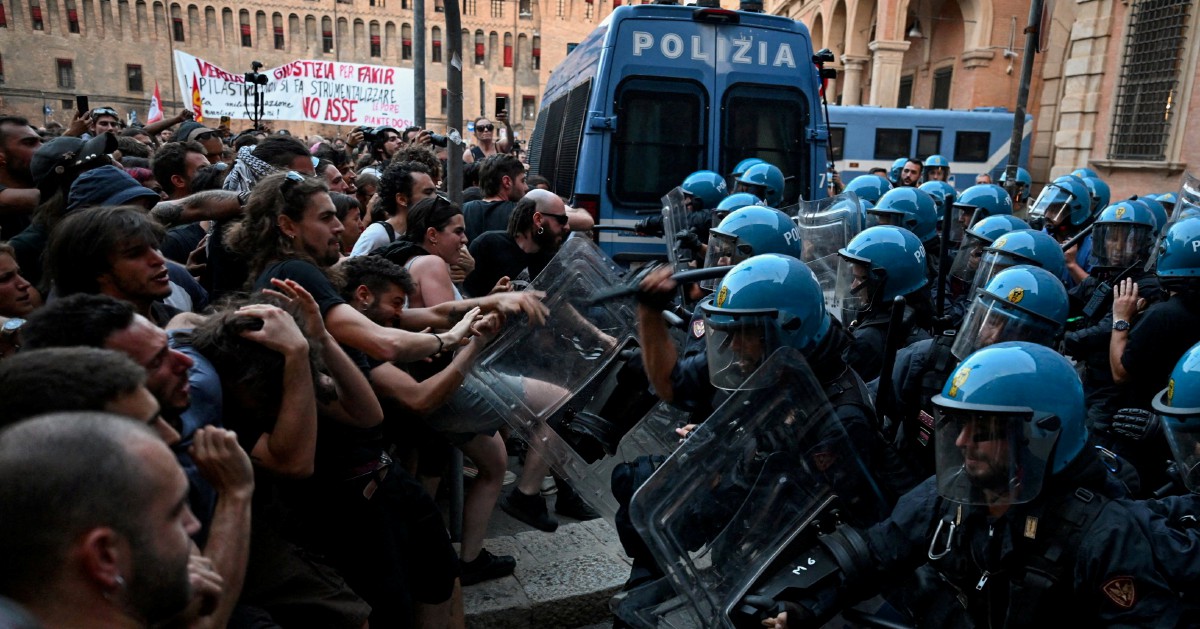
The sudden death of a Moroccan man while in police custody in Italy has escalated into a diplomatic matter, with Moroccan authorities demanding comprehensive clarification and Italian Prime Minister Giorgia Meloni publicly committing to full transparency. The incident, which resulted in street demonstrations, represents the kind of high-stakes law enforcement controversy that can strain bilateral relations and test the credibility of European policing standards.
Morocco's formal response signals the seriousness with which Rabat views the circumstances surrounding the death. Rather than allowing the matter to be treated as a routine internal Italian police matter, the Moroccan government has signalled its intention to monitor the investigation closely and ensure that accountability mechanisms function properly. Such diplomatic interventions occur when a government believes its citizens abroad require heightened protection and oversight, particularly when death occurs in state custody.
Prime Minister Meloni's public pledge to pursue "the truth right to the end" indicates that Rome recognises the reputational stakes involved. European Union member states operate under considerable scrutiny regarding police conduct and human rights standards, and high-profile custody deaths can attract criticism from international bodies and civil society organisations. Meloni's commitment to transparency appears designed to forestall accusations of cover-up or indifference, establishing early that the Italian state will conduct a thorough investigation.
The street protests that have erupted reflect broader public concern about policing practices and the potential for systemic abuse. In Italy, as across Europe, questions about how police handle individuals from immigrant communities—whether through disproportionate force, inadequate medical attention, or procedural failures—have become increasingly politicised. Protest movements draw participants concerned not just with this single case but with patterns of treatment that may extend beyond it.
For Malaysia and Southeast Asian readers, this incident carries relevance beyond European affairs. Many Southeast Asians work, study, or travel in Europe, and custody deaths represent a fundamental concern about personal safety abroad. The incident underscores the importance of knowing one's rights in foreign jurisdictions and the value of diplomatic channels through which governments can demand accountability when their citizens are involved in serious legal matters.
The Moroccan government's activism in this case also reflects how nations of origin increasingly assert agency in protecting their diaspora populations. Historically, wealthy Western nations sometimes treated custody issues involving foreign nationals with less rigour than domestic cases. Contemporary diplomatic pressure—as Morocco is applying here—seeks to establish that such double standards are unacceptable and that investigations must meet uniform standards regardless of the victim's nationality or origin.
Investigations into custody deaths typically examine multiple factors: whether appropriate medical care was provided during detention, whether force was used excessively or inappropriately, whether procedures were followed correctly, and whether systemic failures or individual misconduct contributed to the outcome. Italian authorities will likely face pressure to produce findings that address each dimension thoroughly rather than limiting scrutiny to narrow technical questions.
The timing of Meloni's statement matters politically within Italy as well. Her government has taken strong positions on immigration and law and order, potentially creating tension if investigations suggest police misconduct. By emphasising commitment to truth and accountability, she attempts to position her administration as one that respects rule of law principles even when investigations may reflect negatively on law enforcement agencies aligned with her political coalition.
International response to such incidents typically involves not just bilateral negotiations between Italy and Morocco but also input from European human rights mechanisms, civil liberties organisations, and media scrutiny. The case will likely attract attention from bodies that monitor police conduct across Europe, and findings could influence policy discussions about training, oversight, and accountability structures.
For Italian-Moroccan relations, the incident occurs against a backdrop of significant migration flows between North Africa and Europe. Morocco remains both a source country for migrants to Europe and a transit nation for those heading northward. Managing such relationships requires robust legal frameworks and confidence that both sides will handle sensitive matters—including deaths in custody—with transparency and mutual respect. The willingness or reluctance to conduct thorough investigations can significantly affect bilateral trust.
The broader context includes ongoing European debates about immigration enforcement and the treatment of migrants by authorities. Cases involving death in custody inevitably become focal points for advocates and activists questioning whether enforcement operations are conducted humanely and whether vulnerable populations receive adequate protection. Such scrutiny, while sometimes contentious politically, serves an important function in maintaining standards.
Looking forward, the investigation's conclusions and the quality of the process will determine whether the incident becomes resolved as an isolated tragedy or evolves into a symbol of systemic problems. Moroccan and Italian authorities both have incentives to conduct the inquiry thoroughly and transparently, ensuring that facts emerge clearly and that any necessary reforms can be implemented. For diaspora communities worldwide, including those from Southeast Asia in Europe, the outcome carries implications for how confidently their own governments can demand accountability when citizens face serious incidents abroad.

