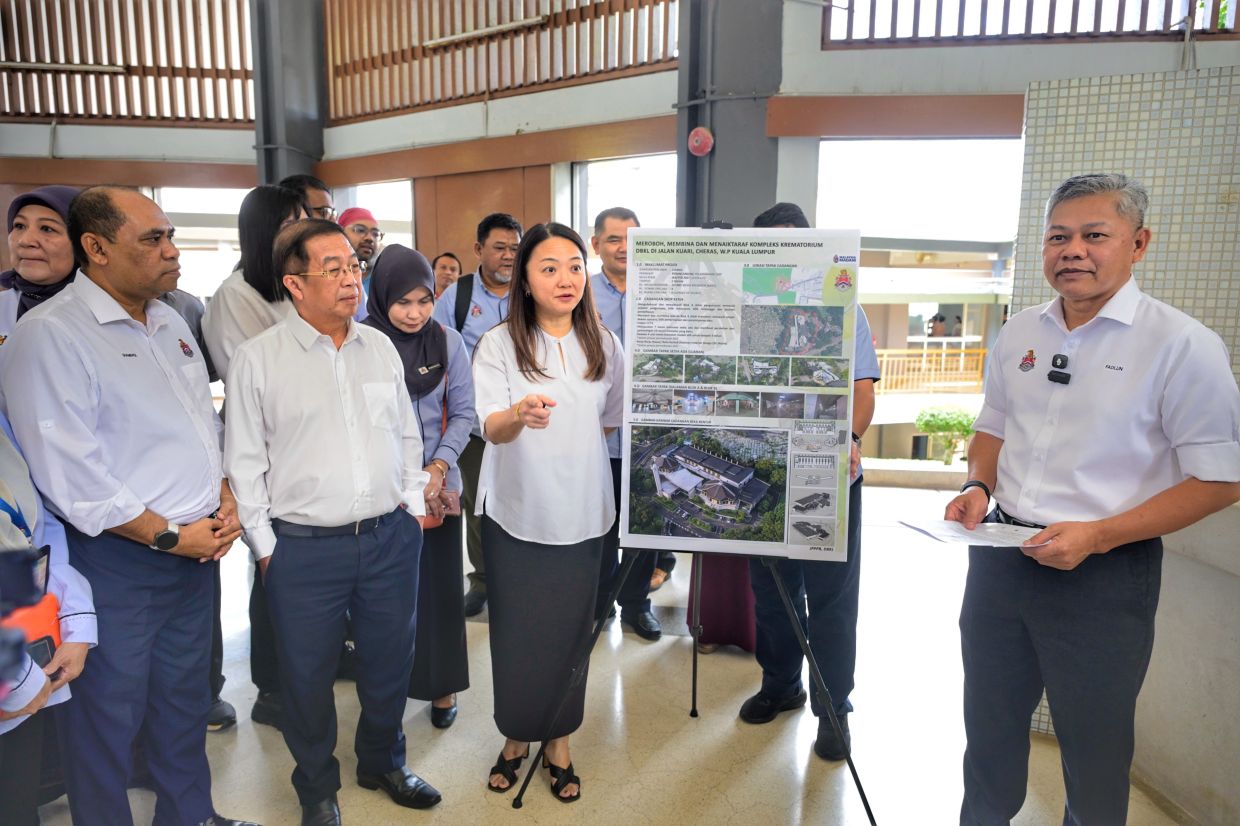
The Cheras crematorium on Jalan Kuari is set for a substantial modernisation programme as Kuala Lumpur City Hall moves to address mounting capacity constraints at its sole municipal cremation facility. A RM45 million investment will expand the complex through the addition of three new cremation units alongside existing infrastructure, with construction anticipated to commence in February 2026 and span two years for completion. The decision reflects the municipality's recognition that the facility, which has operated since 1977, requires substantial enhancement to serve Kuala Lumpur's demographically diverse population effectively.
During a site visit on Wednesday, DBKL Mayor Datuk Seri Fadlun Mak Ujud outlined the strategic importance of the upgrade in maintaining service standards as the city continues to grow. Currently, the Jalan Kuari complex processes more than 5,800 cremations annually, serving non-Muslim communities across the federal territory. The expansion represents a measured response to documented capacity pressures that have accumulated over nearly five decades of operation, with the facility now operating substantially above its original design parameters.
To ensure continuity of essential funeral services throughout the renovation period, four of the existing seven cremation units will remain operational while upgrading works proceed. This phased approach aims to minimise disruptions to bereaved families who depend on the facility during critical moments. The careful orchestration of construction and service delivery underscores the municipality's understanding that crematorium capacity directly impacts public welfare and social services delivery, particularly for Hindu, Buddhist, and Sikh communities who represent significant portions of Kuala Lumpur's population.
Cheras Member of Parliament Tan Kok Wai attended the visit and urged the city hall to accelerate the project timeline. Tan noted that the facility's half-century age makes modernisation overdue given the capital's demographic expansion. His intervention reflects broader concerns within the parliamentary constituency about infrastructure adequacy for ceremonial and funeral services, an often-overlooked dimension of municipal planning that nonetheless carries considerable weight in community satisfaction with city governance.
The expansion initiative received Federal Government endorsement through the 13th Malaysia Plan, with Minister in the Prime Minister's Department (Federal Territories) Hannah Yeoh present at the site inspection. This intergovernmental coordination signals alignment between City Hall and the Federal administration on infrastructure priorities for Kuala Lumpur, though Yeoh's comments also highlighted related capacity pressures affecting Muslim burial services across the federal territory.
Yeoh disclosed that the Federal Government is currently engaged in discussions with the Selangor state administration to locate appropriate sites in Semenyih for establishing Muslim cemeteries. This parallel initiative reveals that funeral infrastructure constraints extend beyond cremation facilities and reflect a broader spatial challenge facing the Klang Valley region. Kuala Lumpur's geographical limitations constrain the development of new burial grounds within the federal territory itself, necessitating inter-state cooperation to meet the needs of Muslim residents whose numbers have similarly grown substantially.
The twin challenges of cremation and burial ground capacity illuminate an underappreciated dimension of metropolitan planning across Malaysia. As urban populations expand and become increasingly diverse, municipal authorities must balance religious and cultural requirements with physical space limitations. The crematorium expansion and cemetery search represent pragmatic administrative responses to these competing pressures, yet also suggest that comprehensive infrastructure planning for funeral services has often lagged behind more visible development priorities such as transportation and commerce.
For Malaysia's diverse urban communities, access to adequate and timely funeral facilities carries profound social and cultural significance beyond mere logistical considerations. Delays or capacity constraints in cremation services can extend mourning periods and complicate ceremonial observances central to Hindu, Buddhist, and Sikh traditions. Similarly, burial ground shortages create uncertainty for Muslim families regarding final disposition and commemorative practices. The investments announced therefore extend beyond infrastructure expansion to represent recognition of equal service standards across religious and cultural constituencies within the capital.
The RM45 million investment signals City Hall's commitment to maintaining service quality amid demographic pressures, yet also raises questions about whether funeral infrastructure planning should receive greater prominence in municipal and regional development strategies. As Malaysia's urban centres continue absorbing population growth and experiencing increasing religious and cultural diversity, the experiences in Kuala Lumpur offer lessons for other major cities navigating similar challenges. The Cheras project demonstrates that addressing infrastructure gaps across all population segments, including less visible facilities serving essential community functions, requires deliberate capital allocation and multi-level governmental coordination.

