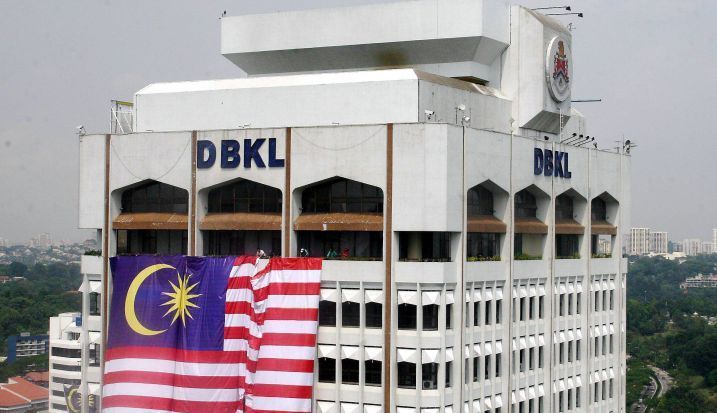
Kuala Lumpur City Hall has escalated its enforcement action against the Taman Desa Phase 1 Residents Association by issuing an official two-week deadline to remove facial-recognition scanners and boom gates from public roads within the residential neighbourhood. The directive came after DBKL officers affixed red enforcement notices at two guard posts on Thursday, 27 August, signalling the authority's determination to restore unfettered public access to the affected streets. The action represents a critical juncture in a prolonged administrative dispute between the municipal government and the residents' association over neighbourhood access controls and security infrastructure.
The enforcement notices specifically identified the structures as unauthorised installations that contravene Section 70 of the Street, Drainage and Building Act 1974, the primary legislation governing roadside construction and obstruction in Malaysia. DBKL also cordoned the scanning equipment and gates with yellow enforcement tape, a standard procedural step that formalises the violation and establishes a clear record for potential legal proceedings. A spokesperson for City Hall confirmed that the two-week grace period commenced immediately following the posting of notices, after the municipal authority's legal department completed a consultative review of the situation.
This enforcement action follows an inspection conducted by DBKL on 17 August, which revealed that the residents' association had failed to comply with previous directives despite receiving an extended 30-day window to bring its guarded-community scheme into alignment with municipal standards. In a subsequent letter dated 18 August, DBKL explicitly ordered the TDP1RA to fully reopen guard posts 2, 5, and 6 to vehicular traffic, dismantle all unapproved structures, and restore complete public access to the affected thoroughfares. The escalating timeline demonstrates City Hall's growing frustration with what it perceives as deliberate non-compliance from the residents' association, particularly given earlier warnings issued as far back as March regarding the facial-recognition and CCTV systems.
The controversy surrounding Taman Desa's access control measures has ignited significant community friction, with residents expressing diverse concerns about the security apparatus. On 24 August, over 40 neighbourhood residents, predominantly individuals aged 50 and above, staged a demonstration at Gate 5 along Jalan Desa Ria to protest the restricted vehicular access. The gate remains permanently sealed to vehicles and locked to pedestrians until 6 o'clock in the morning, forcing residents who walk early to navigate an inconvenient detour along a congested main road to access a nearby public park. This physical inconvenience has become emblematic of broader anxieties about gated communities and their relationship to public rights of way.
Beyond practical accessibility concerns, residents have articulated substantive objections to the facial-recognition technology itself, characterising it as intrusive surveillance that infringes on privacy expectations in residential areas. Additionally, safety advocates have flagged legitimate concerns that physical barriers and gate-controlled access could impede the rapid response times critical for emergency vehicles during medical crises or fire incidents. These arguments reflect growing regional awareness of the tension between private security preferences and public safety infrastructure needs, a debate gaining traction across Southeast Asian cities experiencing similar gated-community proliferation.
The residents' association has maintained its position that it complied with established procedures and secured substantial community mandate for the scheme. TDP1RA president Frank Yeh previously asserted that the association obtained support from 81 percent of residents before implementing the guarded-neighbourhood initiative, suggesting that the security measures reflect majority preference within the residential enclave. This claim highlights the underlying complexity: the dispute involves competing claims about proper consultation, democratic legitimacy within a residential setting, and the authority's right to enforce municipal regulations regardless of internal community preferences.
From a municipal governance perspective, DBKL's enforcement action represents an assertion of public authority over private community initiatives, particularly where such initiatives appropriate or restrict public space. The Street, Drainage and Building Act provisions invoked in the notices establish a clear legal framework preventing individuals or organisations from constructing unapproved obstructions on public roads, regardless of residential community consensus. City Hall's approach reflects growing recognition among Malaysian local authorities that gated communities, while popular among residents, must remain compatible with fundamental principles of public access and transparent governance.
The facial-recognition technology dimension introduces contemporary concerns about data collection and algorithmic surveillance in residential spaces. The systems at Taman Desa capture biometric information from all residents and visitors, raising questions about data storage, security protocols, and potential misuse—matters that extend beyond simple access control into personal privacy and information rights. Malaysian residents' growing wariness about biometric surveillance reflects global trends where facial-recognition technology increasingly attracts regulatory scrutiny and public scepticism regarding proportionality and necessity.
The Taman Desa situation also illuminates the broader challenge facing Malaysian municipalities managing the proliferation of gated communities across urban and suburban landscapes. Residents naturally desire secure neighbourhoods, yet municipal authorities must balance such preferences against established rights to public roads and principles of urban integration. The DBKL enforcement action suggests a regulatory approach prioritising public interest and legal compliance over community preference, setting potential precedent for how other local authorities might address similar unauthorised access-control schemes in their jurisdictions.
The two-week deadline now places TDP1RA at a critical decision point: comply voluntarily or face forced removal by municipal personnel. Should the association defy the notice, DBKL has explicitly indicated its preparedness to dismantle the infrastructure unilaterally, which would represent a significant assertion of municipal enforcement capacity. This outcome would likely generate additional community discord and potentially invite legal challenges from association members contending that their investment in security infrastructure warrants protection or compensation.

