Kuala Lumpur City Hall (DBKL) has initiated formal proceedings to purchase land in the Taman Datuk Senu area of Sentul, moving to resolve a persistent problem affecting thousands of residents who depend on a public access road that technically sits on privately owned property. The issue came to widespread public attention recently when residents began shutting down the thoroughfare, prompting frustrated community members to voice their concerns across social media platforms, highlighting how the blockage had severely disrupted their daily commute and access to essential services.
According to Kuala Lumpur Mayor Datuk Seri Fadlun Mak Ujud, investigations revealed a significant administrative oversight: no formal land acquisition had ever been executed in the location despite the road serving the public for an extended period. This gap in documentation means that a vital arterial route, which residents have relied upon for years, technically remains the property of a private landowner who recently took steps to prevent public use. The situation underscores how rapidly changing urban development patterns can create governance challenges when historical land records and actual public usage diverge sharply.
The municipal authority began exploring pathways to rectify the situation from February onward, engaging in preliminary consultations with stakeholders involved in the dispute. Rather than attempting to resolve the matter through DBKL's direct intervention, city officials recognised that resolving the boundary between public and private land requires involvement of federal government institutions with statutory authority over such transactions. Consequently, DBKL submitted a formal application to the Department of the Director General of Lands and Mines (JKPTG), the regulatory body empowered to conduct official land acquisitions on behalf of state authorities.
Fadlun explained that the acquisition procedure involves multiple sequential stages, each requiring careful adherence to legal frameworks. The process begins with securing official governmental approval, followed by formal gazettement procedures that announce the acquisition through official government publications. Subsequently, the Valuation Department assesses the fair market value of the property, after which the government must compensate the private landowner according to that determination. These procedural steps, while necessary for protecting property rights and ensuring transparency, necessarily require time to execute thoroughly.
The timeline for completion remains contingent on how smoothly these bureaucratic and legal processes advance without encountering obstacles. DBKL anticipates that if governmental approval proceeds without complications and the landowner accepts the valuation assigned by professional valuers, the entire acquisition could be finalised within three to four months. However, this optimistic projection assumes that no disputes emerge regarding the assessed property value and that all stakeholders cooperate with the schedule. Delays could extend this timeline considerably if the landowner contests the valuation or if JKPTG encounters administrative bottlenecks in processing the application.
Mayor Fadlun publicly appealed to the affected property owner to exercise patience as the legal machinery operates, emphasising that the road's longstanding use by the public creates a compelling case for completing the acquisition expeditiously. His remarks indicate that city leadership recognises both the legitimate property rights of the landowner and the practical realities of a residential community whose access depends on this particular route. By framing the acquisition as mutually beneficial—enabling the landowner to receive fair market compensation while restoring uninterrupted access for residents—municipal authorities hope to facilitate cooperation rather than foster confrontation.
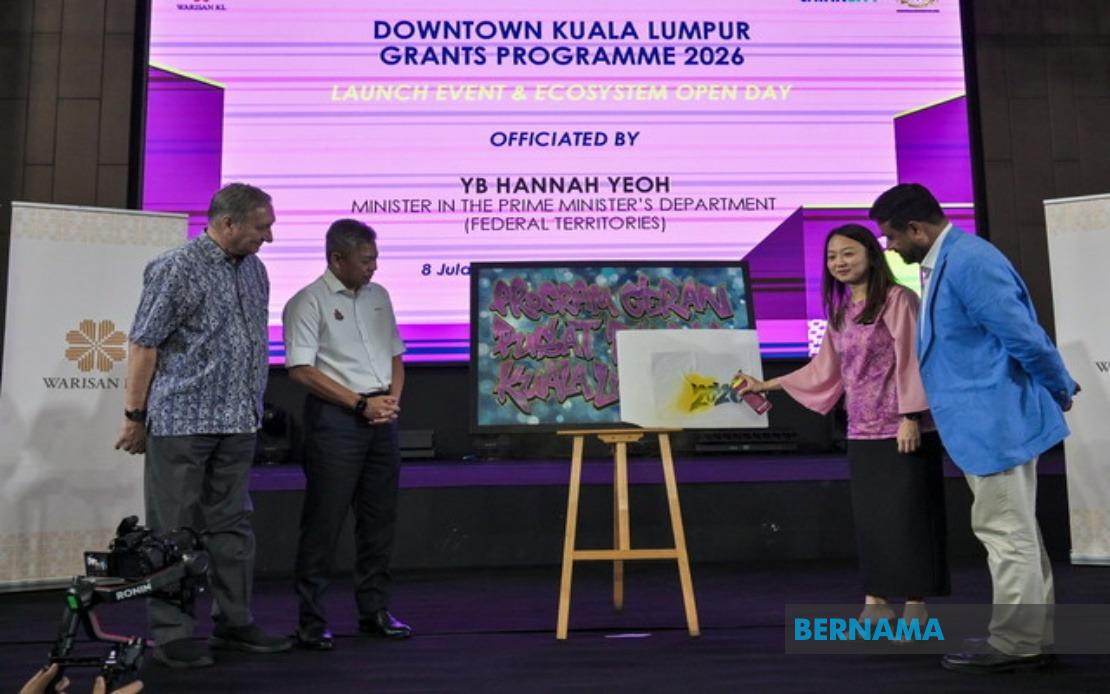
The involvement of Minister in the Prime Minister's Department (Federal Territories) Hannah Yeoh at the Downtown Kuala Lumpur Grant Programme 2026 launch signals that the federal government's Federal Territories division is monitoring this issue at a senior policy level. For residents across Kuala Lumpur's Federal Territory, the resolution of the Taman Datuk Senu access dispute carries broader implications about how public-private property disputes will be managed in Malaysia's capital city as urbanisation continues and land values escalate. The precedent established here may influence how future similar conflicts are handled across the capital.
The viral social media campaign that brought the road closure to national attention demonstrates how digital connectivity has empowered residents to rapidly mobilise public opinion around local infrastructure issues. This pressure from constituents appears to have accelerated official response, suggesting that municipal authorities are increasingly responsive to collective citizen action amplified through online platforms. For other Malaysian communities facing similar access problems on privately owned land, the DBKL initiative provides a potential template for pursuing formal resolution through government acquisition mechanisms rather than entering protracted private disputes.
From a broader governance perspective, this situation reveals the importance of maintaining comprehensive land registries and conducting periodic audits to identify discrepancies between official documentation and actual public usage patterns. The fact that a public road operated without formal land acquisition demonstrates potential gaps in municipal planning records and historical documentation that could be replicated elsewhere in Kuala Lumpur or other Malaysian cities. Authorities may need to conduct systematic reviews to identify other instances where essential public infrastructure exists on technically private land, potentially preventing similar crises before they disrupt community access.
The property owner's decision to block access, while legally defensible based on ownership rights, ultimately forced government intervention that will result in the land transfer through compensation. This outcome illustrates how pursuing private interests in opposition to longstanding public usage patterns often proves counterproductive, as it mobilises official mechanisms that may result in acquisition rather than negotiation. For property owners in Malaysia, the lesson suggests that engaging constructively with communities and municipal authorities yields better outcomes than unilateral actions that generate social friction and political pressure.
The projected three-to-four-month resolution timeline, if achieved, would represent a relatively efficient government response to an infrastructure crisis affecting daily lives. However, Malaysian residents and property owners watching this situation should remain cautious about timeline predictions in government acquisition processes, which historically have experienced delays. The success of this particular endeavour will depend significantly on the goodwill of all parties and the administrative capacity of JKPTG to prioritise the application without encountering resource constraints or procedural complications that commonly slow such transactions.

