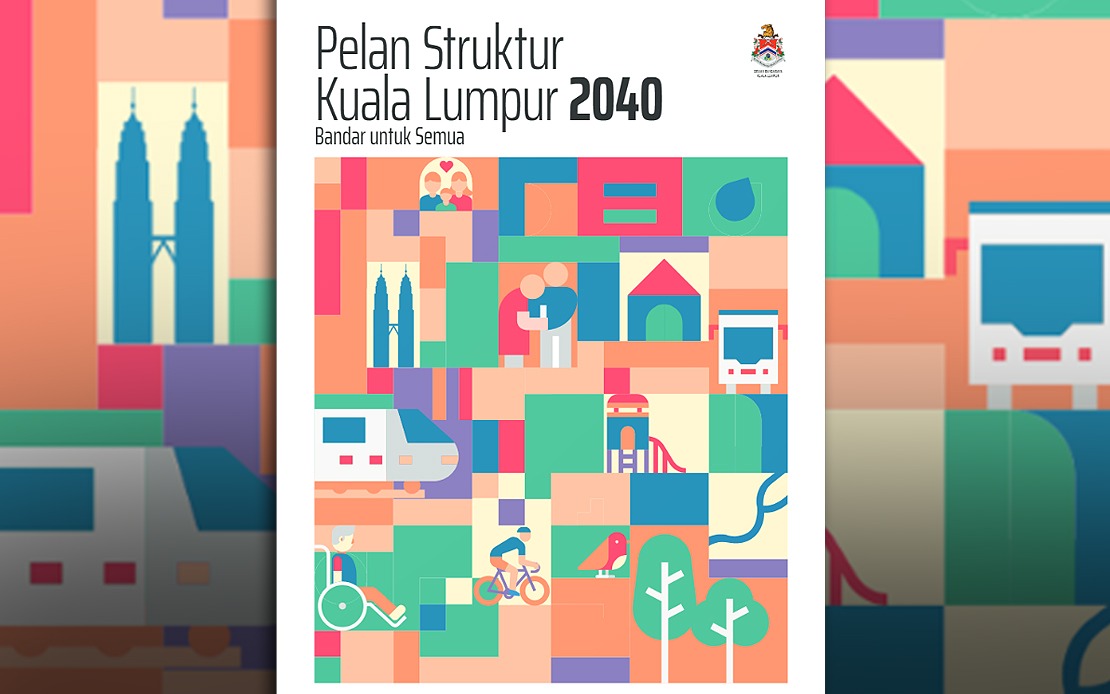
Kuala Lumpur City Hall (DBKL) has announced an extension to the application deadline for proposed amendments to the Kuala Lumpur Local Plan 2040 (PTKL2040), moving the cutoff to 5 pm on August 7. The decision reflects an effort to give all interested parties—including registered landowners, developers, and other stakeholders—sufficient opportunity to prepare comprehensive submission packages without rushing through the process.
The extended timeline serves a practical purpose in the urban planning cycle. Preparing a formal amendment application involves multiple components that cannot always be assembled quickly, particularly for larger or more complex proposals. DBKL's rationale is straightforward: allowing more preparation time increases the likelihood that applications will be complete, well-documented, and ready for professional evaluation. Incomplete submissions create bottlenecks in the review process and often require resubmission, ultimately slowing down the entire approval mechanism.
Prospective applicants must include several key elements in their Letters of Intent. Beyond the basic justification for why a change to PTKL2040 is needed, submissions require detailed site plans or location maps and the most current land title documents pertaining to the proposed area. These requirements ensure that DBKL's City Planning Department (JPRB) can quickly assess whether a proposal has merit and whether the applicant has legitimate standing to propose changes. The documentation framework reflects standard urban planning practice across Malaysia and elsewhere.
The amendment process operates under Section 17 of the Federal Territory (Planning) Act 1982 (Act 267), which establishes the statutory framework for modifying local development plans in Kuala Lumpur. This legislative anchor means that DBKL's procedures are not arbitrary but rather grounded in formal law. Understanding this context matters for stakeholders seeking to navigate the system, as it clarifies that the rules governing amendments are fixed and transparent rather than subject to discretionary interpretation.
For larger or more technically demanding proposals, applicants may need to commission a Local Plan Amendment Proposal Report (LCPPT). DBKL will inform affected applicants about this requirement, and those proceeding along this path must engage a Registered Town Planner. The decision to require professional planning input depends on the scope and complexity of each proposed amendment, a sensible graduated approach that does not impose unnecessary burdens on minor modifications while ensuring rigorous analysis of significant changes.
The submission process offers flexibility in how applications reach DBKL. Prospective applicants can deliver their Letters of Intent in person to the director of the City Planning Department at Level 9, Menara DBKL 1 on Jalan Raja Laut, or they may submit materials electronically. This dual-channel approach accommodates different working styles and geographic circumstances, making the system more accessible to participants based around Kuala Lumpur.
For those navigating the amendment framework for the first time, DBKL has made supporting resources available online. The Application Checklist and the Kuala Lumpur LCPPT Manual can be downloaded from the Kuala Lumpur Development Plan website, allowing prospective applicants to understand requirements in advance and avoid common pitfalls. Access to these materials democratizes the process to some extent, reducing the information asymmetry that might otherwise favor experienced developers or well-resourced stakeholders over individuals or smaller entities.
The extension itself signals a measure of pragmatism from DBKL. Urban planning departments across Southeast Asia frequently face tension between maintaining schedule discipline and accommodating the legitimate needs of those affected by plan amendments. By granting extra time, DBKL acknowledges that quality submissions require genuine effort, and that rushing the process serves no one's interests. Poor applications waste departmental resources and often lead to rejection, whereas more time frequently yields stronger proposals.
For Malaysian developers and property stakeholders, this extension carries broader implications. The PTKL2040 represents Kuala Lumpur's vision for urban development through the coming decades, and the amendment mechanism allows for course corrections as circumstances change. Whether responding to market shifts, technological innovations, or revised community priorities, the ability to modify the plan prevents it from becoming an obstacle to rational development. The extended deadline thus represents an opportunity for stakeholders to shape the city's future within established legal channels.
DBKL's encouragement that stakeholders make full use of the extension period carries an implicit message: completeness and clarity matter more than speed. Applications submitted at the last moment under time pressure often lack the supporting evidence and professional polish that facilitate approval. By extending the deadline and explicitly urging careful preparation, DBKL is incentivizing applicants to approach the process methodically, potentially improving approval rates and reducing back-and-forth correspondence between the city and applicants.
The PTKL2040 amendment framework exists because comprehensive development plans require periodic adjustment. Markets evolve, infrastructure changes, and community needs shift. Creating accessible pathways for formal amendments prevents stakeholders from attempting informal workarounds or challenges. The August 7 deadline extension, while seemingly routine, thus represents an important opportunity for Kuala Lumpur's development ecosystem to voice proposed changes through proper channels during this window of receptivity.

