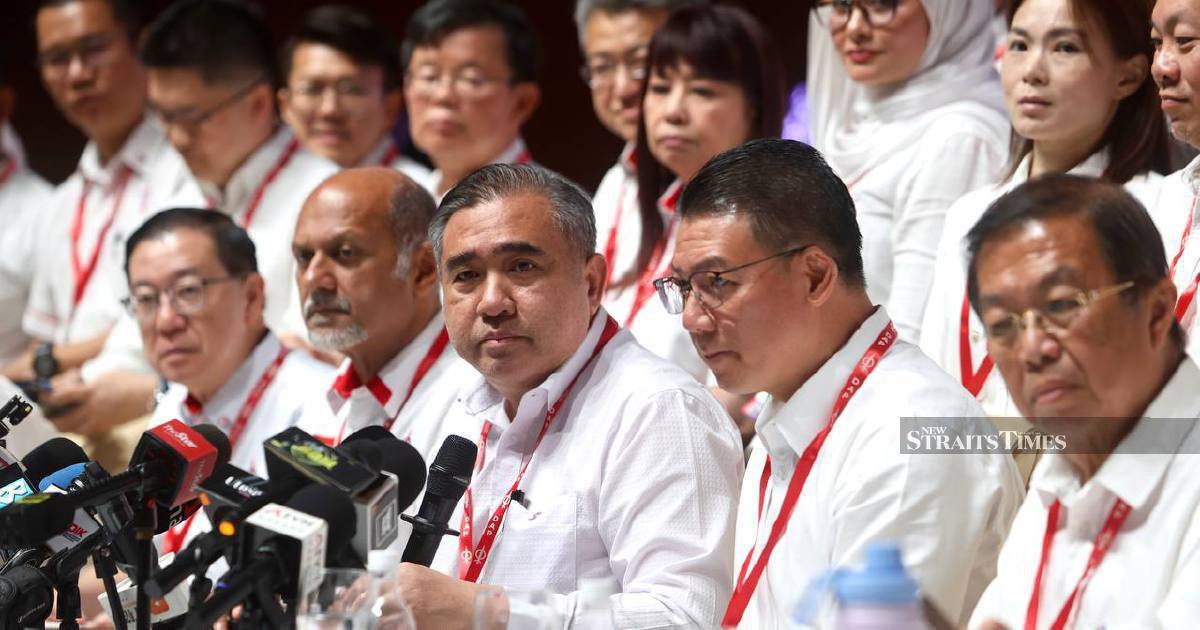
The Democratic Action Party has reaffirmed its commitment to working alongside Umno, signalling that tensions surrounding the discharge of corruption charges against Barisan Nasional chairman Ahmad Zahid Hamidi will not derail the coalition partnership. The statement reflects an effort to compartmentalise political disagreement from governance requirements, a pragmatic approach essential to maintaining the fragile unity that has underpinned Malaysia's government structure since 2022.
The discharge not amounting to an acquittal decision has proven contentious within political circles. Unlike an outright acquittal, the legal designation leaves the charges technically unresolved, a distinction that carries symbolic weight for those emphasising accountability and rule of law. For DAP, a party that has historically positioned itself as reformist and anti-corruption, the situation presents a delicate balancing act between maintaining coalition unity and addressing party member concerns about the integrity of the judicial outcome.
Umno's position as the largest party in the Dewan Rakyat makes it indispensable to maintaining the government's parliamentary majority. Without Umno's legislative support, the coalition would lack the numbers to pass budgets and key legislation. This structural reality constrains DAP's ability to take a confrontational stance, regardless of internal party sentiment. The calculation is straightforward: disagreement on this specific matter, however principled, cannot be allowed to destabilise the broader governmental apparatus.
The timing of DAP's reassurance is significant given recent political volatility. Malaysia's coalition government has weathered multiple crises since its formation, from defections and party-switching to competing claims over ministerial portfolios and policy direction. Each challenge has tested the resolve of constituent parties, yet the need for stable governance has repeatedly prevailed over partisan disputes. This latest episode follows the same pattern, with pragmatism ultimately prevailing over ideology.
Within DAP, party members hold divergent views on how to respond to cases involving allegations of corruption within government ranks. Younger members and activists within the party have expressed frustration over what they perceive as compromised principles, viewing the DNAA outcome as inadequate justice. Conversely, party leadership recognises that governance requires difficult choices and that maintaining coalition stability serves national interests even when it necessitates tolerating uncomfortable political outcomes.
The relationship between DAP and Umno represents one of Malaysia's most consequential political alignments. These parties operated in opposition for decades, with DAP viewing Umno as embodying feudal and patronage-based politics, while Umno regarded DAP with historical suspicion rooted in ethnic and ideological differences. Their cooperation marks a profound shift in Malaysian politics, one driven by the imperative to keep Pakatan Harapan and its allies in government following the 2022 general election.
From a Southeast Asian perspective, Malaysia's coalition governance offers instructive lessons about managing pluralistic democracies with deep communal divisions. The willingness of ideologically divergent parties to work together, despite disagreements, demonstrates commitment to parliamentary democracy even when compromise creates internal tensions. This model contrasts sharply with regional trends toward authoritarianism and majoritarian politics in neighbouring countries.
Looking ahead, DAP's principled pragmatism will likely characterise its approach to similar situations. The party appears committed to separating questions of national governance from individual cases of alleged misconduct, a distinction increasingly difficult for democratic parties to maintain in an era of heightened social media scrutiny and activist demands for accountability. By publicly affirming partnership with Umno, DAP signals that such separation remains its preferred strategy.
The broader implication for Malaysian politics is that coalition stability now trumps individual accountability in shaping government conduct. While this serves important functions in preventing political paralysis and ensuring continuity of administration, it raises questions about whether the government can simultaneously champion anti-corruption agendas while accommodating outcomes that suggest selective enforcement of accountability principles. This tension will likely persist as a defining feature of Malaysia's political landscape for the foreseeable future.
For international observers and investors tracking Malaysia's political direction, DAP's statement offers reassurance that the current government structure remains fundamentally stable despite visible friction. Market confidence depends partly on political predictability, and public reaffirmations of coalition commitment—even when strained—serve to maintain that confidence. The decision to continue working relationships thus extends beyond domestic politics to shape perceptions of Malaysian governance reliability.
The challenge ahead for DAP involves managing expectations among its own supporters while demonstrating responsible governance partnership. Public statements emphasising coalition commitment must be paired with visible efforts to address corruption and strengthen institutional integrity in other policy domains. Without such balance, the party risks losing credibility with constituents who voted expecting transformative change rather than political compromise with former adversaries.

