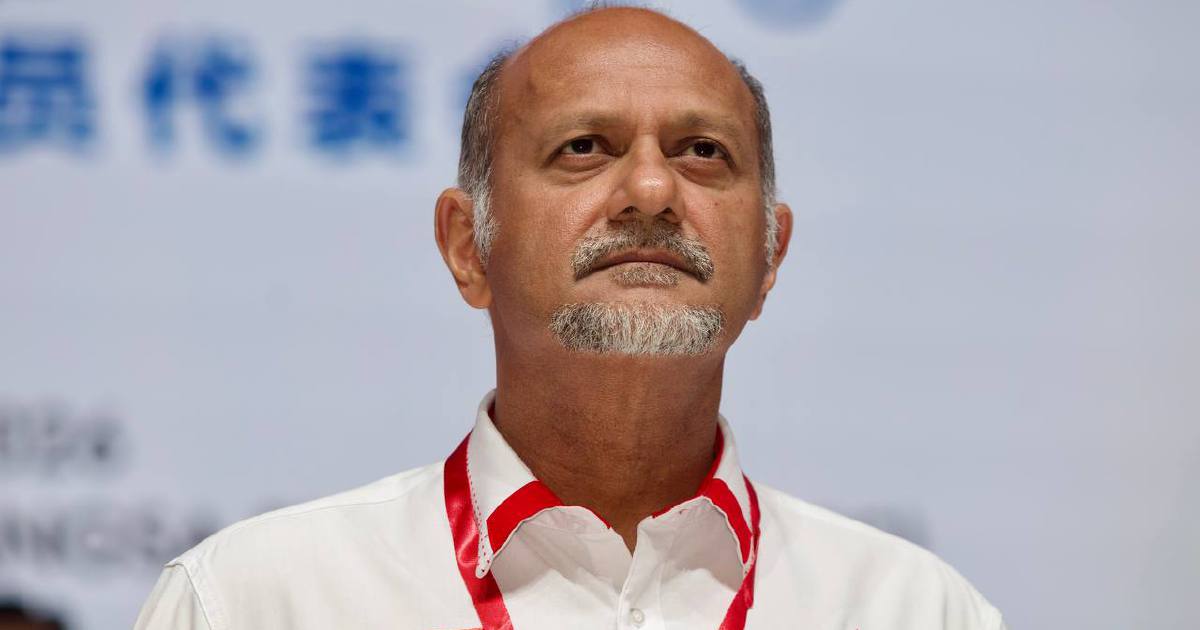
The Democratic Action Party is raising the pressure on the Anwar Ibrahim administration to deliver more substantive changes to Malaysia's economic structures and institutional frameworks. Speaking in Putrajaya, DAP national chairman Gobind Singh Deo articulated the coalition partner's assessment that the unity government's current trajectory on reform requires meaningful acceleration, particularly as the administration approaches a critical juncture in its term.
This intervention from DAP represents a significant moment within Malaysia's political compact. Since the unity government's formation in November 2022, the coalition has sought to project stability and shared purpose across traditionally fractious political lines. However, DAP's public call for heightened reform efforts suggests that within coalition discussions, there is growing frustration about the pace of substantive structural change. The timing of Gobind Singh Deo's remarks carries weight given DAP's position as a crucial stabilising force within the government, particularly on urban and progressive policy matters.
The institutional reforms DAP is seeking likely encompass judicial independence, civil service modernisation, and governance transparency. Malaysia's institutional framework has long been the subject of reform discussions, with various stakeholders arguing that updating administrative structures, enhancing meritocratic advancement within government, and clarifying the separation of powers would strengthen the nation's democratic foundations. These are not abstract concerns—they directly affect investor confidence, business efficiency, and public service quality that Malaysians experience daily.
On the economic dimension, DAP's push signals concern about structural competitiveness issues. Malaysia's economy continues to grapple with productivity growth challenges, an education-to-employment mismatch, and the need to transition away from resource dependency. The party's emphasis on economic reform suggests that coalition partners believe current policy measures have not addressed these fundamental challenges with sufficient urgency or depth. This is particularly relevant for younger Malaysians entering the workforce and businesses navigating regional competition from countries like Vietnam and Thailand.
Three and a half years into any government's term represents a pivotal moment. The administration has typically established its initial priorities and begun implementation, yet sufficient time remains to course-correct before electoral pressures intensify. DAP's intervention at this juncture appears strategically timed to influence government agenda-setting for whatever period remains, ensuring that the progressive coalition partner's reform vision remains central rather than peripheral to policy outcomes.
For regional observers, DAP's reform push also reflects competition dynamics within Southeast Asia. Governments across the region are pursuing modernisation agendas, and Malaysian political parties are acutely aware that institutional and economic stagnation could trigger relative regional decline. Singapore's continued economic leadership, Vietnam's rapid industrialisation, and Indonesia's demographic dividend all create competitive pressure on Malaysia to demonstrate meaningful progress on efficiency and structural adaptation.
The unity government model itself depends partly on demonstrating tangible achievements that justify coalition participation across ideological lines. For Barisan Nasional, collaborating with Pakatan Harapan and smaller partners requires showing that this arrangement delivers outcomes that individual parties could not achieve alone. DAP's public prodding suggests that internal coalition dynamics may be shifting, with partners increasingly focused on outcomes rather than simply maintaining stability.
Gobind Singh Deo's call also reflects DAP's particular concerns about urban development, environmental governance, and social policy implementation. As the primary urban-based opposition party that joined government, DAP has stakes in demonstrating that coalition participation translates into concrete improvements in city management, public transportation, waste handling, and environmental protection—all areas where Malaysian cities lag regional peers.
Prime Minister Anwar Ibrahim faces a delicate balancing act. He must maintain sufficient reform momentum to satisfy coalition partners like DAP while ensuring that changes do not destabilise traditionally powerful institutions and constituencies whose support remains essential for government stability. The previous administration's reform attempts sometimes faltered when institutional resistance proved stronger than political will, so DAP's intervention suggests coalition partners are impatient to avoid similar stalling.
The economic reform agenda becomes particularly urgent given Malaysia's fiscal consolidation requirements and revenue pressures. Structural economic improvements—whether through digital economy development, manufacturing sector modernisation, or human capital investment—represent the genuine path to long-term competitiveness and fiscal sustainability. Incremental policy adjustments, however well-intentioned, may not suffice.
Looking forward, whether the Prime Minister accelerates reform efforts will signal much about the unity government's actual capacity to function as a transformative force versus a merely stabilising arrangement. For Malaysian businesses, investors, and citizens evaluating government performance, DAP's public push for institutional and economic overhauls represents a test of the coalition's ability to translate shared governance into shared vision for national modernisation.

