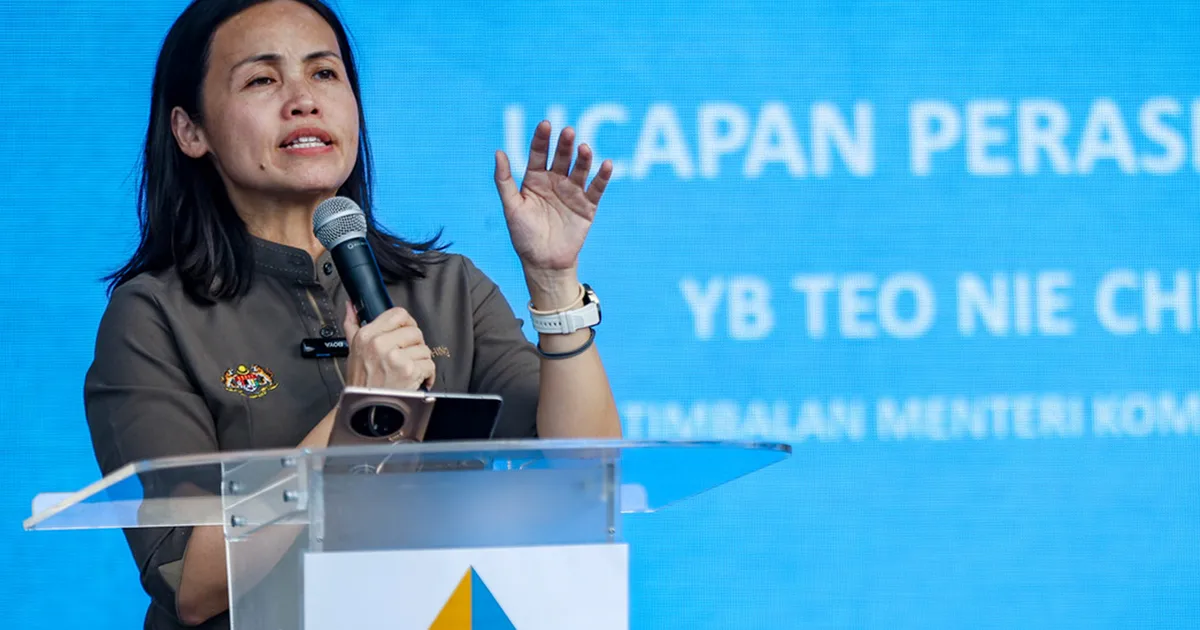
A prominent DAP leader serving as deputy minister has come forward with allegations that her reputation has become the target of a coordinated disinformation campaign orchestrated through multiple social media platforms. The politician contends that the accounts in question were established specifically to level false accusations connecting her to gang-related criminal enterprises—claims she firmly denies and characterises as part of a deliberate effort to undermine her credibility and political standing.
The emergence of such allegations reflects a growing pattern of weaponised disinformation targeting Malaysian political figures, particularly women in leadership positions. The use of freshly created accounts designed to bypass platform safeguards and established verification systems suggests a calculated approach to spreading damaging falsehoods. By establishing new profiles rather than utilising existing ones with established histories, the perpetrators appear intent on avoiding accountability and making it difficult for investigators to trace the source of the attacks.
Social media platforms have become increasingly weaponised in Malaysian politics over recent years, serving as conduits for coordinated campaigns that transcend traditional political discourse. The deliberate fabrication of narratives linking individuals to criminal enterprises represents a particularly serious form of character assassination, as such allegations carry severe reputational and professional consequences. For a politician holding a ministerial portfolio, such attacks carry additional weight given the responsibility attached to government positions and the reliance placed on public trust.
The targeting of Teo appears consistent with broader international trends where women in political authority face disproportionate levels of online harassment and fabricated allegations. Research has consistently demonstrated that female politicians receive substantially higher volumes of personal attacks and false claims compared to their male counterparts, with such attacks frequently introducing gender-based elements alongside professional criticism. The gang-related allegations directed at this deputy minister exemplify how false narratives can be constructed to exploit stereotypes and prejudices.
The deliberate creation of new accounts to propagate these accusations suggests sophistication in approach and raises questions about potential coordination among multiple actors. Rather than representing spontaneous grassroots criticism, the pattern indicates planning, resources, and likely technical knowledge to execute such a campaign effectively. This raises concerns about whether organised political operatives, whether domestic or foreign, may be leveraging social media infrastructure to interfere in Malaysian political processes and undermine public confidence in specific individuals and institutions.
For the DAP as a political organisation, such attacks on its senior members reflect broader challenges facing Malaysian opposition politics in the digital age. The party has increasingly found itself navigating complex terrain where policy positions and political achievements can be overshadowed by coordinated misinformation campaigns. The ability to rapidly establish false narratives and spread them across social networks before fact-checking mechanisms can intervene presents a significant challenge to transparent political discourse.
The implications extend beyond the individual politician targeted. When social media can be weaponised to create entirely fictitious associations between public figures and criminal activity without consequence or verification, it undermines the broader foundation of democratic debate. Citizens lose the ability to distinguish between legitimate political criticism grounded in fact and manufactured allegations designed solely to damage. This erosion of information integrity weakens the mechanisms by which voters make informed electoral choices.
Platform responsibility represents another critical dimension of this issue. Major social media companies operating in Malaysia have implemented various measures to identify and remove inauthentic accounts, yet the ease with which new accounts spreading false allegations can be created and gain traction suggests these protective mechanisms remain insufficient. The responsibility for policing coordinated disinformation campaigns requires not only technological solutions but also rapid human review and intervention.
The response from the deputy minister highlights the broader challenge facing Malaysian public figures in defending themselves against digitally-amplified false narratives. Traditional media engagement and official statements, while important, often struggle to match the viral velocity of social media disinformation. The time lag between allegations appearing online and formal rebuttals being issued frequently allows false claims to achieve significant distribution before correction, with psychological research showing that corrections often fail to fully counteract initial false impressions.
Moving forward, this incident underscores the urgency for Malaysia to develop more robust mechanisms for addressing coordinated disinformation targeting political figures. This might include enhanced platform accountability, improved tools for rapid identification of inauthentic accounts, and public education initiatives teaching digital literacy. Without such measures, Malaysian democracy risks continued vulnerability to campaigns designed not to advance substantive policy debate but rather to poison the information environment and undermine legitimate political competition.

