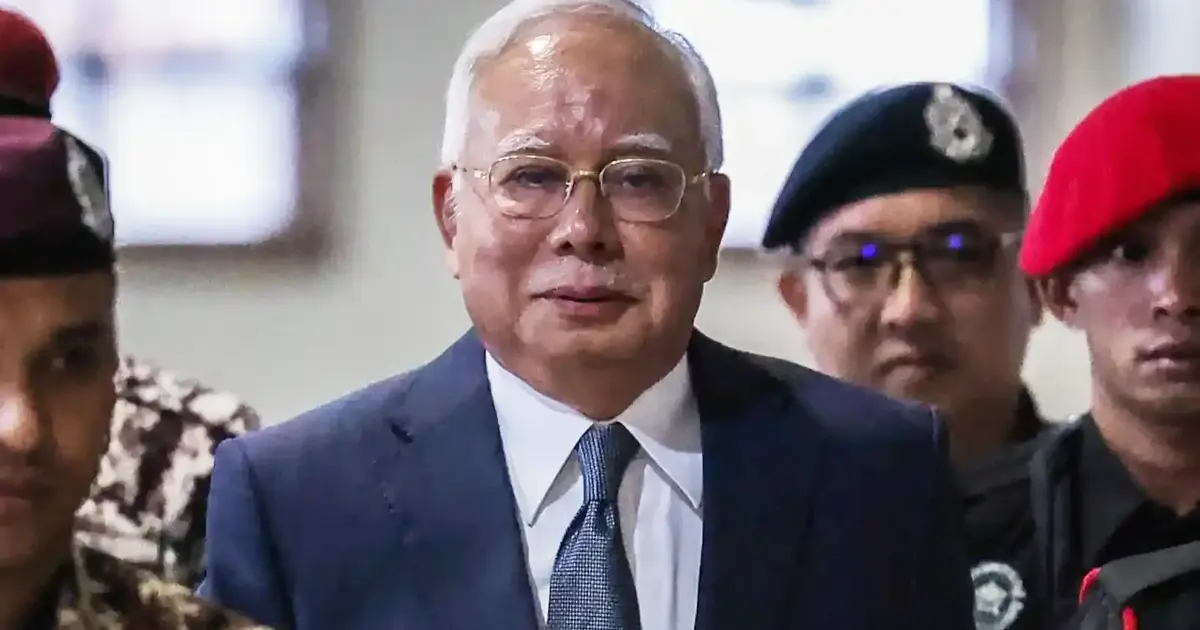
The debate over former Prime Minister Najib Razak's potential pardon has become increasingly contentious, with a DAP politician now challenging the Malaysian Chinese Association to articulate where the party truly stands on the matter. Ong Hui Xue's public questioning of MCA's position reflects deeper anxieties within the multiracial political coalition, particularly among non-Malay parties concerned about appearing complicit in efforts to overturn a high-profile conviction that many regard as central to Malaysia's anti-corruption credibility.
Umno leaders have been mounting a sustained campaign to secure a full pardon for Najib, who was convicted in 2023 on multiple counts of criminal breach of trust and money laundering linked to the 1Malaysia Development Berhad scandal. The pressure has intensified in recent months, with senior party figures openly advocating for the former leader's release. This coordinated effort has placed partners in Malaysia's ruling coalition in an awkward position, forcing them to either endorse the initiative or remain uncomfortably silent.
The stakes for MCA extend beyond simple political calculation. As the primary representative of Malaysia's Chinese business and professional communities within the federal government, the party carries symbolic weight on matters of governance and rule of law. The Chinese-led Democratic Action Party, which sits outside the current coalition but operates in state-level partnerships, has seized upon this vulnerability to pressure MCA into making an explicit declaration. Such pressure tactics underscore how Malaysia's fractious coalition politics leaves smaller partners vulnerable to accusations of inconsistency or moral compromise.
Najib's original conviction stemmed from his role in the massive 1MDB embezzlement scheme, which prosecutors alleged saw billions in government funds diverted through complex international networks. The case became a lightning rod for broader concerns about elite accountability and transparent governance in Malaysia. Any substantial move toward his release would carry symbolic implications far beyond the individual, potentially signalling to investors, civil society groups, and the broader public that Malaysia's judicial independence and anti-corruption framework remain subject to political manipulation.
MCA's silence or ambiguous positioning on the matter may reflect internal divisions within the party itself. Veteran party leadership, particularly those focused on international business relationships and Malaysia's reputation abroad, likely harbour reservations about backing a pardon campaign. Younger members or those positioned closer to Umno's grassroots networks might face pressure to demonstrate solidarity. This internal tension rarely reaches public discourse, but Ong's direct challenge forces the party to navigate these contradictions in the open.
The timing of DAP's intervention proves strategically shrewd. With national elections potentially looming within the next two years, all coalition partners face renewed scrutiny over their actual principles versus their operational compromises. DAP has consistently positioned itself as the guardian of anti-corruption standards and meritocracy, making Umno's pardon campaign a perfect opportunity to highlight what it views as MCA's complicity or weakness. By demanding public clarity, DAP manufactures a scenario where MCA either distances itself from Umno or risks appearing to endorse judicial interference.
Regional implications merit consideration as well. Malaysia's investment climate has recovered gradually since the 1MDB crisis fundamentally damaged the nation's international image. Major institutional investors, particularly from Singapore, South Korea, and Western nations, closely monitor how Malaysian authorities handle high-profile corruption cases. A successful pardon campaign could reignite concerns about rule of law and governance standards, potentially affecting foreign direct investment in sensitive sectors requiring strong institutional assurance.
The broader coalition politics context illuminates why MCA might resist explicit positioning either way. The party depends upon Umno's numerical dominance in Parliament while simultaneously needing to maintain credibility with non-Malay voters who increasingly scrutinise its effectiveness as an independent voice. Clear support for the pardon invites backlash from civil society, professional associations, and urban constituencies that form MCA's electoral base. Yet overt opposition risks internal friction with coalition leadership and jeopardises access to government contracts and patronage networks that sustain the party apparatus.
This standoff also reflects longer-term anxieties within Malaysia's Chinese political establishment. Both MCA and DAP compete for representation of Chinese interests, yet operate from fundamentally different strategic frameworks. DAP's parliamentary role as opposition provides freedom to hold principled stances without executive responsibility, whereas MCA must constantly balance coalition loyalty against community expectations. Ong's challenge exploits this structural asymmetry, positioning DAP as principled while implying MCA lacks backbone.
The Najib pardon debate ultimately exposes fissures in Malaysia's political consensus regarding accountability and institutional integrity. Umno's campaign mobilises the party's strongest grassroots supporters, many of whom view Najib as a victim of political persecution rather than a convicted criminal. Countering this narrative requires sustained commitment from coalition partners to articulate competing values around governance and rule of law. MCA's reluctance to do so publicly suggests internal calculations prioritise short-term coalition cohesion over longer-term credibility stakes.
As the conversation continues, Malaysian civil society, international observers, and ordinary citizens are watching how the political establishment ultimately resolves this tension between maintaining judicial independence and managing intra-coalition dynamics. MCA's forthcoming public positioning on Najib's potential pardon will send significant signals about whether Malaysia's non-Malay political parties retain meaningful influence over government direction or have become secondary actors in decision-making processes dominated by Umno's controlling interests and leadership preferences.

