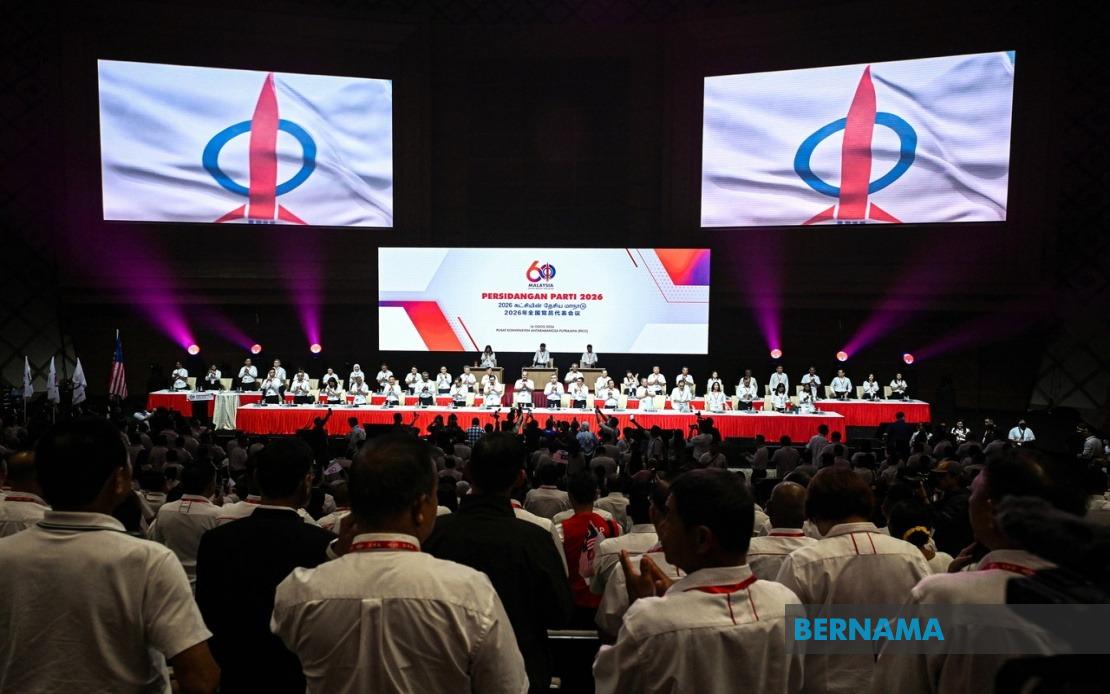
The Democratic Action Party's national conference in Putrajaya has endorsed continued participation in Prime Minister Datuk Seri Anwar Ibrahim's Unity Government, with delegates from across Malaysia's states backing the coalition partnership through the end of the current parliamentary term. The decision, reached during debate and subsequent secret ballot voting at the party's 60th anniversary gathering, reflects DAP's calculation that remaining in federal office offers greater leverage to advance reform agendas than operating from opposition benches.
Delegates from fourteen state committees presented arguments supporting DAP's continued membership within the administrative bloc. Their reasoning coalesced around several interconnected themes: fulfilling electoral promises made to constituents, advancing institutional reforms, intensifying anti-corruption efforts, tackling affordability challenges, safeguarding minority rights within Malaysia's multiethnic framework, ensuring policy continuity, and averting the disruption of early general elections. These justifications reveal how Malaysia's coalition politics increasingly hinges on pragmatic assessments of where influence can be best wielded rather than ideological purity or oppositional positioning.
Perak delegate Jason Ng Thien Yong encapsulated a recurring sentiment among supporters of continued participation. Despite acknowledging setbacks in several state-level elections, Ng argued that abandoning federal office would constitute a strategic miscalculation. His perspective recognised that the Unity Government contains structural imperfections but suggested that reform-minded parties exercise greater agency from within power structures than from external positions. This reflects a maturing understanding within DAP's ranks that coalition governance, with all its compromises, permits incremental progress on policy objectives that remain unattainable from the sidelines.
Veteran legislator Leong Ngah Ngah of Pahang invoked the success record of the Anwar administration across its initial three-year tenure as justification for continued engagement. Leong specifically highlighted demonstrable achievements and institutional reforms already implemented, positioning the decision as one demanding mature political calculation rather than emotional responses to electoral reverses. For Malaysian observers, this argument signals DAP's desire to shift narratives away from recent state-level disappointments toward emphasising federal-level accomplishments in governance and economic management.
Delegate perspectives from coastal and East Malaysian regions added territorial nuance to the unified support. Selangor representative Muhammad Shakir Amerr Mohideen stressed that sustained government participation, combined with effective administration and credible performance, could rebuild voter confidence in districts previously lost to opposition parties. Similarly, Sabah delegate Yap Wui Lip conditioned continued support on DAP's willingness to champion constitutional guarantees stemming from the Malaysia Agreement 1963, illustrating how component parties within federal coalitions leverage partnership agreements to advance regional interests and secure local political bases.
The breadth of state-level representation voting in favour reveals surprising cohesion across DAP's geographical and demographic constituencies. Delegates from peninsular strongholds like Penang, Selangor, and Johor voted alongside representatives from historically marginal areas including Perlis, Terengganu, and Kelantan. East Malaysian participation through Sarawak and Sabah delegates underscores that DAP's coalition calculations transcend regional boundaries. This geographic diversity of support complicates narratives suggesting the party's base has fractured or that federal participation lacks grassroots legitimacy.
Secretary-General Anthony Loke's closing remarks introduced crucial qualifications regarding the terms of continued participation. While confirming the party's acceptance of delegate suggestions and criticisms, Loke explicitly rejected interpretations that ongoing coalition membership implied unconditional support for government initiatives. He reframed continued participation as conditional upon sustained commitment to reform implementation and renewal efforts designed to rehabilitate public confidence. This formulation permits DAP to maintain internal cohesion while signalling to voters that the party retains independence and will not subordinate principles to coalition solidarity.
The voting mechanics themselves merit examination. Four thousand two hundred sixty-four delegates representing seventeen hundred and four eligible branches participated in secret ballot procedures, conferring legitimacy on the outcome through transparent democratic processes. The secret ballot mechanism ensured delegates could vote according to conviction rather than factional pressure, enhancing the authenticity of the endorsement. For Malaysian readers accustomed to coalition politics characterised by backroom negotiations and top-down directives, this emphasis on delegate participation and secret voting represents a deliberate attempt to establish moral authority for a significant strategic decision.
DAP's positioning within Pakatan Harapan and the broader Unity Government carries implications extending beyond the party itself. As one of three major Pakatan Harapan components alongside PKR and Amanah, DAP's continued commitment strengthens the coalition's institutional stability heading toward the next general election cycle. A DAP withdrawal would dramatically reshape federal politics, potentially triggering realignments that could destabilise the Anwar administration. Conversely, sustained DAP participation provides the government crucial political capital to advance agendas in parliamentary committees, facilitate policy implementation, and project unity to international observers assessing Malaysia's governance trajectory.
The conference timing, coinciding with DAP's diamond jubilee marking sixty years since establishment, infused the decision with historical weight. Party leadership deliberately linked generational legacy and institutional survival to continued coalition participation, framing the vote as a choice between irrelevance and continued relevance in shaping Malaysia's political direction. This historical framing carries particular resonance given DAP's evolution from marginalised protest party to establishment coalition participant, a trajectory that provokes ongoing internal debate about identity, principles, and pragmatism.
Looking forward, the delegate vote establishes DAP's baseline position for the remainder of the current parliamentary term, projected to extend through 2028. However, this endorsement should not be interpreted as absolute commitment impervious to changed circumstances. The party's leadership indicated that reform delivery remains the essential legitimising condition for coalition membership, meaning deteriorated governance standards or abandoned reform initiatives could reignite internal debate about participation. For Malaysia's investment community, international partners, and opposition movements, DAP's commitment to the Unity Government provides policy continuity assurances while simultaneously fixing parameters within which the coalition must operate to maintain its largest Chinese-based political component.
The conference outcome represents a calculated gamble on reform delivery within coalition constraints. DAP delegates essentially wagered that remaining in government permits sufficient institutional change and anti-corruption momentum to vindicate continued partnership when voters next cast ballots. Should governance performance stagnate or public perceptions of coalition integrity deteriorate, the party's grassroots base may revisit this decision. For now, however, DAP has chosen institutional positioning and reform leverage over oppositional purity, a choice reflecting pragmatic assessments about where political power actually resides in contemporary Malaysia.

