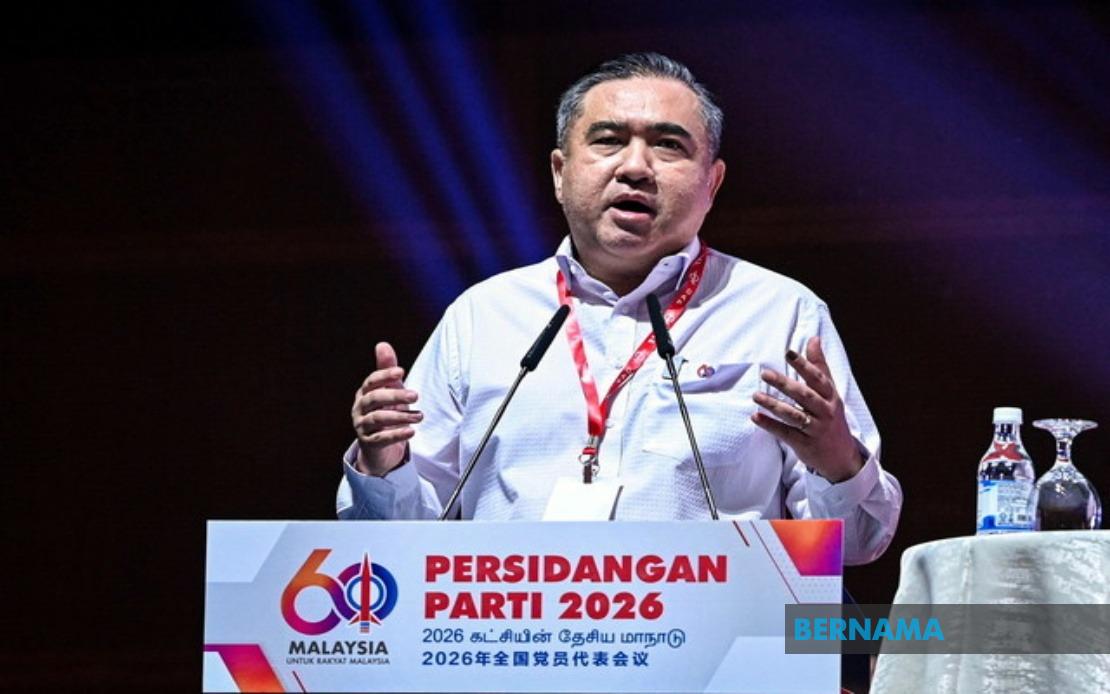
The Democratic Action Party has formally committed to staying within the federal coalition government until the completion of the 15th Parliament's full term, resolving any internal speculation about the party's long-term political direction. Party delegates gathered at the Putrajaya International Convention Centre on August 16 delivered a decisive mandate to the party leadership, endorsing continued participation in the unity government framework that has defined Malaysian politics since 2022.
The decision emerged through a special motion introduced by DAP secretary-general Anthony Loke during the party's 2026 national conference. Rather than relying on traditional voice voting or a show of hands, the party implemented a secret ballot process to underscore the legitimacy and transparency of the outcome. Conference Speaker Cha Kee Chin subsequently announced the final tally: 1,857 delegates voted to maintain the government partnership, 242 supported an exit, and seven ballots were spoilt from the 2,106 papers distributed. The overwhelming 88.2 per cent support among voting delegates represented a powerful reaffirmation of the party's participation in Malaysia's broader political coalition.
DAP's presence within the cabinet reflects its significant influence within the unity arrangement. The party holds five ministerial portfolios of varying strategic importance. Anthony Loke, as Transport Minister, oversees crucial infrastructure and connectivity initiatives that remain central to Malaysia's economic development trajectory. Steven Sim manages the Entrepreneur and Cooperatives Development portfolio, addressing small and medium enterprise growth across the nation. Gobind Singh Deo's Digital Ministry position places DAP at the forefront of Malaysia's technology and digital transformation agenda. Nga Kor Ming directs Housing and Local Government responsibilities, encompassing urban planning and municipal administration. Hannah Yeoh, stationed within the Prime Minister's Department with responsibility for Federal Territories, holds particular significance given the constitutional importance of Kuala Lumpur, Labuan, and Putrajaya.
Beyond cabinet rank, DAP has consolidated power through deputy ministerial appointments that extend the party's policy reach across multiple government departments. Teo Nie Ching's position in the Communications Ministry provides influence over media policy and government information dissemination. The appointments of Chan Foong Hin to Agriculture and Food Security and Wong Kah Woh to Education place DAP representatives in portfolios affecting rural constituencies and national human capital development. Liew Chin Tong's deputy role in Finance grants the party insight into fiscal planning, while M. Kulasegaran's position within the Prime Minister's Department overseeing Law and Institutional Reform positions DAP within constitutional and legal governance frameworks. The deputy positions held by Lim Hui Ying and Mordi Bimol in Women, Family and Community Development and Youth and Sports respectively reflect DAP's commitment to addressing demographic and social policy considerations.
The party's retention of these positions through the next general election—whenever it occurs within the current parliamentary term—represents a significant political achievement for a predominantly urban-based, Chinese-majority party operating within Malaysia's complex multiethnic coalition landscape. Since 2022, DAP has navigated the delicate balance of maintaining coalition discipline while advancing its own policy agenda and constituent interests. The formal reaffirmation through conference voting suggests internal alignment around this strategic approach, despite the inevitable tensions that emerge within any governing coalition.
The decision carries particular weight given Malaysia's evolving political economy. The unity government structure itself remains contested by various opposition elements, and DAP's continued participation effectively anchors the current coalition framework against potential defections or realignments. The party's presence also represents a counterbalance within the coalition, particularly concerning policy areas where DAP's urban support base and reformist orientation might otherwise diverge from other coalition components.
For Malaysian voters and observers, DAP's commitment signals governmental stability through the remainder of the 15th Parliament's term, which extends until 2027 or 2028 depending on whether the government calls an earlier election. Political uncertainties that might otherwise prompt coalition members to position themselves for opposition status have been effectively addressed by this formal conference decision. The high delegate participation—with 4,264 representatives from 1,704 branches nationwide eligible to vote—suggests the party conducted this process as a genuine deliberative exercise rather than a predetermined formality.
Regionally, DAP's continued participation in Malaysia's federal government maintains a representative of Malaysian urban, progressive politics at the policymaking table. This has implications for how Malaysia engages with regional initiatives on governance, digital transformation, and economic policy. The party's prominence in portfolio areas like Transport and Digital also positions Malaysia strategically within regional connectivity and technology frameworks.
The overwhelming delegate support—with nearly nine in ten voting delegates endorsing continued government participation—provides the party leadership with a strong democratic mandate for navigating the complexities of coalition governance. This internal legitimacy potentially strengthens DAP's negotiating position on policy issues within cabinet, while also providing political cover for decisions that may disappoint more radical party members or activists favouring opposition politics. The formal nature of the conference decision, combined with the secret ballot mechanism, suggests DAP prioritised establishing a decisive, transparent mandate rather than pursuing consensus that might have required extensive compromise.
Looking forward, the DAP decision effectively extends the coalition government's institutional lifecycle to its natural parliamentary terminus. This removes immediate speculation about whether DAP might realign with opposition forces before the next general election. For the broader unity government framework, DAP's recommitment represents continuity and predictability, though the party's internal dynamics and future electoral calculations may shift as the next general election campaign period approaches. The decision also underscores how Malaysian political coalitions increasingly rely on formal party structures and democratic procedures to validate major strategic choices, moving away from executive decision-making models that characterised earlier coalition arrangements.

