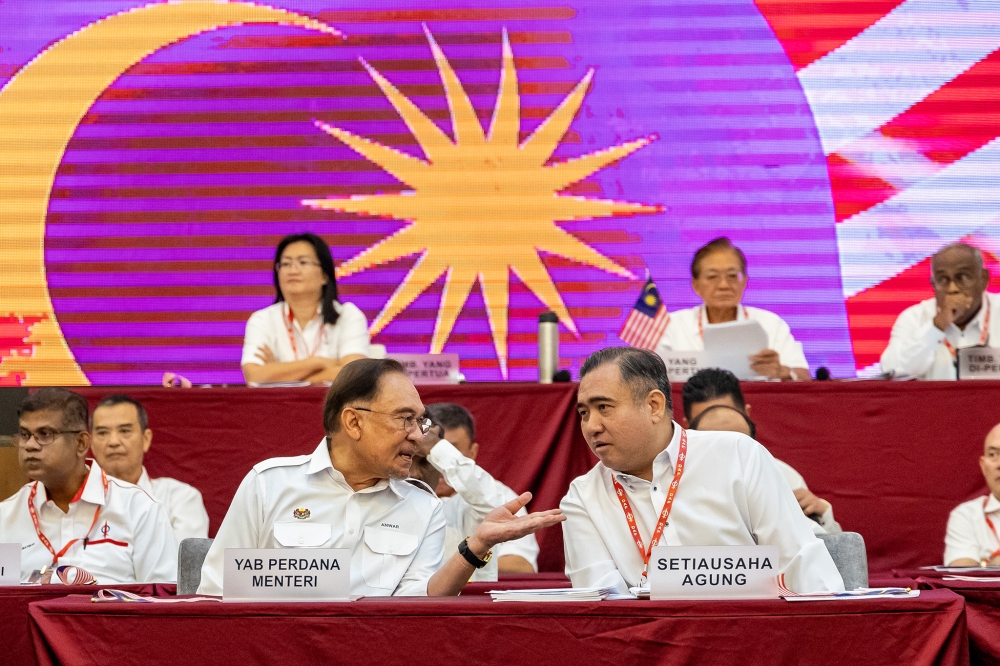
The Democratic Action Party has emphatically rejected speculation about withdrawing from Prime Minister Datuk Seri Anwar Ibrahim's Pakatan Harapan coalition, signalling that the multiracial alliance will remain intact despite mounting internal tensions over the pace of legislative change. Party leadership, speaking through transport minister Anthony Loke, acknowledged that participation in federal government necessarily involves compromise on the speed and scope of transformative policies—a reality that comes with the responsibility of managing a diverse, multi-coalition administration.
Loke's statement represents a deliberate attempt to manage expectations within DAP's own ranks, where younger activists and grassroots members have grown increasingly vocal about what they perceive as diluted reform momentum since Pakatan took office. The party, which has historically positioned itself as an agent of institutional change and greater transparency, now finds itself navigating the practical constraints of governing alongside multiple coalition partners with competing interests and ideological inclinations. This tension between aspiration and pragmatism has become one of the defining characteristics of Malaysia's current political arrangement.
The coalition structure that brought Pakatan to power in 2022 remains one of Malaysia's most complex governing arrangements. Unlike previous administrations that operated with clearer parliamentary majorities, the current government depends on support from an array of partners with differing visions for national direction. Bersatu, PKR, Amanah, and smaller components each bring their own constituencies and policy preferences to the table. For DAP, which draws its core support from urban Chinese and Indian voters as well as progressive Malays, this collaborative framework frequently demands accepting outcomes that fall short of the party's stated objectives. Loke's comments suggest the party has calculated that maintaining coalition coherence serves the broader anti-corruption and institutional reform agenda better than pursuing an oppositional stance.
The minister's framing of compromise as an inherent cost of executive power reflects a maturation in DAP's political thinking, though it remains contentious within the party ecosystem. Critics argue that DAP has become too willing to accept ministerial positions and perks in exchange for abandoning its traditional watchdog role. Supporters counter that influence from within government allows the party to block regressive policies and advance incremental progress on issues ranging from environmental protection to judicial independence. This internal debate echoes similar conversations occurring across Pakatan partners, each wrestling with the gap between campaign promises and governing reality.
Several specific policy areas have emerged as friction points. Judicial reform, long a cornerstone of DAP advocacy, has progressed more slowly than party strategists anticipated. Constitutional amendments requiring supermajority support have proven difficult to shepherd through parliament, particularly when securing agreement from non-Pakatan MPs becomes necessary. Similarly, efforts to strengthen the Malaysian Anti-Corruption Commission's autonomy have encountered bureaucratic obstacles and resistance from entrenched interests. These setbacks have fuelled perceptions among some DAP members that the party has sacrificed leverage by committing too fully to Pakatan's survival.
The coalition's vulnerability in parliament also constrains DAP's negotiating position. With Pakatan holding no clear supermajority, maintaining the support of independent MPs and smaller parties requires constant attention and occasional concessions. Anwar's government has resorted to collaboration with PAS on several legislative matters, creating situations where DAP finds itself uncomfortable with the alliance's ideological direction. These pragmatic partnerships, while often necessary for legislative passage, sit uneasily with DAP's secular platform and social liberal identity. Loke's reassurance that the party remains committed to the coalition acknowledges these tensions implicitly while attempting to prevent them from destabilizing the broader arrangement.
Looking forward, the sustainability of DAP's participation in Pakatan may well depend on demonstrating tangible progress on signature issues before the next general election cycle approaches. The party's base has extended patience, but that patience is not infinite. Coalition partners will watch whether DAP's leadership can maintain internal discipline while continuing to advocate for reforms that reflect the party's values. For Anwar's government, retaining DAP as a committed partner remains strategically crucial, as the party's urban support base and parliamentary representation give it disproportionate influence on coalition calculus.
Regionally, Malaysia's coalition dynamics carry implications for democratic governance across Southeast Asia. As neighbouring countries struggle with authoritarianism and democratic backsliding, the ability of diverse political parties to work within democratic coalitions while maintaining distinct identities offers instructive lessons. DAP's decision to remain in Pakatan, despite frustrations, suggests that Malaysia's political class recognises the costs of coalition collapse and the importance of institutionalising cooperation across ideological lines. Whether this recognition can translate into sustainable governance frameworks remains an open question as the coalition navigates its second phase of administration.
The coming months will test whether Loke's statement reflects genuine strategic clarity or hopeful messaging obscuring deeper fissures. Pakatan's success in delivering meaningful policy outcomes on issues DAP cares about will ultimately determine whether the party's patience in coalition politics proves justified or becomes a liability in future electoral contests.

