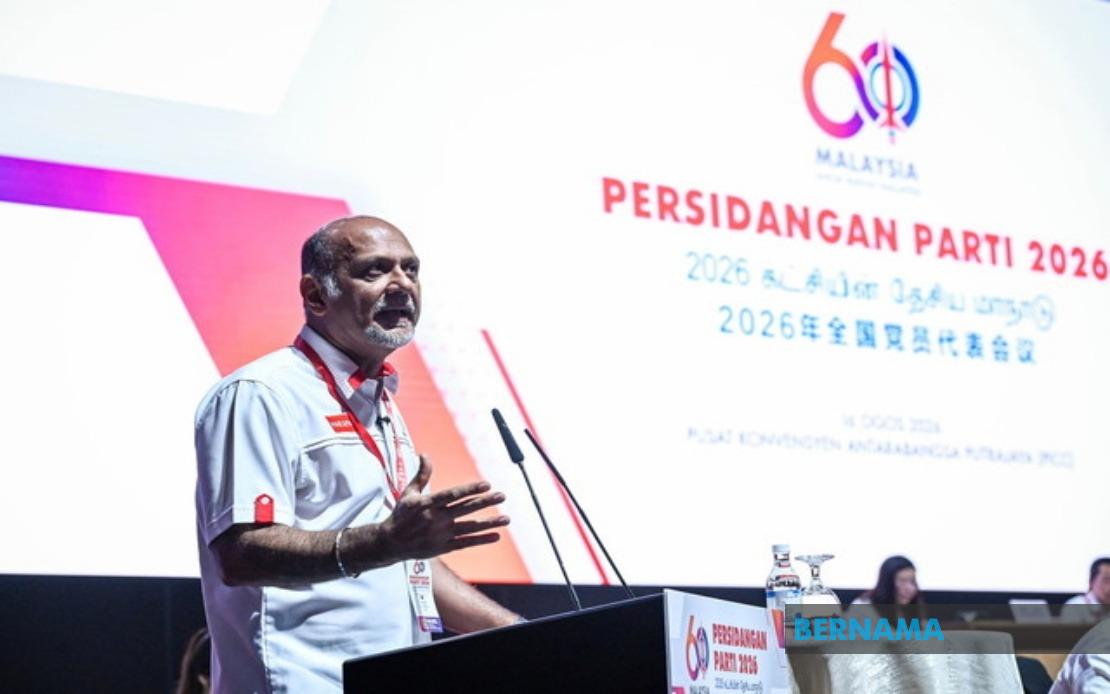
The Democratic Action Party is at an inflection point. At its annual conference in Putrajaya on August 16, party chairman Gobind Singh Deo laid bare the tensions that have surfaced after three and a half years within Malaysia's Unity Government arrangement, suggesting that DAP must fundamentally recalibrate its expectations and operational philosophy if it wishes to remain a consequential political force. The message was unmistakable: the party's recent electoral performance has exposed gaps between its reform ambitions and the political realities of governing alongside ideologically diverse partners.
Gobind's remarks represent a significant acknowledgment that DAP's participation in a multi-party administration demands a different strategic calculus than opposition politics. Rather than positioning the party as a sole architect of change, he articulated a more modest vision centred on identifying reforms that can achieve consensus among coalition partners—a position that implicitly accepts that the party cannot unilaterally implement its full electoral manifesto. This recalibration reflects a maturation of sorts, recognising that effective governance within a broad coalition requires compromise rather than ideological purity.
The context surrounding this repositioning matters considerably for Malaysian politics. The state election results that triggered this reassessment have not been detailed in available reporting, but their apparent severity has prompted soul-searching at the highest levels of DAP leadership. For a party that has historically drawn its support base by positioning itself as a champion of institutional reform and anti-corruption, such introspection signals either a crisis of confidence or a pragmatic acknowledgment that voters may prioritise economic concerns and immediate relief over structural institutional changes.
Gobind's proposal for a special parliamentary sitting to debate and approve amendments to key legislation underscores where DAP believes its energies should be concentrated. The Security Offences (Special Measures) Act 2012, known as SOSMA, has long been a concern for civil liberties advocates, and DAP's focus on reforming this law aligns with its historical positioning on rights issues. Similarly, proposed amendments to the Peaceful Assembly Act 2012 and efforts to separate the Attorney General's and Public Prosecutor's powers represent genuine institutional governance improvements that could improve Malaysia's democratic functioning. The proposal to limit prime ministerial tenure to two terms addresses concerns about executive concentration of power—a topic that has been central to Malaysian political debate for years.
However, the acknowledgment that such reforms require multi-party consensus implicitly signals that DAP views the current political environment as constrained. Each of these proposals involves modifications to how state power operates, changes that require buy-in from partners in government who may have different institutional interests. This positioning suggests that DAP has absorbed the lesson that electoral results reflect public sentiment about the pace and nature of reform, and that pushing ahead unilaterally on institutional change may further alienate voters concerned with immediate economic pressures.
The economic dimension of Gobind's speech deserves particular attention given Malaysia's current challenges. His emphasis on ensuring political stability to attract foreign investment and his commitment to easing the economic burden on ordinary Malaysians indicate a shift in party messaging. For much of its history, DAP has been associated with strong positions on systemic reform; now, the party chairman is highlighting the connection between stable governance and bread-and-butter economic outcomes. This rhetorical adjustment reflects an understanding that voters facing rising living costs and employment uncertainty may view institutional reform as a luxury when compared to immediate economic relief.
The proposed secret ballot on whether DAP should remain within or exit the government bloc until the end of the current parliamentary term represents a critical juncture for the party. The fact that this motion requires formal decision by over 4,000 delegates suggests genuine debate within the party membership about the wisdom of continued participation in the Unity Government. Whether the motion emerges from grassroots frustration with limited policy achievements or represents an effort by leadership to consolidate internal consensus remains unclear, but the public nature of this vote will likely generate significant political commentary regardless of the outcome.
DAP's position within Pakatan Harapan and the broader Unity Government coalition is more complex than it might appear from external observation. As one of three major components of Pakatan Harapan alongside PKR and Amanah, DAP carries responsibility for a significant segment of the coalition's political support, particularly among urban and Chinese-majority constituencies. Any decision to withdraw from government would have cascading effects on the entire ruling arrangement and could trigger premature elections or significant political instability. Conversely, remaining in government while seeing electoral support erode creates internal party tension and legitimacy questions.
For Malaysian readers and Southeast Asian observers watching the evolution of Malaysian politics, DAP's current trajectory matters because the party historically has been among the more reform-oriented voices in Malaysian governance. The apparent modulation of that reform agenda in favour of pragmatic consensus-building reflects broader questions about whether substantive institutional change in Malaysia occurs incrementally through coalition politics or requires different political configurations. The party's calculus will significantly influence the character of Malaysian governance over the coming years, particularly on issues related to civil liberties, executive power, and democratic institutions.
The timing of this conference, coinciding with DAP's 60th anniversary, underscores the historical significance of this moment. The party that emerged in an earlier era of Malaysian politics faces different challenges today, operating within constraining coalition arrangements rather than from an opposition vantage point. How DAP navigates the tension between its reformist identity and the incremental achievements possible within a Unity Government coalition will shape not only the party's future relevance but also the trajectory of Malaysian democratic development more broadly.

