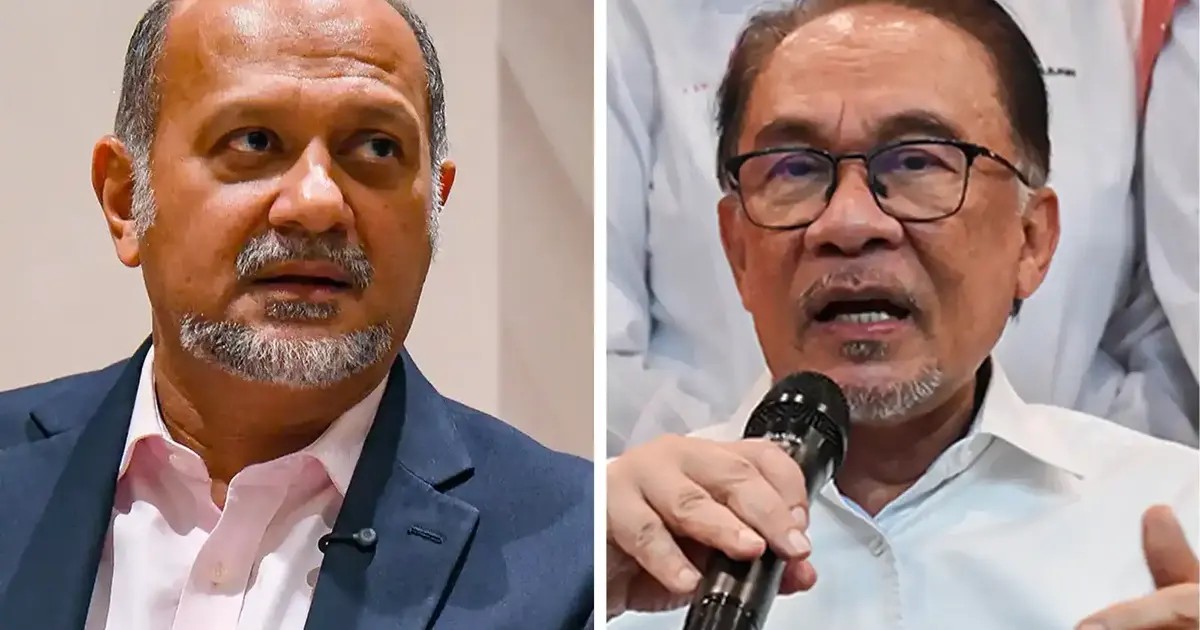
The Democratic Action Party is pressing Prime Minister Anwar Ibrahim to introduce legislation that would guarantee all Members of Parliament receive identical funding allocations for their constituencies, a move the party believes would enhance democratic equity and level the playing field across parliamentary representation.
Gobind Singh Deo, a senior DAP figure, revealed that his party has engaged the Prime Minister on this matter repeatedly in recent months, underscoring the importance the opposition coalition places on standardising resource distribution to elected representatives. The push for legislative change reflects broader concerns within DAP about whether current funding mechanisms adequately serve the interests of opposition-held constituencies compared to those governed by the ruling coalition.
The rationale behind DAP's proposal centres on a fundamental principle: Members of Parliament, irrespective of their party affiliation or the political complexion of their constituencies, should command equal fiscal resources to perform their constitutional duties and serve their constituents effectively. Under such an arrangement, an opposition MP representing a rural area would theoretically enjoy the same financial capacity as a government-backed legislator in an urban centre, assuming equal population bases.
Current practices in Malaysian parliamentary administration allow for differential funding allocations based on various criteria, some of which may inadvertently favour ruling coalition members or reflect historical budget allocations rather than merit-based resource distribution. DAP's advocacy for legislative codification seeks to remove administrative discretion from funding decisions, replacing it with transparent, rules-based mechanisms that would be difficult for future administrations to circumvent or manipulate.
This initiative carries particular significance for opposition-held constituencies, which frequently report resource constraints in delivering services such as drainage maintenance, street lighting, community development projects, and administrative assistance compared to government-held areas. The funding disparity, though often difficult to quantify precisely, compounds the challenges faced by opposition MPs attempting to demonstrate tangible benefits to their voters and build political capital for future electoral contests.
For the Anwar Ibrahim administration, embracing such legislation would signal commitment to democratic norms and fair play in parliamentary operations, potentially burnishing its reform credentials with international observers and domestic civil society groups. However, the ruling coalition might also harbour reservations, given that any reduction in the relative funding advantages currently enjoyed by government-linked MPs could translate into reduced capacity for grassroots service delivery in government-held areas.
The broader context involves Malaysia's transition towards stronger institutional checks and more transparent governance mechanisms following the 2022 general election that produced a fragmented parliament. In such an environment, smaller coalition partners and opposition representatives have gained unexpected leverage to demand reforms they previously lacked the political muscle to secure. DAP's proposal reflects this new dynamic, where even opposition voices increasingly shape legislative agendas.
Malaysian parliamentary practice traditionally vested considerable discretion in executive leadership regarding allocation of resources to backbenchers and constituency-level support. Legislating equal funding would represent a notable shift towards institutionalising resource distribution, placing decisions about parliamentary finances beyond the reach of any single administration's preferential treatment.
Similar debates have emerged across Commonwealth democracies, though few have achieved complete parity in parliamentary member funding. The challenge lies in defining what "equal" means—whether based on constituency population, geographical area, or standardised per-MP allocations—and determining appropriate funding levels that enable all representatives to discharge their duties adequately.
For Malaysian MPs representing rapidly urbanising constituencies, equal funding might prove insufficient for managing complex infrastructure and social service demands, whereas representatives in less densely populated areas might face surplus allocations. DAP's proposal would need to grapple with such nuances when advancing its legislative framework, potentially requiring more sophisticated methodology than simple per-MP distribution.
Gobind Singh Deo's public articulation of this demand signals that DAP intends to maintain pressure on the Prime Minister's office to prioritise the matter, potentially elevating it during parliamentary sessions or formal coalition discussions. The timing of such advocacy may also reflect DAP's positioning ahead of any future electoral contests, where demonstrating commitment to democratic reform could resonate with urban middle-class voters who prioritise institutional integrity.
The success of DAP's initiative will depend partly on whether other coalition components, particularly the People's Justice Party and other smaller government partners, perceive equal funding as serving their own interests or threatening established patronage networks. Anwar's response to this pressure will provide crucial signals about whether his administration prioritises institutional reform over maintaining traditional executive prerogatives in resource allocation.
Ultimately, the push for legislative equal funding reflects a maturing democratic culture in Malaysia where previously unchallenged executive practices face renewed scrutiny and demands for transparent, equitable procedures that transcend partisan advantage.

