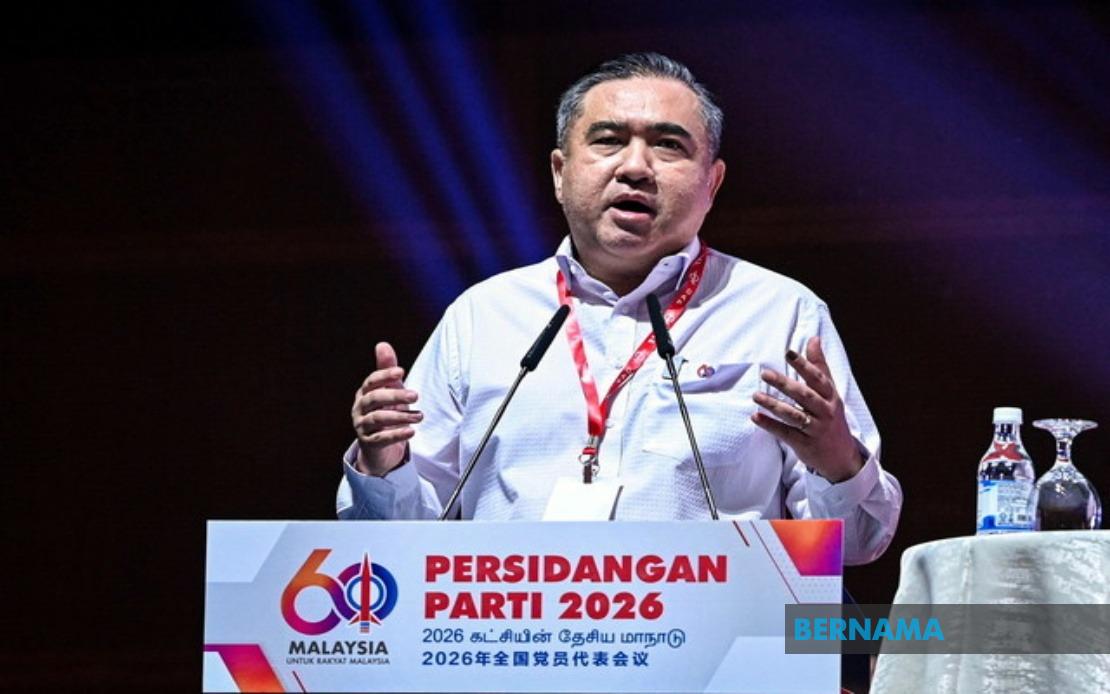
The Democratic Action Party has thrown its weight behind Prime Minister Datuk Seri Anwar Ibrahim's announcement to repeal the Universities and University Colleges Act (AUKU) 1971, marking a significant moment for an educational legislation that has shaped student life in Malaysia for over five decades. DAP secretary-general Anthony Loke declared the party's unequivocal support during the Democratic Action Party's 2026 National Conference at the Putrajaya International Convention Centre, framing the repeal as validation of the party's longstanding campaign to grant Malaysian students greater democratic freedoms and participation rights.
The legislative push comes after Anwar articulated the rationale in his address to the PKR 2026 National Congress, emphasising that removing AUKU would expand democratic space for student activism and movements across the country's public university system. According to the Prime Minister, the decision was informed by memoranda and representations submitted by student leaders who have consistently called for comprehensive restructuring of the Act and the regulatory framework governing campus life. The government intends to present the repeal proposal before Cabinet deliberation the following Wednesday, signalling serious momentum behind what could be among the most consequential higher education policy changes in the nation's recent history.
ALEGO's enthusiasm extends beyond mere support for the repeal itself. Loke articulated a broader agenda, arguing that the government must capitalise on the momentum created by AUKU's removal to advance complementary reforms. He specifically highlighted the party's commitment to dismantling racial barriers in tertiary education access, calling for policies that guarantee equal higher education opportunities regardless of students' ethnic backgrounds. This suggestion reveals DAP's wider ambitions within the governing coalition, positioning the AUKU repeal as a foundation for restructuring Malaysia's approach to meritocracy and social equity in university admissions and student life.
Understanding the context of AUKU's evolution illuminates why its complete repeal represents such a watershed moment for Malaysian higher education governance. Since its enactment in 1971, the Act has undergone seven amendments, with each revision reflecting shifting political calculations and student activism. A particularly significant modification occurred in 2012 when authorities permitted students to engage in political party activities beyond campus boundaries, acknowledging growing pressure to align university regulations with constitutional freedoms. This amendment represented a crack in the legislative edifice restricting student political expression, yet critics argued the concession remained insufficient given that core restrictions remained intact.
The trajectory of recent amendments demonstrates incremental but meaningful liberalisation of AUKU's most restrictive provisions. The 2024 amendment to Section 16B fundamentally altered disciplinary authority structures by transferring student disciplinary decisions from vice-chancellors to newly established Student Disciplinary Committees. This shift represented recognition that concentrated administrative power to punish student activism had become increasingly untenable in contemporary governance contexts. Simultaneously, amendments to Section 15A expanded financial autonomy for Student Representative Councils and affiliated bodies, permitting them to solicit and receive monetary contributions without the onerous restrictions that previously applied, thereby enhancing their operational independence.
For Malaysian readers and Southeast Asian observers, the AUKU repeal carries implications extending far beyond campus gates. Universities serve as incubators for political consciousness, professional networks, and civic engagement. Constraining student political participation has long been criticised as fundamentally at odds with the developmental purpose of higher education and the cultivation of informed democratic participation. By removing AUKU's restrictions, Malaysia joins regional peers in acknowledging that vibrant student movements correlate with healthier democratic societies and more engaged citizenry.
The timing of this legislative initiative reflects broader political calculations within the current government coalition. DAP's enthusiastic endorsement positions the party as advancing its ideological priorities regarding democratic freedoms and pluralism while maintaining coalition harmony. For Anwar's administration, the repeal offers an opportunity to demonstrate responsiveness to civil society demands and generational aspirations, particularly among younger voters who have experienced AUKU's constraints throughout their university years. This move may also represent an attempt to outmanoeuvre opposition forces by claiming credit for a reform that enjoys substantial public support, particularly among urban, educated demographics.
The nexus between AUKU's repeal and DAP's broader agenda regarding education equality warrants closer examination. The party's simultaneous push for racial equality in higher education access suggests a comprehensive vision for reconstructing Malaysia's educational landscape. Currently, Malaysia's universities remain significantly stratified along ethnic lines in terms of student composition and cultural dynamics. Addressing this requires not merely repealing restrictive legislation but actively reforming admission mechanisms, scholarship allocation, and institutional culture. DAP's framing of these reforms as interconnected indicates sophistication in understanding that political freedoms and social equality require complementary policy interventions.
Student movements in Malaysia possess a distinguished historical pedigree, from the anti-colonial struggles of the 1940s through the reformasi era of the 1990s and contemporary movements addressing climate change, gender justice, and economic inequality. AUKU's existence has represented an anachronistic constraint on the natural evolution of student activism as a democratic force. Repealing the Act will likely unleash dormant activist energy, potentially catalysing renewed student engagement with pressing social issues. Universities may become more vibrant spaces of ideological contestation and intellectual ferment, with implications for how Malaysian society processes and debates major policy questions.
The practical mechanics of repealing AUKU and crafting successor legislation will require careful legislative drafting. Questions remain regarding what framework, if any, should replace the Act's provisions, particularly concerning student conduct standards and institutional governance. Simply removing restrictions without establishing clear governance alternatives risks creating regulatory vacuums. The Cabinet's forthcoming deliberation will need to address whether alternative frameworks should protect core institutional interests while maximising student freedoms, or whether repealing AUKU entirely signals confidence that existing institutional mechanisms suffice.
Regional context adds further significance to Malaysia's movement. Across Southeast Asia, university autonomy and student freedoms remain contested terrain where governments frequently exercise considerable control. Vietnam, Myanmar, and Thailand all maintain significant restrictions on campus political activity. By repealing AUKU, Malaysia positions itself as the region's leader in expanding academic freedom and student democratic participation, potentially influencing neighbouring countries' approaches to higher education governance. This regional distinction may enhance Malaysia's soft power and international standing as a democracy committed to institutional pluralism.
The broader implications for Malaysian civil society cannot be overstated. If AUKU's repeal translates into genuinely expanded student activism, universities may function more effectively as incubators for civil society leaders, advocacy organisations, and social movements. Young people gain organisational experience, network connections, and political consciousness through campus activism that shapes their subsequent civic engagement throughout adult lives. Liberalising the regulatory environment for student politics thus represents investment in the long-term health of Malaysian democratic institutions and civil society robustness.
As the government advances the repeal through Cabinet and Parliament, DAP's positioning as a champion of this reform reinforces the party's identity as a force for democratic liberalisation and progressive social change. However, translating legislative victory into substantive expanded freedoms requires institutional cultures at universities to shift beyond merely meeting legal requirements. The true test of AUKU's repeal will emerge in subsequent years as universities navigate their expanded autonomy and students exercise newly available political spaces, determining whether theoretical freedoms materialise into genuine, vibrant campus democracy.

