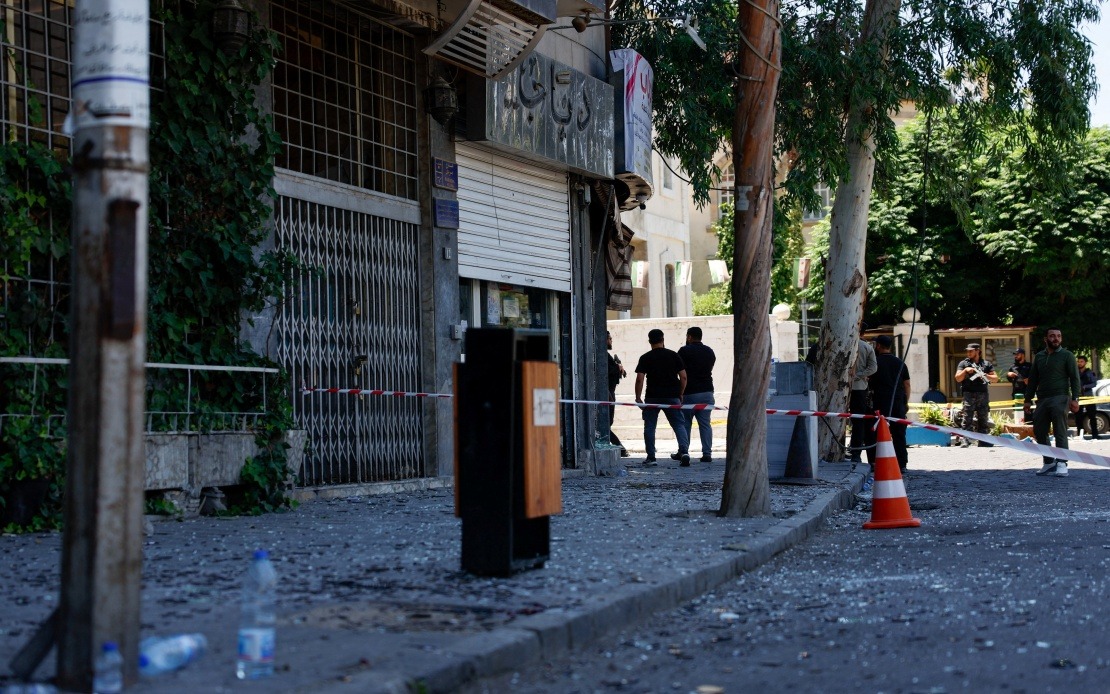
Two improvised explosive devices detonated in Damascus on Tuesday, leaving at least 18 people injured, including four members of the police force, according to statements from the Syrian Interior Ministry. The twin explosions took place in proximity to lodgings associated with French President Emmanuel Macron's presence in the Syrian capital, marking a volatile backdrop to what has been heralded as a significant diplomatic overture. The Élysée Palace in Paris swiftly issued confirmation that Macron had not been harmed during the incident.
Accounting for the sequence of events, the Syrian Observatory for Human Rights, a London-headquartered monitoring organisation, reported that the initial detonation was rapidly succeeded by a substantially more forceful blast. The proximity of both explosions to the hotel where Macron was reported to be lodging underscored the security implications surrounding his visit at a time when Syria remains navigating complex geopolitical terrain. The occurrence sparked considerable consternation throughout Damascus, as residents grappled with the uncertainty surrounding the origins and implications of the coordinated attacks.
Macron's arrival in Syria on Monday evening represented a watershed moment in European diplomatic engagement with the Levantine nation. His presence marked the first visit by a serving European Union leader to Syria since 2010, signalling a potential shift in Western positioning towards the Assad government following more than a decade of international isolation and regional conflict. The visit had been anticipated as an opportunity for substantive dialogue between Paris and Damascus on matters ranging from humanitarian concerns to regional stability.
Despite the explosions, the French delegation proceeded with scheduled engagements. According to official statements, Macron remained ensconced at the presidential palace, where comprehensive discussions between representatives of both nations were proceeding. This continuation of diplomatic activities, even as security incidents unfolded in the vicinity, illustrated both the commitment to the visit's objectives and the heightened security protocols surrounding the French president's movements throughout the Syrian capital.
Emergency responders mobilised rapidly following the detonations, with ambulances and rescue personnel converging on the affected area to attend to the injured. The swift response capability of Damascus's emergency services underscored the preparedness measures that had likely been implemented in anticipation of such contingencies during a high-profile international visit. Simultaneously, security forces established cordons around the blast zones, restricting civilian access and facilitating investigation into the circumstances surrounding the explosions.
The timing of the attacks raises important questions about security coordination and threat assessments preceding Macron's journey. Syria remains a nation where security challenges persist across multiple dimensions—from remnants of militant organisations to factional tensions within territories nominally under government control. The proximity of the explosions to facilities associated with the French president's visit suggests either an intelligence failure or a deliberate attempt to demonstrate vulnerabilities in security arrangements surrounding the high-stakes diplomatic engagement.
For Malaysian observers and policymakers, the Damascus incident carries significance beyond immediate security concerns. Malaysia, as a member of the Association of Southeast Asian Nations, maintains diplomatic relations with Syria and is attentive to developments affecting regional and international stability. The willingness of a major European leader to engage with Damascus despite security risks and Syria's contested international standing reflects pragmatic recalibration of diplomatic approaches in the Middle East, a calculation that carries implications for how nations across the Indo-Pacific region navigate their own complex bilateral relationships.
The incident also underscores the enduring volatility of Syria's security environment as the country navigates post-conflict reconstruction and international reintegration. Macron's visit, despite the explosions, represents an effort by France to position itself as an engaged mediator and stakeholder in Middle Eastern affairs. This diplomatic activism contrasts with periods of Western disengagement and reflects calculations about European strategic interests in a region that remains consequential for global energy security, migration patterns, and counterterrorism operations.
The broader context of Macron's Syria visit is his administration's effort to rebuild strategic influence in the Middle East and counterbalance competing geopolitical interests from other major powers. The visit represents a calculated risk, accepting security vulnerability as a necessary cost of restoring diplomatic channels with a nation long isolated from the international community. For regional observers, including those in Southeast Asia monitoring great power competition, such moves illustrate how traditional cold war frameworks have given way to more transactional, interest-based diplomatic engagement.
The explosions, while causing injury and alarm, did not derail Macron's mission or force his departure from Damascus. This resilience in maintaining the visit despite security incidents reflects the priority France accords to normalising relations with Syria and reasserting European agency in Middle Eastern affairs. The incident will likely prompt deeper examination of security protocols and threat assessments, but appears unlikely to reverse the trajectory toward renewed diplomatic engagement that Macron's historic visit represents.

